
State Library Victoria members can access hundreds of databases from home (if your home is in Victoria). That’s millions of articles, magazines, archives, ebooks, videos, songs, audiobooks and more, available through the catalogue anytime. We’re taking a closer look at new and/or interesting databases as well as hidden gems from our collections. Read on for top picks and tips from Librarians.
Not a member yet? Sign up online first and reward your curiosity.
Today we’re looking at the Bloomsbury Historic Dress in Detail database.
What makes this database so great?
The Bloomsbury Historic Dress in Detail database consists of twenty-six exclusive videos created with Crow’s Eye Productions, a leader in historical dress and costume media content. Each video links to a dedicated article which deep dives into the specific material presented. The collection includes womenswear and a selection of menswear ranging across multiple centuries, continents and classes.
Clothing is so much more than pure aesthetics. It is a powerful tool for communication. But the stories it tells are complex and not always the ones the wearer intended. — Pauline Loven, Women’s Dress in the 1790s video
The videos have been created using an array of styles to add variety and interest for the viewer. These include videos showing garment construction to give viewers an understanding of how an item was made and put on. Other videos show the items in context, with actors demonstrating how the garments were layered and worn. The acted scenes also show how outfits were accessorised and styled to communicate time of day and social standing.
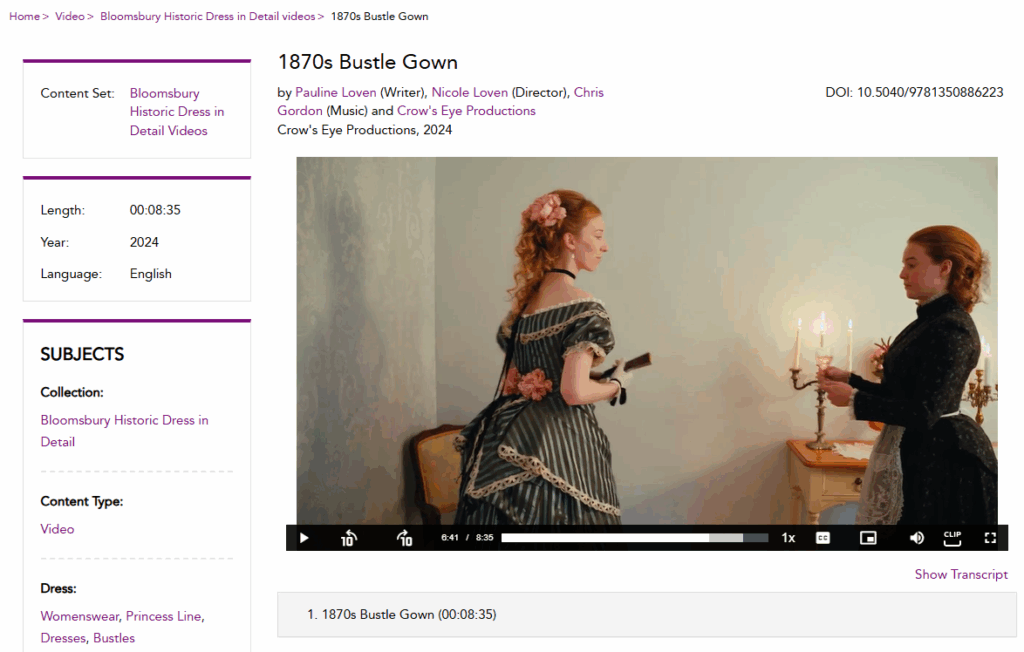
This is a concise database hitting major historical points and common misconceptions about fashion and dress during historical periods. The companion articles provide an in-depth analysis into the background of how the garments for each video were researched and developed, showing the historical context of the clothing. They also provide links to primary and secondary sources for further research and reading. You can see an example of an available article below:
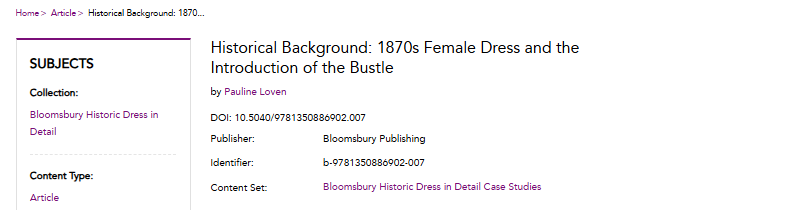
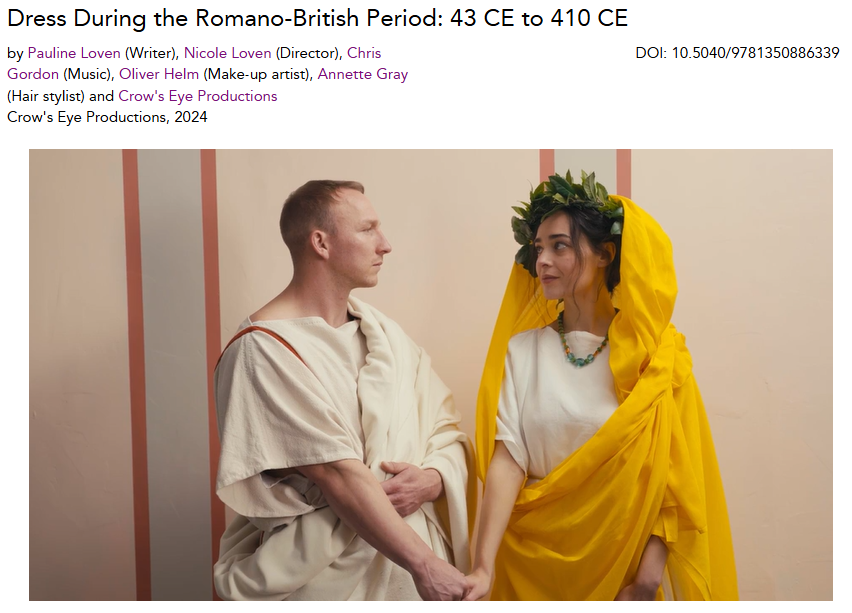
Designed for student use this database offers a wealth of contextual knowledge and practical advice on how to research historical dress and recreate garments without patterns. Periods range from Mycenaean Greece (approximately 1650 and 1200 BCE1) to the 1960’s AD and includes Roman, Renaissance, and Regency dress, making it a perfect starting place for designing period accurate film costumes or creating your next best historical cosplay.
Highlights
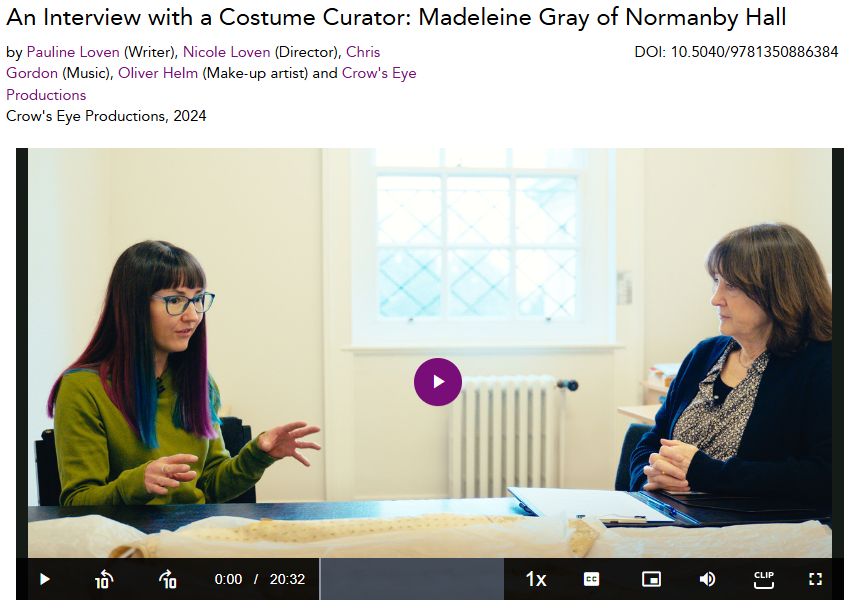
One stand-out element from the twenty-six videos is An Interview with a Costume Curator: Madeleine Gray of Normanby Hall. This 20-minute video is the longest in the collection and gives some insight into the work that goes into collecting and preserving textiles, curating an exhibit, and providing access to the public. Madeleine also shares her own journey to working with these collections and becoming one of the select few people that get to handle and explore these materials on a regular basis.
Fashion can be a key indicator of historical events, and new research is commonly conducted. The fabric used, the fastenings, and the cut of a gentleman’s suit may indicate their presence at a certain time, and in a certain place. Economics, politics, and the time of year all influence fashion and even the make and wear of a pair of socks can indicate something about when and how a person lived.
Increasingly archaeological evidence of textiles and textile making in being uncovered. But evidence for how these textiles were worn is more elusive. — Pauline Loven, Anglo-Saxon Dress video
This database is an amazing launching off point for those interested in investigating the State Library’s suite of Bloomsbury Fashion Central databases. Many of the resources cited for the research conducted for these videos can be found in other areas of Bloomsbury Fashion Central.
We hope you enjoy exploring Bloomsbury Historic Dress in Detail.
We always welcome your recommendations for database trials – let us know what you’d like to see. Have a research query or questions on how to use our online collections? Ask a Librarian.

