
A common question we receive on desk is how to trace the career of an ancestor who was a police officer. To begin, I would recommend researching their birth, death, and marriage records. Once you have gathered the necessary information, you can determine the possible year range of their working life and identify any variations in the spelling of their name, which can be helpful for future searches. Please note: The Regulation of the Police Force 1853 1 stipulated that individuals must be at least 20 years of age to join the police force.
The Victoria Police Force was established in 1853 2. While there are some records prior to 1853, they are maintained in a sparse manner.
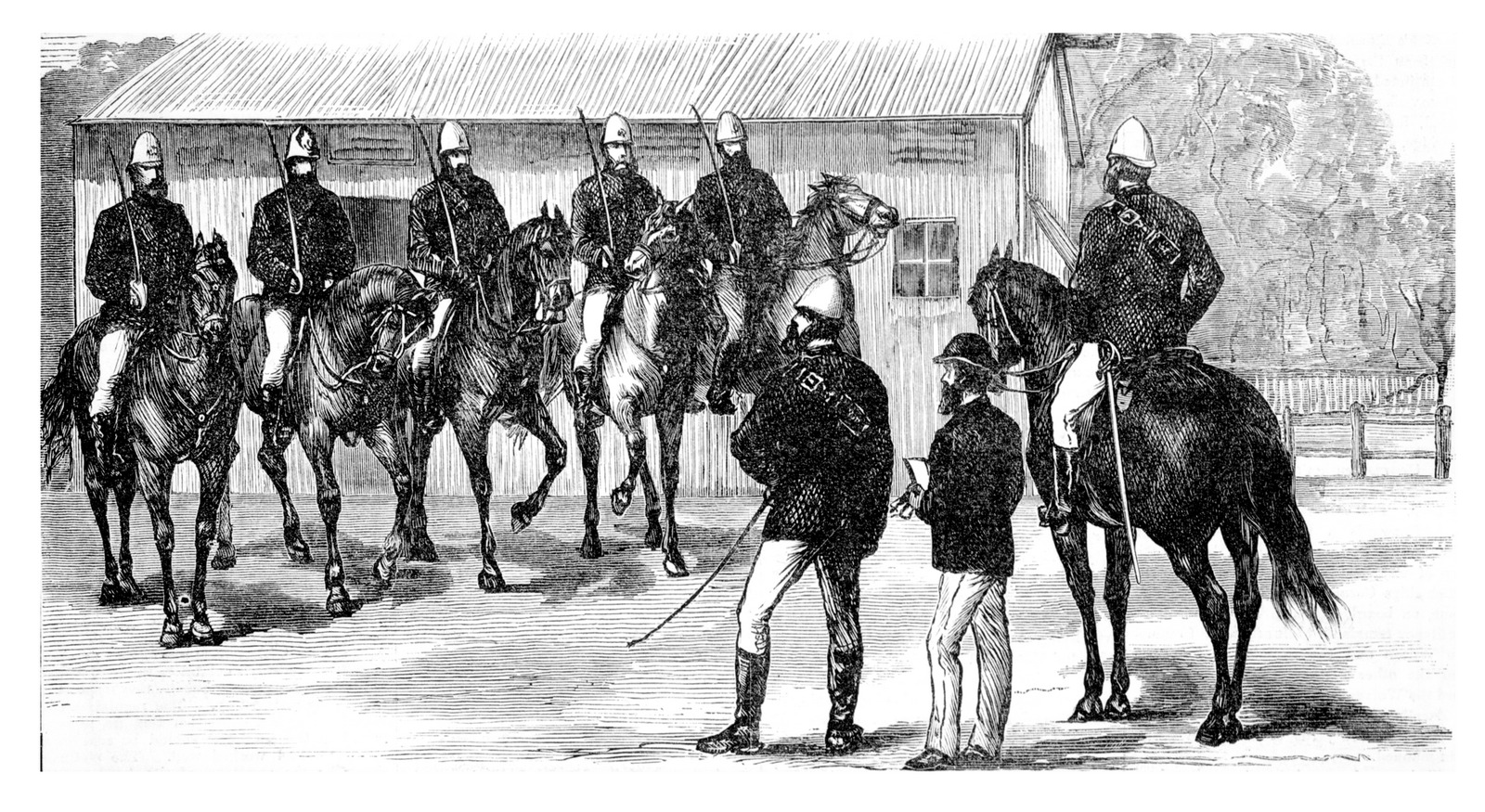
To start your research, I recommend searching the following resources in our collection:
- Index to members of Victoria Police, 1853-1953
- Index to candidates for the Victorian Police 1852- 1920
- List of Chief Constables, District Constables, Police Cadets, and Police Officers in Victoria: 1836-1907
The Victorian Police Museum holds records of conduct and service for Victorian Police officers from 1855-1989. The records include personal details as well as information on their employment with Victoria Police (where they were stationed, comments on character…etc). Get in touch with the Museum directly to ask for a search of their records. It’s helpful to know the police officer’s registered number, which can be found by searching the Index to members of Victoria Police, 1853-1953.
The Public Record Office Victoria holds further records of Victoria Police including police musters (a list of officers in attendance at police stations every month), salary cards and more. For more information, consult the Public Records Office Victoria’s page on Victoria Police employment.
In certain instances, they may have been assigned to work as a police magistrate, a clerk, or a bailiff. To ascertain this, I recommend consulting resources mentioned in the Researching your ancestors’ occupations research guide.
If the individual is no longer alive, their career milestones may have been mentioned in their death notice or obituary. Try conducting a search on the Ryerson Index (an index to contemporary death notices) to ascertain whether there was an obituary or death notice. The Ryerson Index does not cover all newspapers and time periods, but it is a good starting point for death notice and obituary research.

If you find a notice listed in the Ryerson Index, the next step is to look for the newspaper. We hold many historical Victorian newspapers on microfilm in our Newspapers & Family History Reading Room and many others in storage. Try our online catalogue or get in touch to inquire about our holdings.
If you believe your ancestor passed away unexpectedly while on duty, you may consider consulting the following resources:
- Honor roll
- Anzac commemoration
- Inquest records at PROV
- Inquest articles on Trove’s digitised newspapers
Now that you have more information, you can commence an in-depth investigation into their career. As for what sort of work or cases they worked on, unless it was published in the newspapers or gazette, they are not easily discovered. A search through historical newspapers may yield articles that mention your ancestor. Please be aware that these articles may not always include the first name, and in certain instances, they may only include the initials followed by the surname or the title and surname. For instance, Senior Constable McLaren, Sergeant McLaren, and so on.
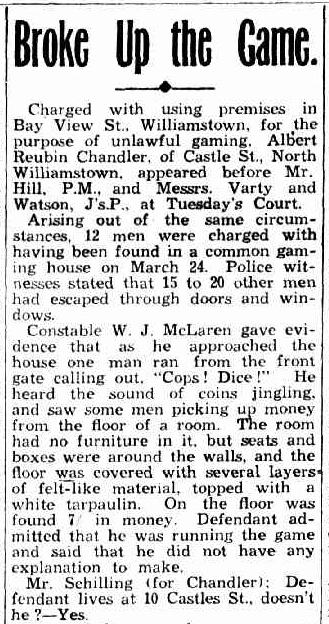
Trove’s digitised newspaper website is a great resource for newspaper research. You will find many Victorian newspapers digitised on this website, mostly before 1955. For more information on searching newspapers, please see our How to find items in newspapers research guide.
To delve deeper into a police officer’s career, I recommend exploring resources published by the Victorian Police. The two most notable resources are:
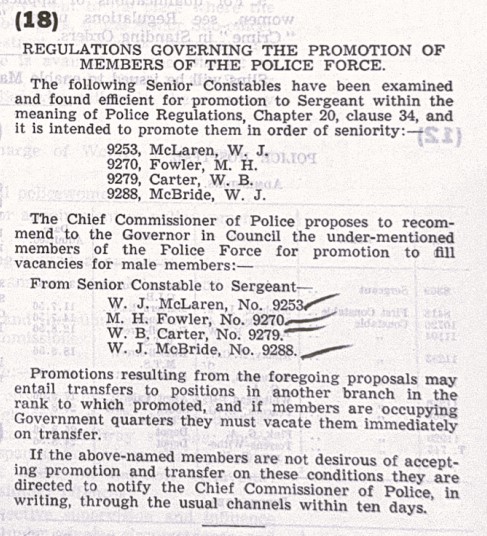
The Library holds copies of the Victoria Police Gazette from December 1853- May 1994. You can also search various years of the Victoria Police Gazette on the Ancestry and Findmypast websites, which can be accessed for free in the State Library building. In the Police Gazette you will find career-related listings, such as appointments, transfers and promotions as well as information on crimes.
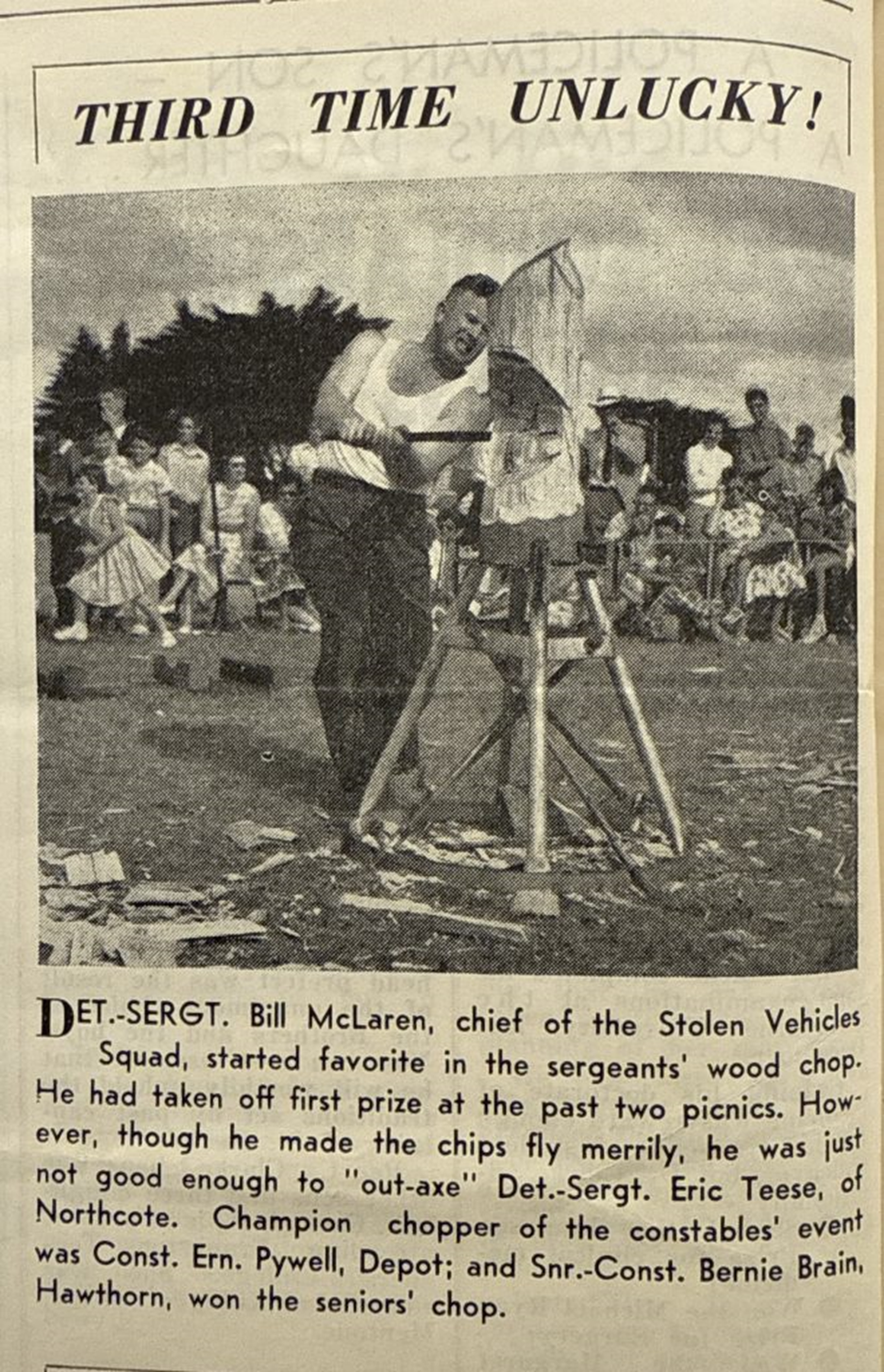
The Library holds issues of Police life from 1955 onwards. Police Life documented various career related and social events, including transfers, promotions, resignations, retirements, weddings, and certain social gatherings.
For further guidance on researching police officers, please refer to the Researching your ancestors’ occupations research guide, specifically the section dedicated to police-related information. Alternatively, submit an inquiry through our Ask-A-Librarian service.
- No. XXIV. An Act for the Regulation of the Police Force. [Assented to 8th January, 1853.] https://classic.austlii.edu.au/au/legis/vic/hist_act/aaftrotpf357/
- Harris, H. D., & Presland, G. (1990). Cops and robbers : a guide to researching 19th century police and criminal records in Victoria, Australia / by Helen Doxford Harris and Gary Presland. Nunawading [Vic: Harriland Press. https://find.slv.vic.gov.au/permalink/61SLV_INST/1sev8ar/alma995984373607636

