
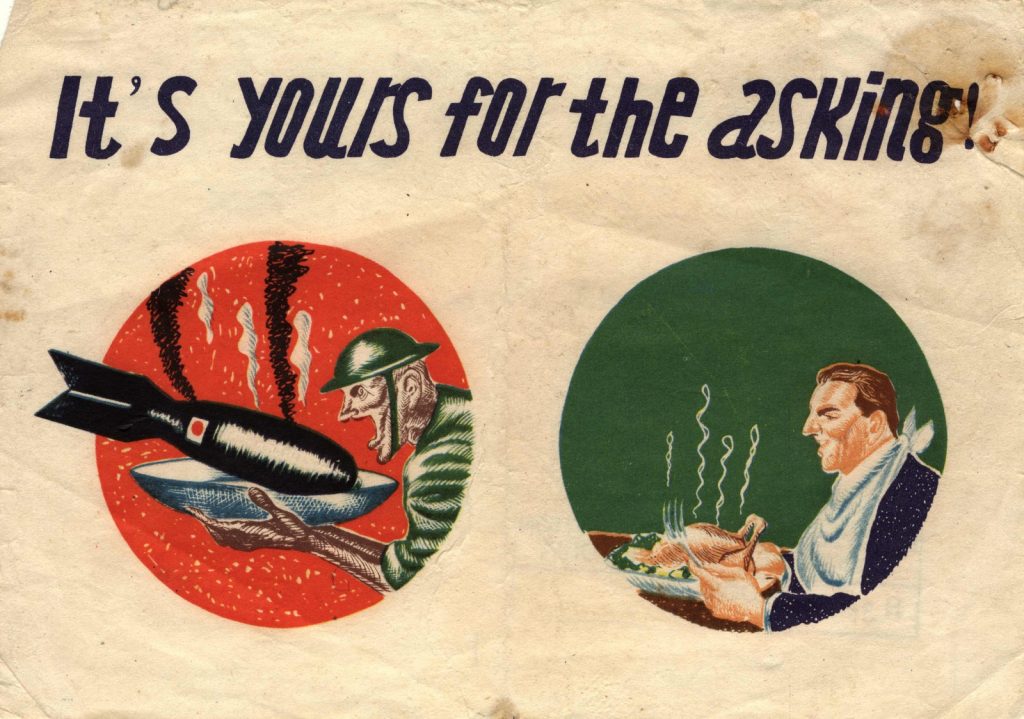
Charles Cousens and Iva Toguri endured an unusual fate during World War II: they were forced to broadcast propaganda for the Japanese from Radio Tokyo. With amazing energy and creativity, they produced their own program, ‘Zero Hour’, which aimed to undermine the propaganda messages and even entertain the allied troops. After the war, they were both accused of treason. The charges against Cousens were dropped, but Toguri spent years in gaol, despite the lack of evidence that she had broadcast negative propaganda.
One way the Japanese endeavoured to make their propaganda broadcasts appealing to Australians was to recruit native English speakers as announcers. Major Charles Cousens, who was taken prisoner at the fall of Singapore in 1942, was recruited, against his will, to broadcast Japanese propaganda from Radio Tokyo. Born in India, the son of a British Colonel, a graduate of the Royal Military College, Sandhurst, Cousens had left the British army and made his way to Australia, where he became a broadcaster at Radio 2GB during the 1930s. 1 His resonant voice and happy-go-lucky manner made him a popular announcer.
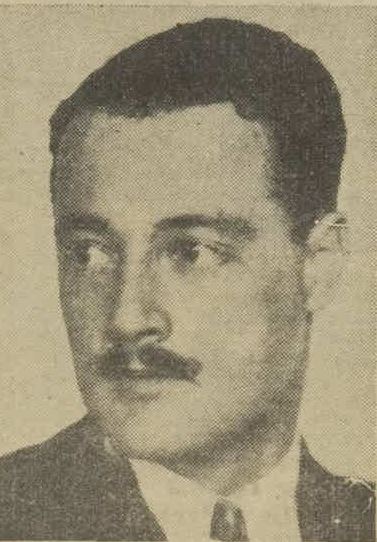
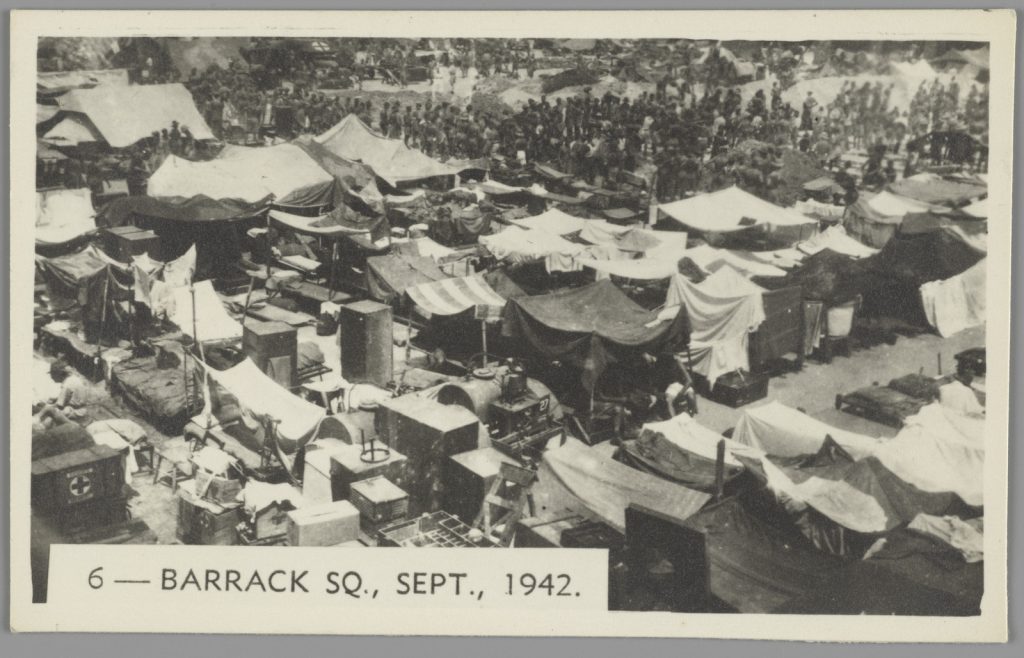
In July 1940, he joined the AIF with the rank of Captain, serving in Malaya and Singapore, before being promoted to the rank of Major in 1942. He was among the 130,000 allied troops, including 15,000 Australian soldiers, captured by the Japanese after the fall of Singapore. By a strange quirk of fate, Cousens’ fame as a broadcaster determined his wartime destiny. After the surrender, Cousens was selected by Australian army authorities to broadcast the news of the allies’ defeat and capture. The Japanese were so impressed by his speech that they separated him from the other prisoners and sent him to Tokyo to broadcast Japanese war propaganda. Weakened by dysentery, Cousens initially refused to broadcast, enduring beatings and the threat of torture by the Japanese military. Finally, he succumbed to pressure and agreed. To make it worse, he knew that people at home would recognise his voice. In the beginning, he was forced to write and broadcast Japanese radio news commentaries, but used all his skill and experience to ‘kill’ these commentaries. 2
A British wartime analyst, Peter de Mendelssohn, said ‘Cousens gives the impression that he is merely reading a script already written for him, probably by a Japanese, as his phrasing rather resembles the peculiar style affected by Japanese when speaking English.’3 Cousens said after the war ‘I took it much too fast, in a flat and meaningless monotone’4
Cousens was determined to control the content of his broadcasts as much as possible. He demanded and won the right to include his own scripts within the propaganda broadcasts, including commentaries on international affairs, which were scrutinised and edited by the Japanese. Initially, lists of the names of AIF prisoners of war were rejected by the Japanese, but eventually, he was allowed to include their names in his broadcasts. Cousens believed his broadcasts contained information which showed intelligence officers in Australia that he was trying to get messages across and to give the Australian people some information about the fate of 8th Division men taken prisoner on the capitulation of Singapore. 5
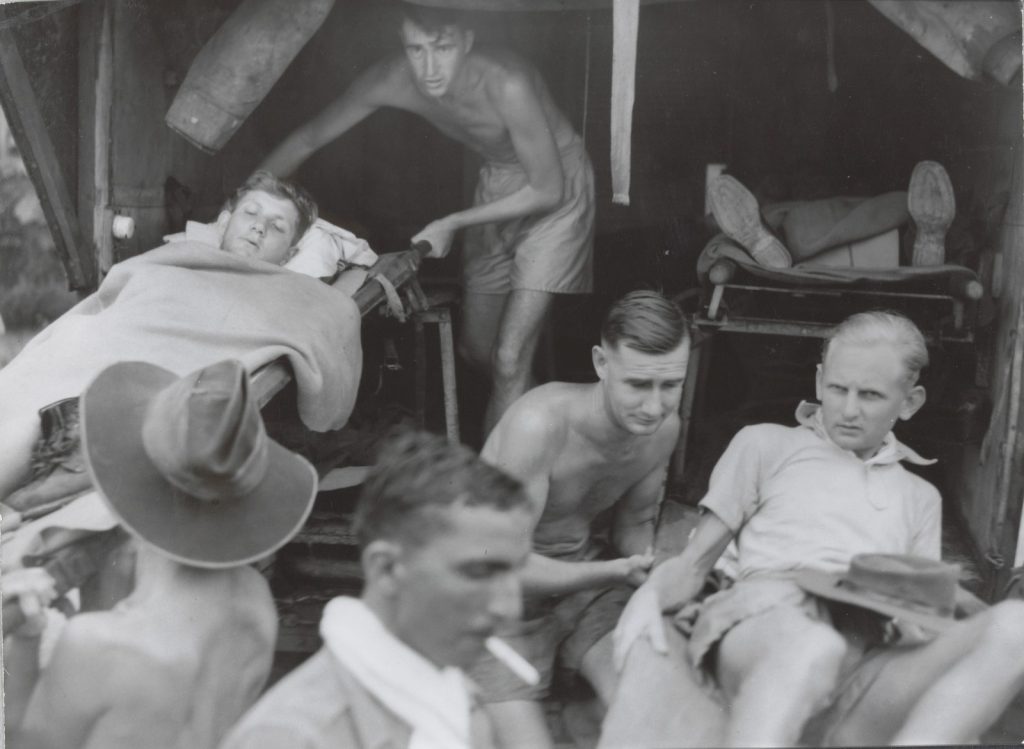
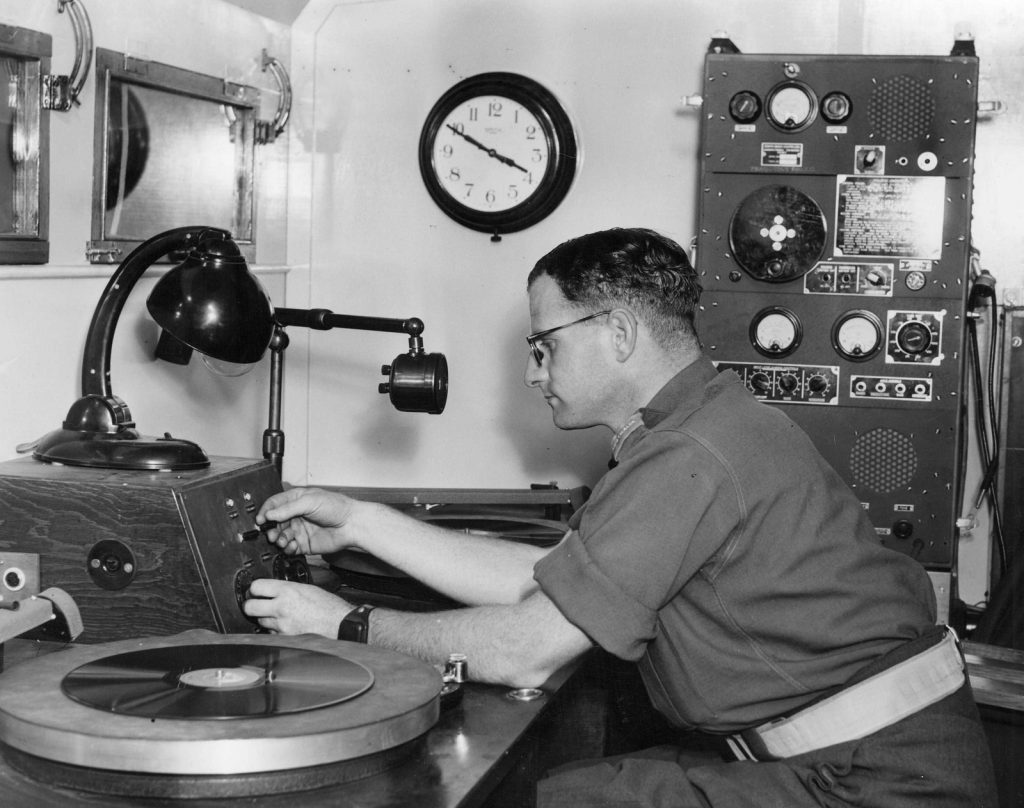
Cousens found ways of sabotaging and diluting the effect of the Japanese propaganda messages. Given the task of coaching a team of English-speaking Japanese announcers, he took advantage of their imperfect English skills to train them to read English broadcasts in a monotonous, uninteresting sing-song voice, emphasising the wrong words, so that their broadcasts would appear ludicrous. He claimed he had done his best to wreck Radio Tokyo’s propaganda efforts, hoping that his tuition would result in ‘a really good belly laugh’ [among Australian listeners].6
After the war, Cousens was charged with high treason for ‘traitorously’ ‘aiding and comforting’ the enemy. He was remanded in custody and was tried at the Central Police Court, Sydney, beginning on 20 August 1946. In September 1946 he appeared in the witness box for twelve days. He claimed his broadcasts included hidden meanings to assist intelligence and double entendres to sabotage the messages. He said that in his commentaries, he adopted a ‘high faluting’ style, which he knew would please the Japanese, but which would arouse antipathy or ridicule in his Australian and American listeners. He adopted a patronising tone, to exasperate listeners. He suggested that the Americans were ignorant and stupid regarding international affairs, to make listeners ‘hopping mad’ with the Japanese. Cousens said he considered his commentaries to have had no propaganda value to the Japanese.7
The Attorney-General of New South Wales dropped the treason charge and Cousens was never court-martialled.
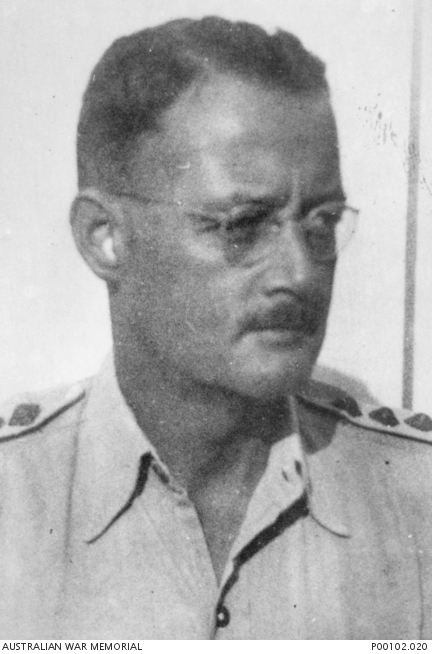
Iva Toguri
One of Cousens’ fellow broadcasters was Iva Toguri, a young woman born in the United States to Japanese parents. Iva graduated with a Bachelor of Science in Zoology from the University of California at Los Angeles. Former fellow students described Iva as ‘energetic and lively’, with a good sense of humour, ‘always kidding and making jokes’, and a ‘completely average American girl’.8 Those qualities would come in handy when Iva broadcast a comedy ‘propaganda’ program scripted by Charles Cousens.

Iva’s life took a fateful turn when she visited Japan in July 1941, to visit a sick aunt. As the situation was urgent, Iva was able to travel with a certificate of identification rather than waiting for a passport. Once in Japan, she applied for a passport. On November 14, 1941, President Roosevelt declared a state of national emergency, meaning all Americans would require a passport for foreign travel. On 8th December, 1941, the United States declared war on Japan and Iva’s passport application had still not been processed. She attempted to book a passage on a ship leaving Yokohama on December 2, but was told that she would need a clearance from the Japanese Finance Ministry. In the meantime, the ship left Japan. Six days later, Japan attacked Pearl Harbor and the war between the US and Japan began. In September 1942, the last repatriation ship left Japan, but Iva could not afford the $425 fare.9
Stranded in Japan, Iva found work as a typist-monitor, monitoring Allied shortwave news broadcasts from Hawaii, San Francisco, New York and London, before finding work as a typist at Radio Tokyo. At the studio, she noticed three underweight, shabbily-dressed prisoners of war. They were Major Charles Cousens, an Australian captured in Singapore, Captain Wallace E. (Ted) Ince, an American captured in Corregidor and Lieutenant Norman Reyes, a Filipino, captured in Bataan. Iva used her meagre funds to buy food, medicine and tobacco for the prisoners, at considerable risk of discovery by the Japanese authorities.10
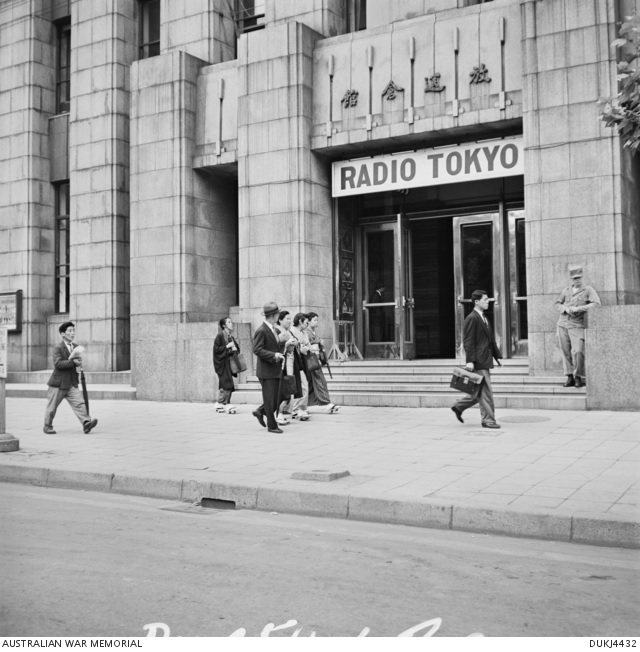
The ‘Zero Hour’ program at Radio Tokyo attracted regular audiences among Australian and American troops and sailors in the Pacific, who enjoyed the music and light commentary. The Japanese decided that Cousens needed female broadcasters on his team, letting him make the selection. Radio Tokyo had a number of talented female Japanese broadcasters with radio experience and appealing voices, who had been educated in English-speaking countries. It was therefore a surprise when Cousens selected Iva to broadcast on one of his regular programs; she had no radio experience and possessed a rough, ‘raspy’ voice. Her selection for the ‘Zero Hour’ radio program was part of Cousens’ plan to make a complete burlesque of the program. ‘It was the complete comedy voice that I needed for this particular job’, Cousens said after the war.11 Iva played the role of ‘Orphan Ann’ or ‘Annie’, an American cartoon character, calling herself ‘your favorite enemy, Ann’. An easy trick was to have Iva mispronounce words and call her listeners ‘honorable boneheads’, pronouncing the adjective ‘onable.’ The American soldiers listening to her ran no risk of being demoralised by propaganda. 12
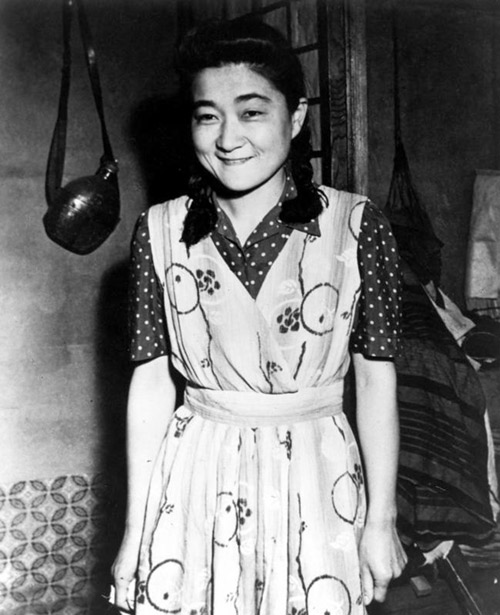
Questioned after the war, Toguri said:
At the beginning of the program, and throughout the program, I was introduced as Orphan Ann, Orphan Annie, Your Favorite Enemy Ann and Your Favorite Playmate and Enemy Ann. I had specific instructions from Cousens to laugh when I said the word ‘enemy’. I was told to be as cheerful and entertaining as possible… Cousens and Ince took me into their confidence and said they were trying to make the program as entertaining as possible rather than propaganda…They told me they were trying to soften the news broadcasts and increase the number of POW messages. They also told me they were putting a double meaning in some of their scripts…13
There was some mystery about a female announcer named ‘Tokyo Rose’ who broadcast Japanese propaganda in the Pacific region. She reportedly delivered negative war news in an alluring voice enjoyed by the American troops. Some soldiers said she had a British accent and sounded nothing like Iva Toguri. To add to the confusion, the troops called many female announcers ‘Tokyo Rose.’ According to one author, Yasuhide Kawashima, ‘No Japanese or Japanese American announcers at Radio Tokyo had ever used the name ‘Tokyo Rose’ when they broadcast from Tokyo or any other stations scattered throughout Southeast Asia and the western Pacific’.14 None of the American monitoring centres recording Japanese broadcasts reported hearing the name. However, the notion that Tokyo Rose was a single individual persisted and took on a new momentum as the war progressed. 15
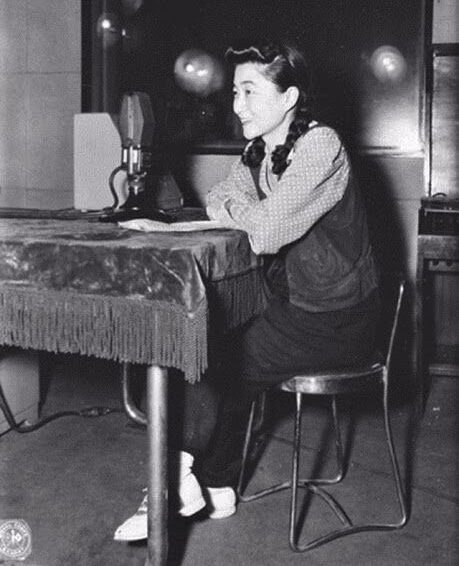
After the war, the American government investigated Iva Toguri’s activities on the radio program (Zero Hour) to determine whether she had broadcast anti-American propaganda. Iva was imprisoned in Yokohama prison and then transferred to Sugamo Prison in Tokyo, a total of twelve months’ imprisonment.
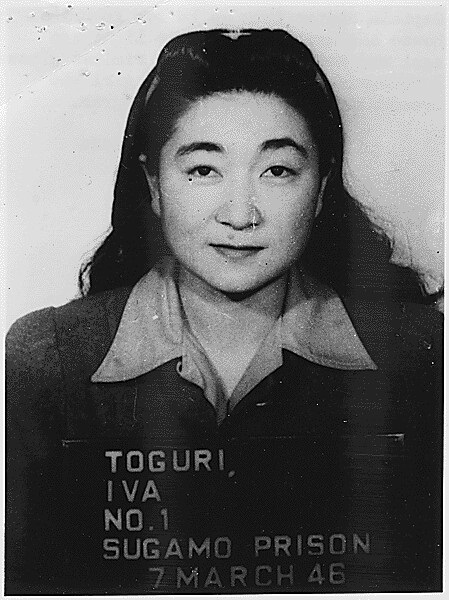
She was illegally detained, was never informed of the charges against her and was denied legal counsel and a speedy trial. During this period, she was subjected to lengthy, exhaustive investigations conducted by the U.S. army, the Federal Bureau of Investigation and the Justice Department. 16
Adding to the pressure, American media correspondents travelled to Japan to find out whether she was the infamous ‘Tokyo Rose’, the notorious woman who had broadcast negative propaganda during the war.17
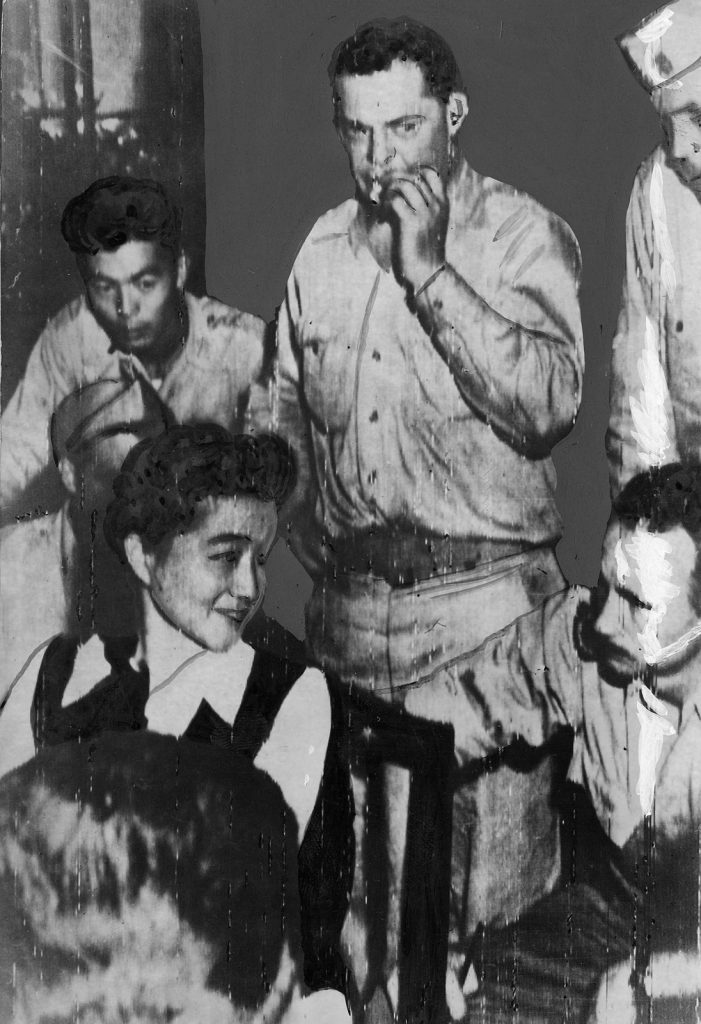
The United States Office of War Information conducted an investigation into the identity of ‘Tokyo Rose’ but failed to identify any wartime Japanese broadcaster who used that name. It is believed that the name was strictly an invention by American servicemen, a generic name for many different female broadcasters. To confuse the issue, Iva Toguri naively signed a contract with Cosmopolitan Magazine in Tokyo on September 1, 1945, stating that she was the one and original ‘Tokyo Rose’ who broadcast from Radio Tokyo. 18
In Japan, Toguri was eventually cleared of all charges of treason, due to inadequate evidence, and was released on October 25, 1946. She returned to her former residence in Tokyo to live with her husband, Filipe D’Aquino. But she was not to lead a peaceful life for long. On August 16, 1948, the head of the United States Justice Department, Attorney General Tom Clark, in a stand against treason and ‘traitors’, decided to arrest and indict Iva in spite of overwhelming recommendations against it. Iva was arrested with a federal warrant and sent to the United States on September 3, 1948. She was to be tried for treason before the federal district court in San Francisco.19
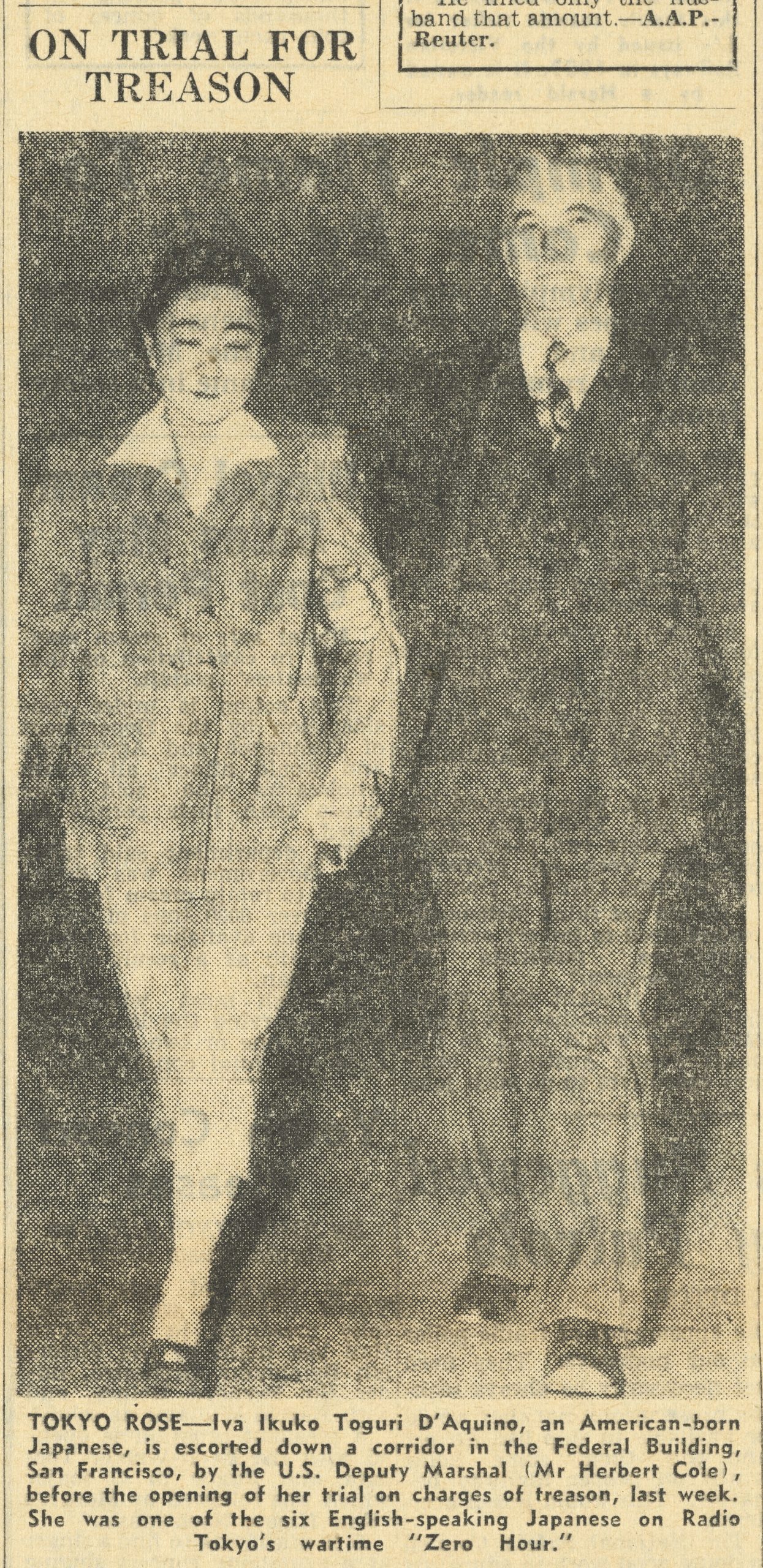
The charges were eight ‘overt’ acts ‘with treasonable intent’ related to ‘aiding and comforting’ the Imperial Japanese Government in her radio broadcasts.20 The charges were so general as to be vague, with no specific dates, names, broadcasts or scripts cited. Iva released a press statement saying that the CIC (Counter Intelligence Corps) and the FBI (Federal Bureau of Investigation) had conducted a full and complete investigation of her life in Japan and had cleared her of any wrongdoing. 21. The main defence witnesses were the three former POWS: Charles Cousens, Wallace Ince and Norman Reyes, who had all broadcast on the ‘Zero Hour’ program. 22 The U.S. government actually held some of the radio recordings she made, which gave no evidence of her broadcasting anti-allied propaganda. A jury found her innocent of seven of the eight charges, and guilty on one charge, of making a broadcast about the loss of allied ships. She was convicted for reading the words, after the Battle of Leyte Gulf: ‘Orphans of the Pacific. You really are orphans now. How will you get home, now that all your ships are sunk?’ 23There was no script or recorded evidence that she ever spoke these words. She vehemently denied ever uttering the words, which may not have been broadcast from Radio Tokyo at all. 24
Toguri spent six years in the Federal Reformatory for Women at Alderson, West Virginia before being released. She showed extreme resilience and fortitude for a woman who was denied justice for so long. In 1977, she was pardoned by President Gerald Ford.
Further reading
Chapman I (1990) Tokyo calling: the Charles Cousens case, Hale & Iremonger, Sydney.
Close FP (2010) Tokyo Rose: an American patriot: a dual biography, Scarecrow Press, Lanham, Md, pp 159-165.
Duus M (1979) Tokyo Rose: orphan of the Pacific Kodansha International, Tokyo.
Howe R W (1990) The hunt for “Tokyo Rose”, Madison Books, Lanham.
Kawashima Y (2013) The Tokyo Rose case: treason on trial, University Press, Kansas.
Meo L D (1968) Japan’s radio war on Australia 1941-1945, Melbourne University Press, Carlton.
Digital records
Synopsis of the criminal trial of Iva Ikuko Toguri D’Aquino (aka “Tokyo Rose”) by J. Eldon Dunn, Federal Bureau of Investigation, Records of U.S. Attorneys, Tokyo Rose Case Files, Records Related to Criminal Case 31712, U.S. v. Iva Ikuko Toguri D’Aquino, Treason (“Tokyo Rose Case”), National Archives (USA).
Audio
The National Film and Sound Archive of Australia has some recordings of Charles Cousens’ voice on radio.
Radio Broadcasts Relating to Tokyo Rose, 1944–1945, NAID: 1991161, National Archives (USA), including Sound Recording of “Zero Hour” and Iva Toguri D’Aquino, July 13, 1944, NAID: 221948597.
Video
Short video of a reenactment of the “Zero Hour” radio program by Iva Toguri D’Aquino, [ca.1945]; NAID: 221948597, National Archives (USA).
- Chapman I (1990) Tokyo calling: the Charles Cousens case, Hale & Iremonger, Sydney, pp 18-28.
- As above, pp 103-107.
- As above, p 110.
- ‘Feared torture’ says Cousens‘, The Age (11 September 1946), accessed 11 August 2025.
- Chapman I (1990) Tokyo calling: the Charles Cousens case, Hale & Iremonger, Sydney, p 111.
- As above, pp 274-275.
- ‘Tokyo commentaries were ‘most dreadful nonsense’ defence in treason charge’, (13 September 1946), The Argus, accessed 6 August 2025.
- Kawashima Y (2013) The Tokyo Rose case: treason on trial, University Press, Kansas, p 11.
- As above, pp 12-18
- As above, pp 26-27.
- Howe R W (1990) The hunt for “Tokyo Rose”, Madison Books, Lanham, p 48.
- As above, pp 45-49.
- As above, p 109.
- Kawashima Y (2013) The Tokyo Rose case: treason on trial, University Press, Kansas, p 28.
- As above. It is possible that another woman at Radio Tokyo possessed the voice of the elusive ‘Tokyo Rose’. Perhaps it was the voice of Ruth Hayakawa, who was born in Japan but raised in the United States. She replaced Iva on Sundays. Or was it June Suyama, who possessed a ‘soft, sultry’ voice and mainly read the news? Kathy Moruka, raised in California by Japanese parents, supported the Japanese and substituted regularly for Iva. Was it Mary Ishii, half Japanese, half English, who spoke with a British accent and replaced Iva at various times? And there was Mieko Furuya, who sometimes substituted for Iva. Perhaps the servicemen were confusing a Radio Tokyo announcer with Myrtle Lipton, a Radio Manila announcer, who delivered ‘innuendo-laden patter’ and false news from home in a low, husky voice. A multi-page report by the FBI on Myrtle Lipton has since disappeared and no particular woman has been identified as the source of the negative propaganda. See Close FP (2010) Tokyo Rose: an American patriot: a dual biography, Scarecrow Press, Lanham, Md, pp 159-165.
- Kawashima Y (2013) The Tokyo Rose case: treason on trial, University Press, Kansas, pp 47-48.
- See Note 15 above.
- Howe R W (1990) The hunt for “Tokyo Rose”, Madison Books, Lanham, Maryland, pp 65-73.
- Kawashima Y (2013) The Tokyo Rose case: treason on trial, University Press, Kansas, pp 61-71.
- As above.
- As above.
- As above, pp 105-111.
- As above, p 134.
- As above, pp 134-135.


Thank you for the interesting blog.
I don’t think Charles Cousens was in a position to demand anything including the right to write his own scripts.
At first the Japanese had a complicated system for writing their propaganda. There was an editorial section that prepared scripts and commentary based on information supplied by Domei*, the army, the navy and the board of information. The scripts were then edited and translated by the relevant sections such as the American, European and Asian (which included Oceania). This led to endless jealousy and confusion between the sections which was very inefficient. Due of the great number of people who had to sign off on each of the scripts there were many delays. [Meo]
With their arrival in Japan from the Philippines, Ince and Reyes’s first job was to read, correct, and rewrite the news scripts prepared by the Japanese however, due to the time it took to correct the large number of errors the staff writers had made, they were given permission to write their own scripts. They were at first unwilling to cooperate with the Japanese. Cousens took this opportunity to gain their confidence suggesting that rather than defying the Japanese, which would put them in a very difficult position probably leading to bad treatment, it would be better to rewrite the scripts trying to subtly sabotage their broadcasts by using strange expressions or words with double meanings. They continued these activities until March 1943 by which time the Japanese army had further developed facilities for monitoring broadcasts from the United States.
From the information received by the monitoring stations the Japanese prepared a daily report, which was dispersed amongst the various departments. It was at this time Radio Tokyo started broadcasting a new program, instigated by the Board of Information, named Zero Hour.
The broadcasting of prisoner’s names started early in the war. Messages from POW’s were interspersed within the various programs to encourage the listening audience’s patronage.
The Japanese also broadcast messages from Australian POWs from Radio Tokyo and Radio Batavia which were received by avid shortwave listeners across Australia and the U.S.
One of the first broadcasts of this type occurred in March 1942 when messages from the Catalina crew, that had been shot down after sighting the invasion fleet heading for Rabaul, were broadcast after their arrival in Zentsuji camp. Between the 23rd of September and the 5th of October 1942, the names of the thirty-nine Lark Force officers from Rabaul, who had been transferred to Zentsuji camp were also broadcast from Radio Tokyo.
With the declassification of files, that should have been opened long ago, evidence suggests that there is a lot more to the story behind the politics of having Cousens charged with treason.
Ivan Chapman’s book is excellent. He got very close to sorting it out but ran out of time.
Iva Toguri herself stated that she thought that Masayo Duus’s Tokyo Rose Orphan of the Pacific was the best book written about her. Meo’s book, although a little dated, is also worth reading.
*Japanese National News Agency