
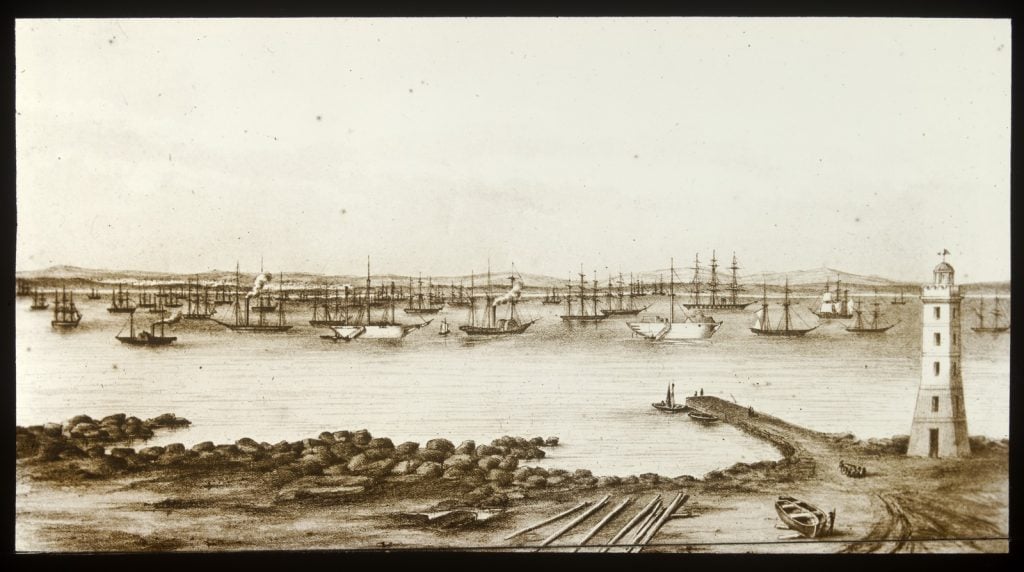
Standing tall on rugged coastline, Victoria’s historic lighthouses were lifesavers for sailing ships navigating the rough seas. They enabled the Shipmaster to pinpoint his exact location, guiding him through dangerous reefs and shallows to a safe harbour. Often painted a distinctive white with a red roof and balcony, flashing their lights at regular intervals, the lighthouses stand out as a symbol of hope in treacherous seas. It was essential that the light shone all night, without interruption; this was the responsibility of the lighthouse keeper and his assistant.

Lighthouses dot the Victorian coastline, at Cape Nelson, Portland, Port Fairy, Warrnambool, Cape Otway, Airey’s Inlet, Point Lonsdale, Queenscliff, Port Melbourne, Williamstown, Swan Spit, West Channel lightship, McCrae Eastern Lighthouse, South Channel (near Rye), Cape Schanck, Cape Liptrap, Wilson’s Promontory, Cliffy Island, South East Point (near Welshpool), Cliffy Island, Deal Island, Point Hicks (Cape Everard), and Gabo Island.
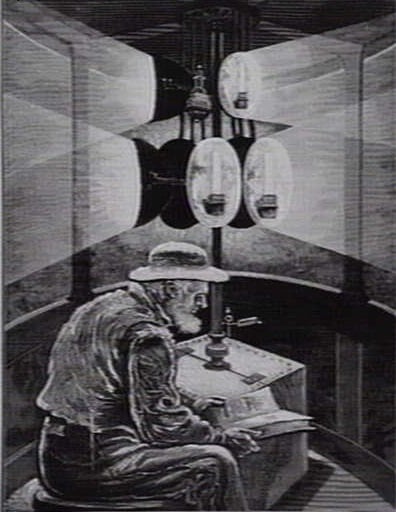
Nineteenth century lighthouses used oil lamps as their light source. Later in the century, they were replaced by kerosene lamps. The lenses were rotated by a weight-driven clockwork assembly wound by lighthouse keepers. The lens assembly sometimes floated in liquid mercury to reduce friction. Most heritage-listed lighthouses in Australia house dioptric lenses, which use concentric annular rings with a convex lens. When a light source is placed in the focal point of a parabolic reflector, the light rays are reflected parallel to one another, producing a concentrated beam. Early lamps required multiple wicks to create a large flame which could be observed at sea.
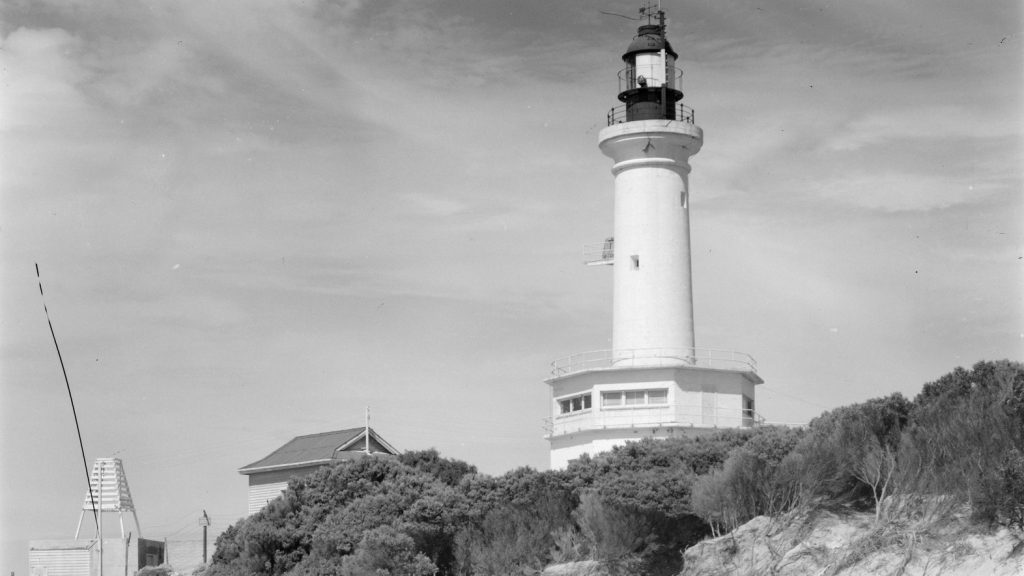
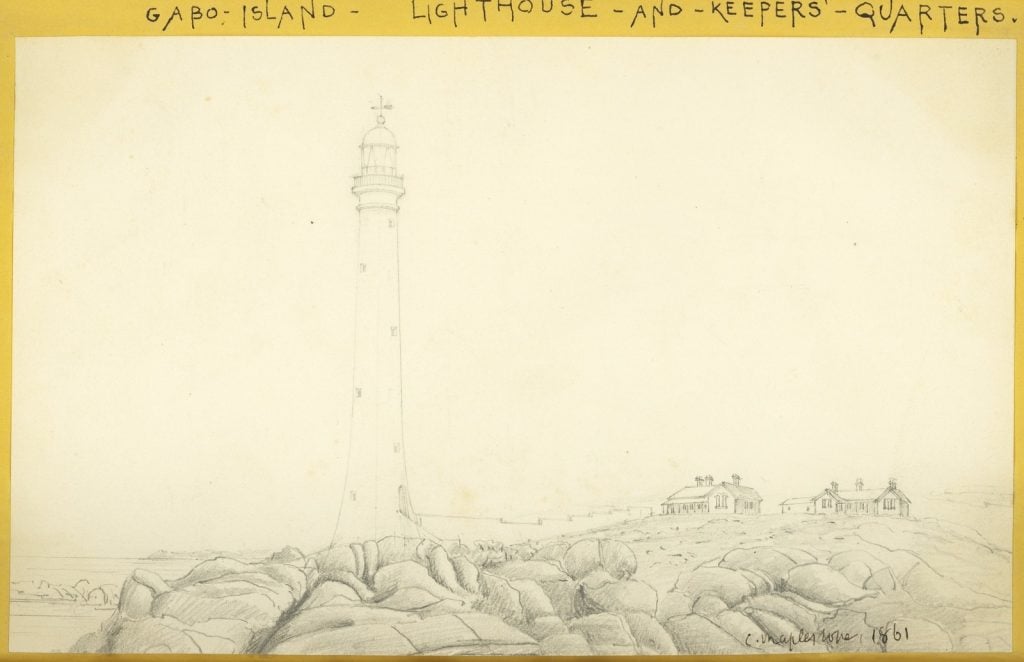
Charles Maplestone (1809-1878) arrived in Victoria in 1853 and was employed as an architect in the Public Works Department. He designed and supervised the construction of lighthouses across Victoria, from the far western district to Gabo Island. Maplestone’s work took him on uncomfortable trips by sea and overland to lighthouses on rugged, inhospitable coastline. In September 1854, he was asked to go immediately to the Cape Otway lighthouse, with a mechanic, to repair the light.
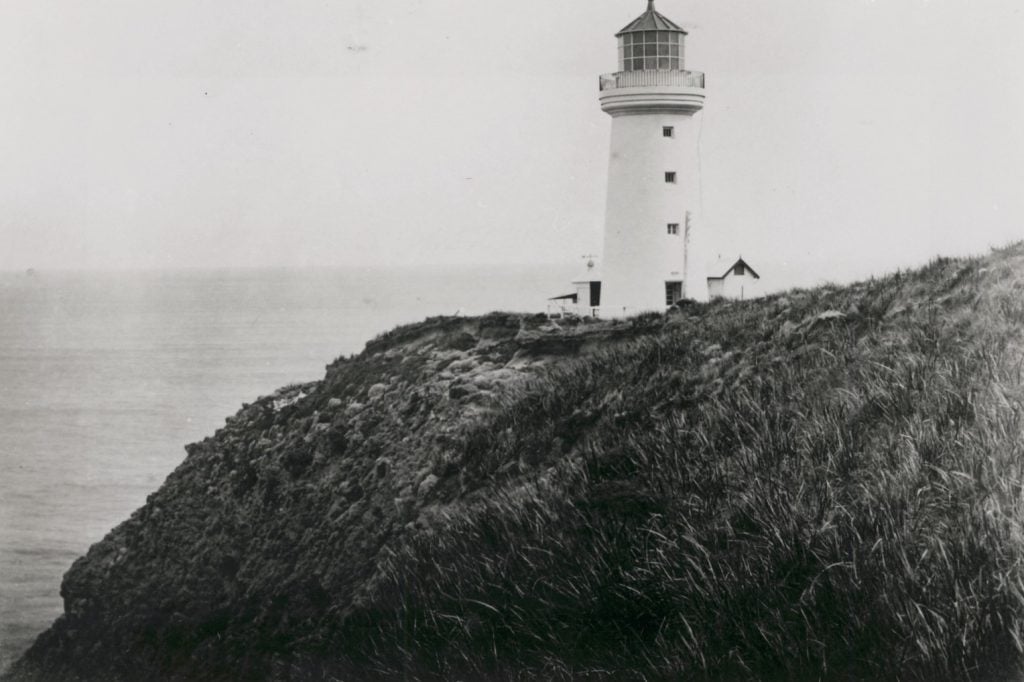
It was an urgent matter; if the light did not work, it could mean the wreck of an important ship, with loss of lives and cargo. Within five minutes he was off. He travelled in the government schooner Wyvern, experiencing ‘foul weather’ and putting ashore at ‘some little risk.1 Arriving on land, he walked five miles (8 km) over rugged hills and ‘verdant valleys’ to reach the lighthouse. Exhausted on arrival at the lighthouse, he soon recovered and repaired the light. His return home was delayed due to the rough seas; it took three days before a boat was able to reach the shore to take him to his vessel. Coming through the surf, the boat capsized and threw the crew overboard. Maplestone vowed never to travel to Cape Otway by sea again. On his return journey, however, he took time to travel overland, hunting bullocks, viewing wildlife and flora, and sketching the scenery.
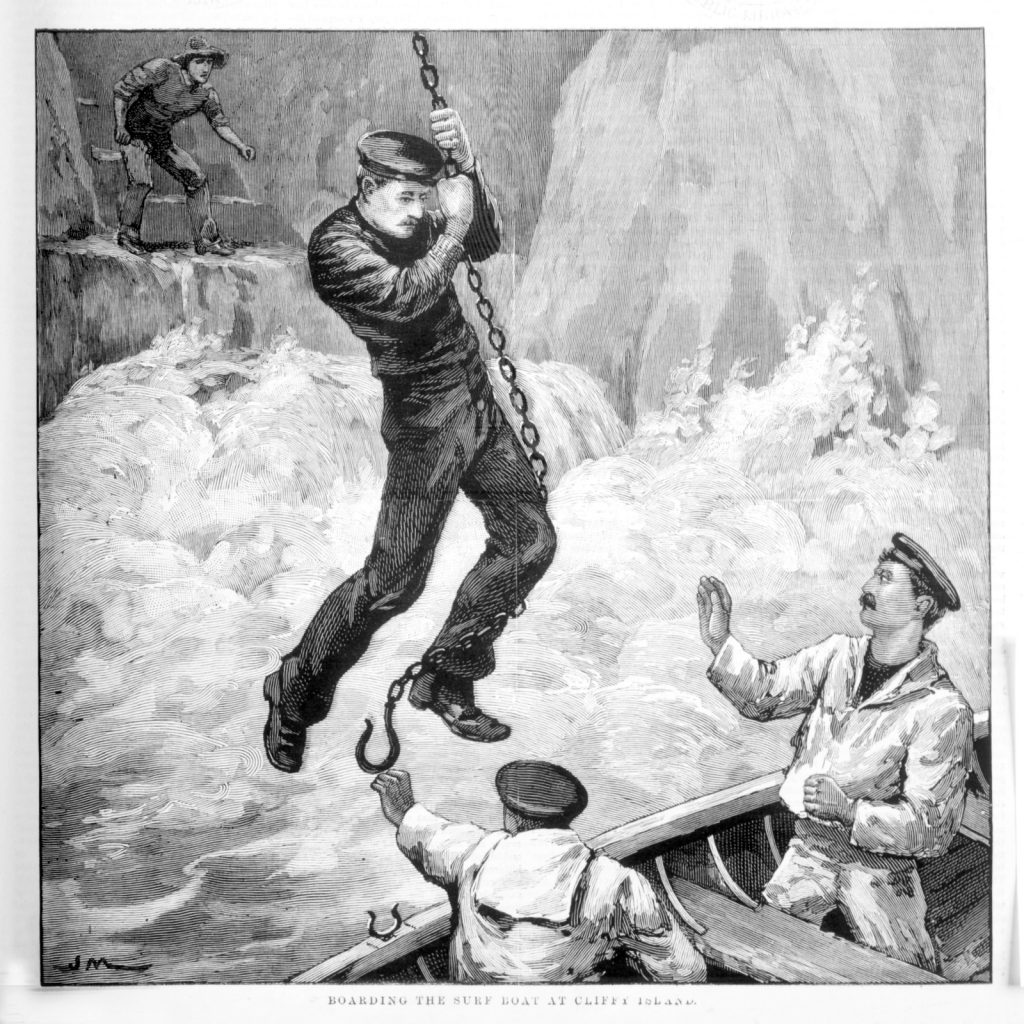
The Cliffy Island lighthouse is located on a rocky island in Bass Strait (32 km south of Port Albert), making access very difficult in turbulent seas. In July 1934, a doctor attempted to reach the island by boat, to attend to the wife of the head lighthouse keeper, Mr E. B. Gledhill. Rough seas had forced him back the previous day. He succeeded in landing on the island in a basket the next day (Weekly Times, 21 July 1934). As you can see from the image below, reaching Cliffy Island by boat was a challenge. Today, it is accessible by helicopter.
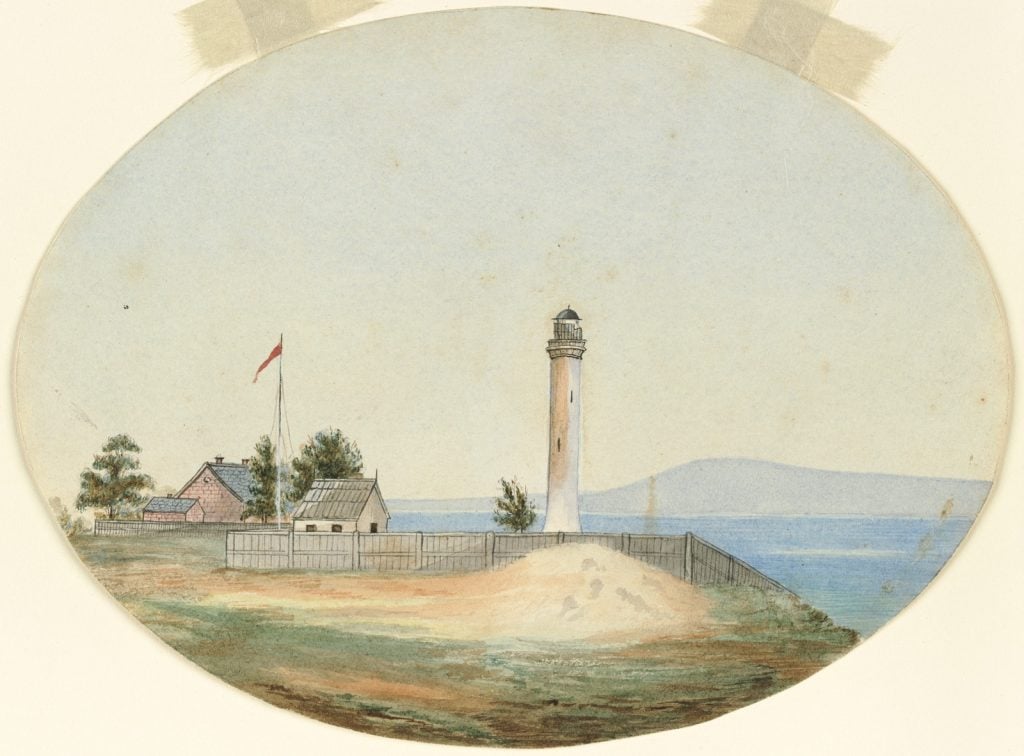
The lighthouse at Rabbit Island, Port Fairy, was completed in 1859, along with a residence for the keeper and his assistant, a storehouse, workshop, breakwater and jetty. The lighthouse tower was built from local bluestone and erected 12.5 metres above the high water level. It was visible at a distance of 19 kilometres.
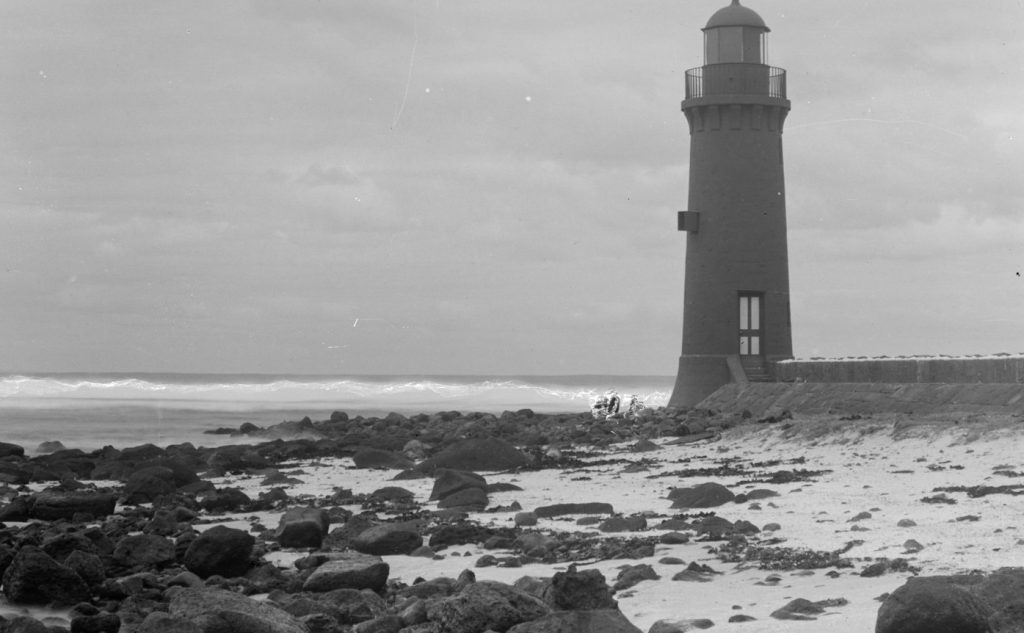
Thomas Pearson was an early lighthouse keeper on Rabbit Island. He was appointed to the position of Under Keeper of the Port Fairy Lighthouse on 9 July 1859 and was promoted to Keeper of the Lighthouse in 1861, a position he held until late 1866. 2
The lighthouse lamps required constant vigilance to ensure that the light did not go out. The Harbour Master would visit the lighthouse by boat if he noticed that there was an interruption to the light or if it did not flash at the correct intervals. Pearson and his assistant had plenty of work; they were responsible for trimming the wicks, dismantling, cleaning and maintaining the lighthouse lamps, cleaning the flue and other equipment, purchasing lamp wicks and making any repairs to ensure that the light never failed. Pearson also cleaned and painted the lighthouse walls, the steps and balcony and repaired the road leading to the lighthouse.
With experience as a crew member of the Harbour Master’s boat, Pearson did not shirk perilous situations on the water. In April 1861, a boat with four men aboard capsized during a heavy gale. Pearson took his dinghy out and saved one man, while the S.S. Ladybird saved another. Unfortunately, two other men drowned.
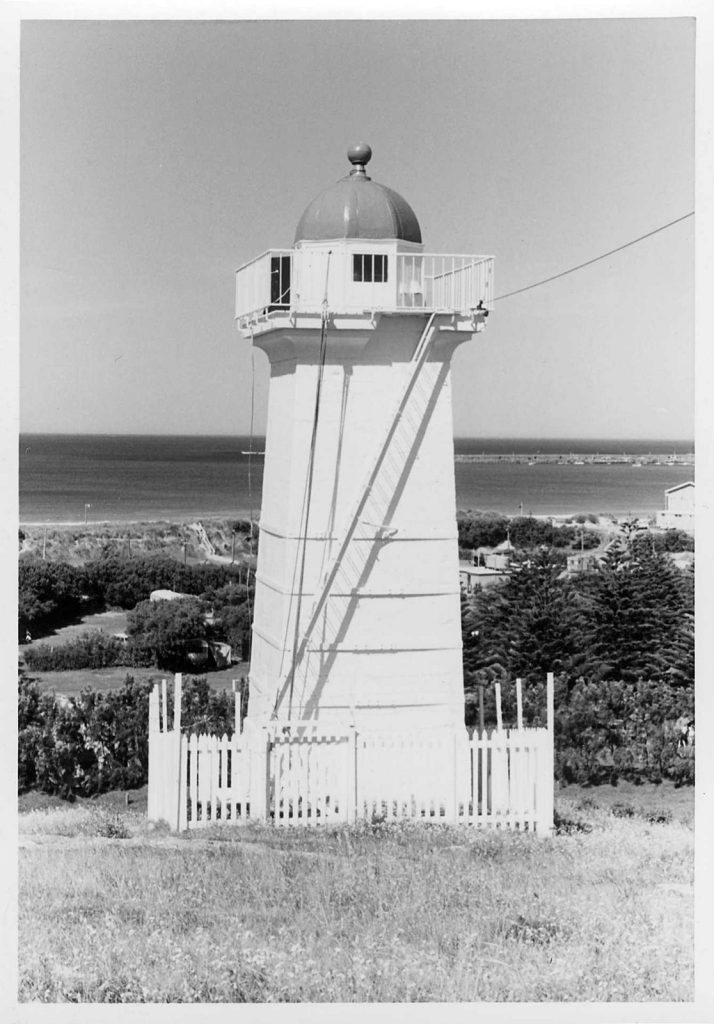
The book Leading lights: the story of the Warrnambool lighthouses and lighthouse keepers3 has biographical information and photographs of Warrnambool’s historic lighthouse keepers and much more: lighthouse keepers’ wages, meteorological observations and government regulations regarding lighthouses. It is illustrated with historic sketches and photographs of the Warrnambool lighthouses, atmospheric drawings of the Cape Schanck, Cape Otway, Wilson’s Promontory and Gabo Island lighthouses and even an architectural drawing of the Port Fairy lighthouse.
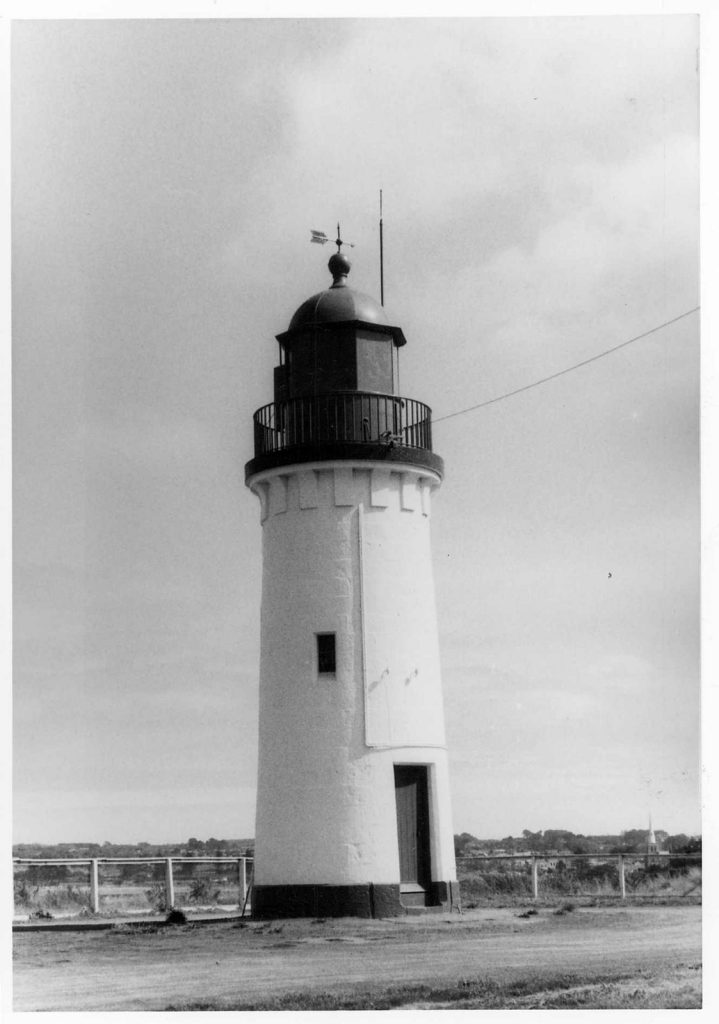
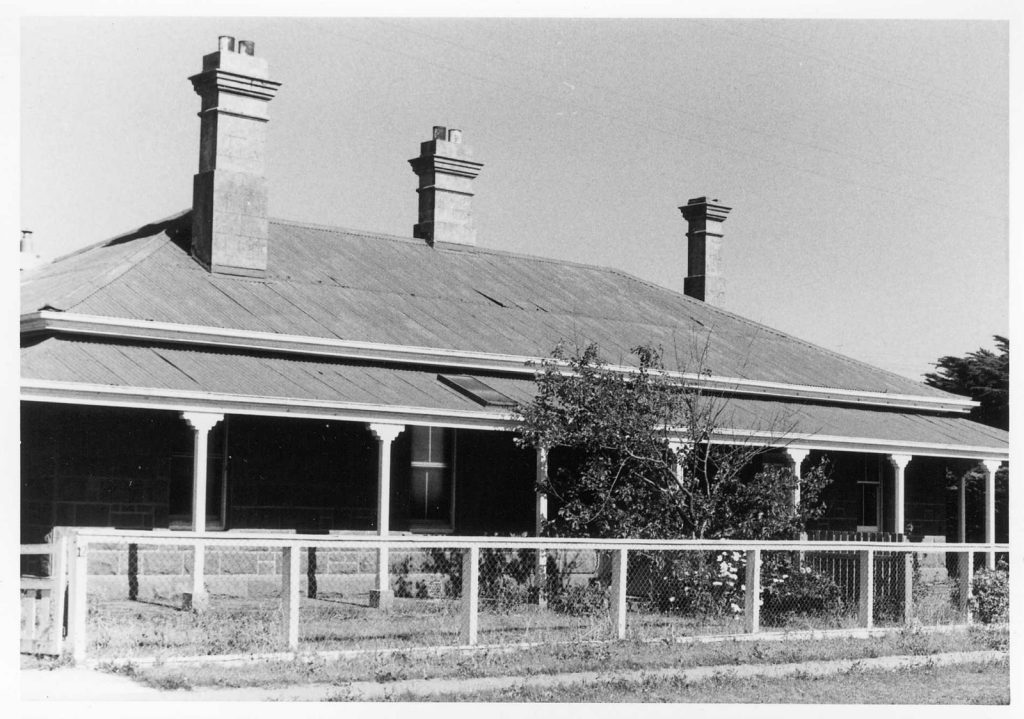
Electricity was used to operate lighthouses in the twentieth century, although most were still manned by lighthouse keepers. It was not until the late twentieth century that lighthouses became fully automated. Today, lighthouses are used by smaller craft along with navigation tools such as GPS and electronic charts.
You can find more digitised photographs and drawings of lighthouses on the State Library Victoria online catalogue. Type in the word ‘lighthouses’ and click Search. You can filter the results by subject, resource type (for example, books or pictures), date of publication and our collection. Our online Gale database The making of the modern world has digitised historic publications about international lighthouses.
Further reading
Australian Maritime Safety Authority, General history of lighthouses in Australia, viewed 24 June, 2022, <https://www.amsa.gov.au/history-3>
Currie, C, ‘Diaries of Catherine Currie and Papers of the Currie Family, 1873-1930’, MS 10886, State Library Victoria
Douglas, E, 1998, Leading lights: the story of the Warrnambool lighthouses and lighthouse keepers, Covell, Warrnambool
Ibbotson, J, 2003, Lighthouses of Australia: a visitors guide, Australian Lighthouse Traders, Surrey Hills
Mapelstone, C, ‘Charles Mapelstone’s journal and letter book : manuscript, printed, 24 December 1852 – 24 January 1861’ MS 14754, BOX 4227/1, State Library Victoria
Patterson, R, 2018, The lighthouse keeper and the one-armed cricketer: the diary of Thomas Pearson, Port Fairy Historical Society, Port Fairy
References
- Mapelstone, C, ‘Charles Mapelstone’s journal and letter book : manuscript, printed, 24 December 1852 – 24 January 1861’ MS 14754, BOX 4227/1, State Library Victoria
- Patterson, R, 2018, The lighthouse keeper and the one-armed cricketer: the diary of Thomas Pearson, Port Fairy Historical Society, Port Fairy
- Douglas, E, 1998, Leading lights: the story of the Warrnambool lighthouses and lighthouse keepers, Covell, Warrnambool

