
Ailsa O’Connor (1921-1980) was a political activist, painter, sculptor, author and teacher. Throughout her art career she was a member of the Communist Party and associated with the Socialist Realist Group. As committed socialists and anti-fascists, social realist artists created art to communicate their view of the world according to their ideology. As such, their art was created to have social relevance and political power; they did not believe that art was separate from living. O’Connor is quoted as asking: ‘Has not the artist some obligation to relate to the majority rather than take refuge in very private esoteric projects?’ 1
Throughout her art career we see her choice of subject matter inspired by the working class, and particularly focused on women.
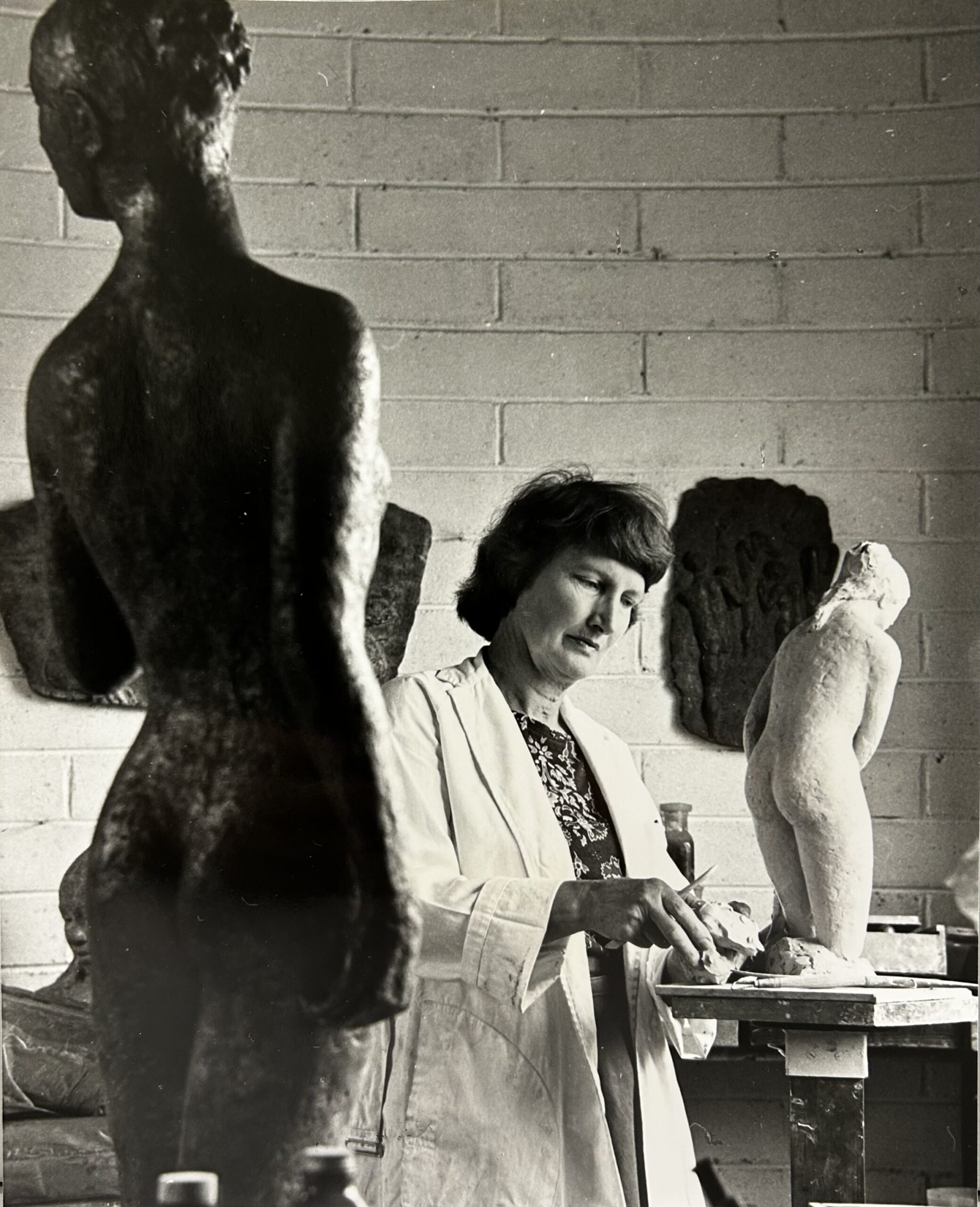
The Papers of Ailsa O’Connor are held in the Manuscripts Collection, MS 17017, and have recently been listed and catalogued. The collection contains diaries, notebooks, correspondence, notes from her studies and teaching career, drafts of essays, some posters, drawings and political ephemera. It reveals her indefatigable efforts in the peace movement, women’s right activism, anti-fascism, anti-racism and workers’ rights campaigns.
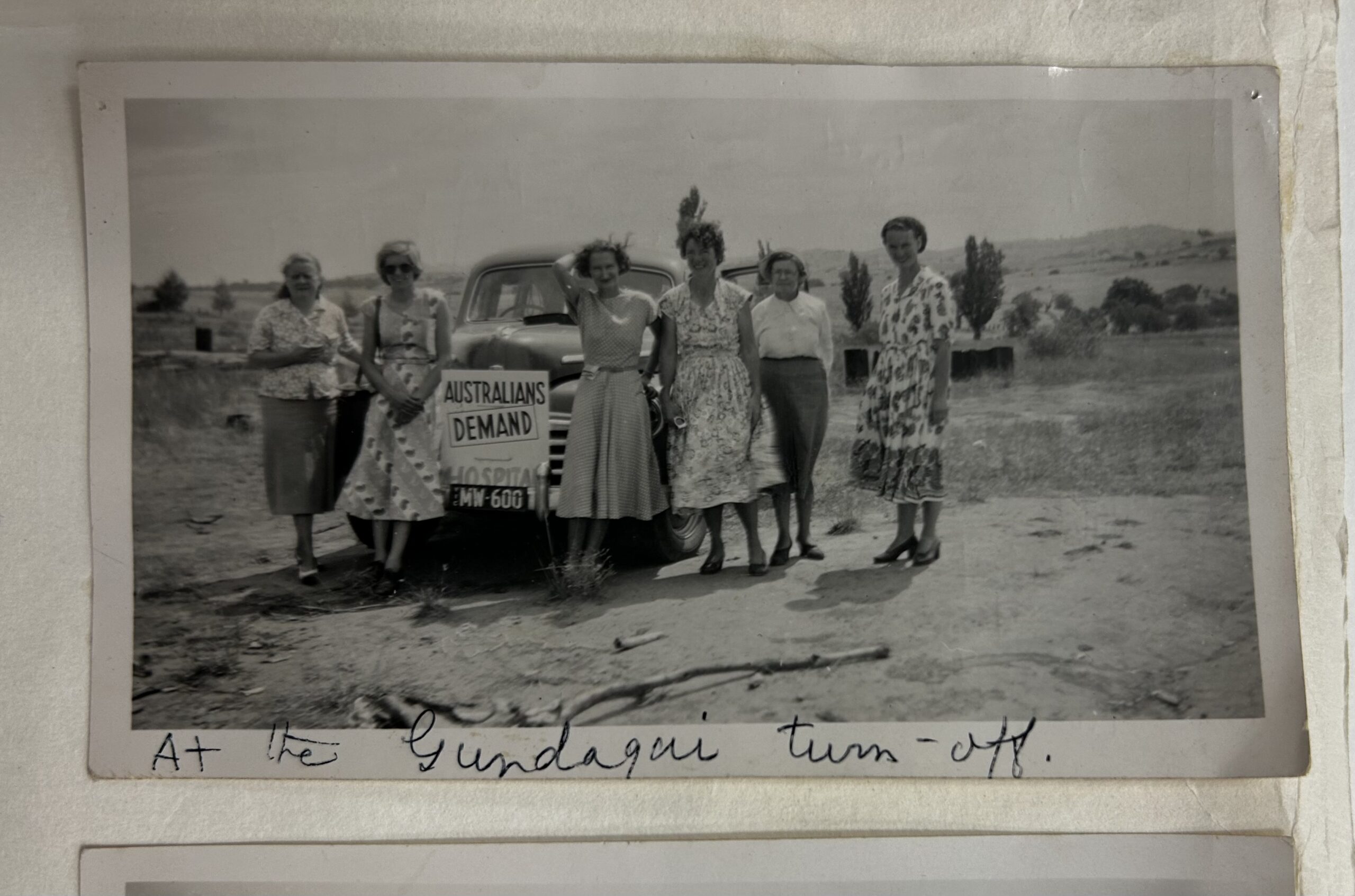
Early art career and politicisation
Ailsa O’Connor’s politics were intertwined with her art. She studied art at the Royal Melbourne Institute of Technology (RMIT) on a scholarship, trained as a teacher, and studied fine art at night. She joined the Contemporary Art Society at its first meeting in 1938, supporting modern art in the face of the Menzies government’s conservatism. In 1942 she exhibited drawings in the Melbourne ‘Anti-Fascist” exhibition, as the only woman artist. By 1944 she had joined the Communist Party of Australia, married artist Vic O’Connor, had her first child, and a second born two years later. She exhibited with the Realist Group, and was one of 10 artists of the ‘Melbourne Popular Art Group’ who produced a folio of 14 lino cuts Eureka 1854-1954, that paid tribute to ‘the stand of the Ballarat miners in the Eureka Stockade. Ailsa’s was Plate Seven: Building the stockade. 2
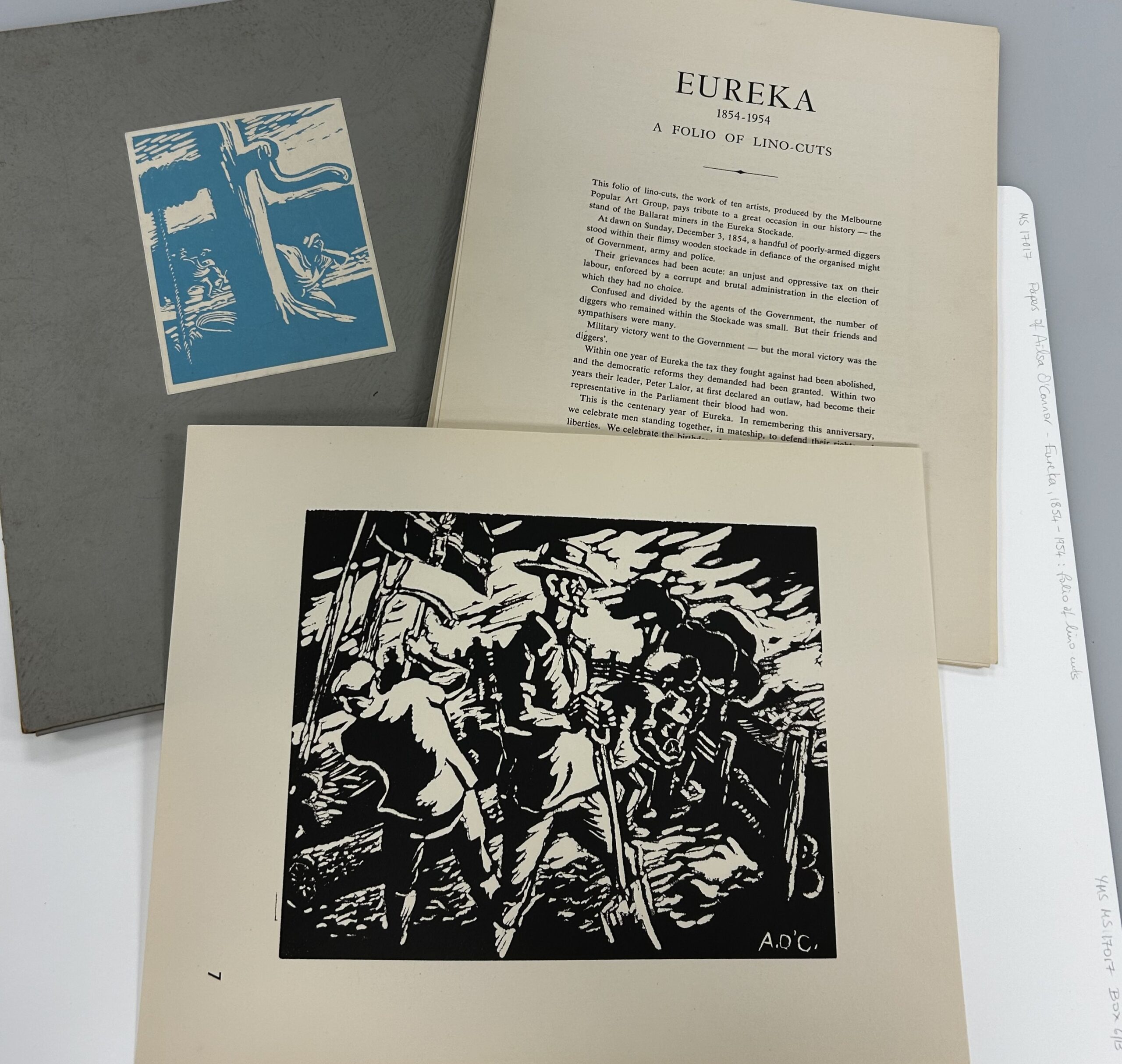
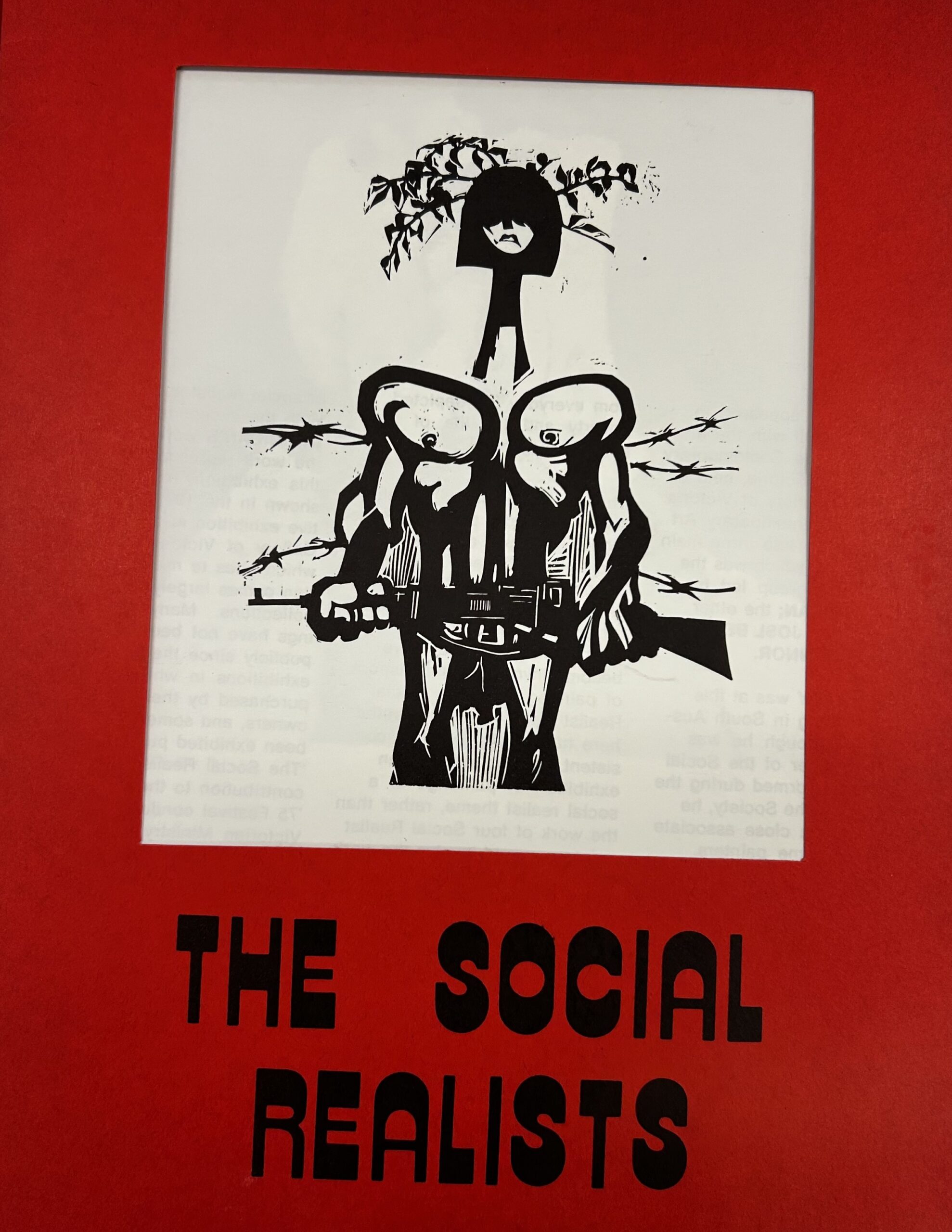
Left: Eureka 1854-1954, folio of lino-cuts, MS 17017 BOX 6/13 (Other copies held in Rare Printed Collection); Right: The Social Realists, exhibition catalogue, MS 17017 BOX 3/8
In these years, her art practice took a back seat to her political activism. And to raising children. During the Cold War period she served as Victorian secretary of the Union of Australian Women (a left-wing social change organisation working for the status and wellbeing of women across the world). In 1953 she was the Victorian delegate to the World Congress of Women in Copenhagen. She also worked with the trade union movement, writing essays, talks and creating social advocacy art, and in the same year, she won first prize in the May Day Art competition.
With Frances Emery, she organised the Asian-Australian Child Art Exchange from 1954 to 1956. Children from participating countries would exchange art which was then exhibited, often in major galleries. Through the Union of Australian Women, this initiative aimed to promote understanding and build friendship between Australia and various Asian countries, and to attempt to counteract anti-Asian sentiments in Australia in the Cold War years.
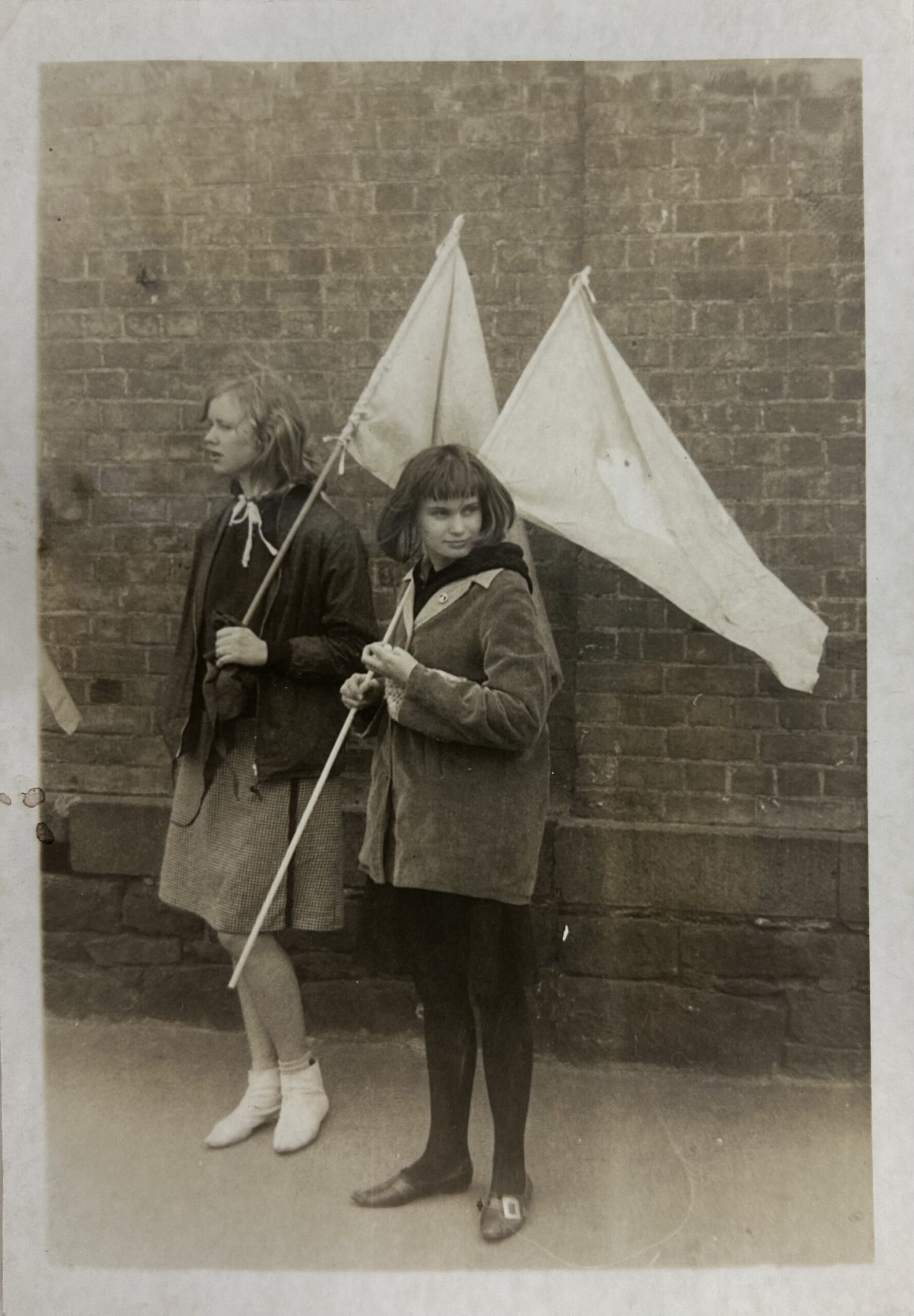
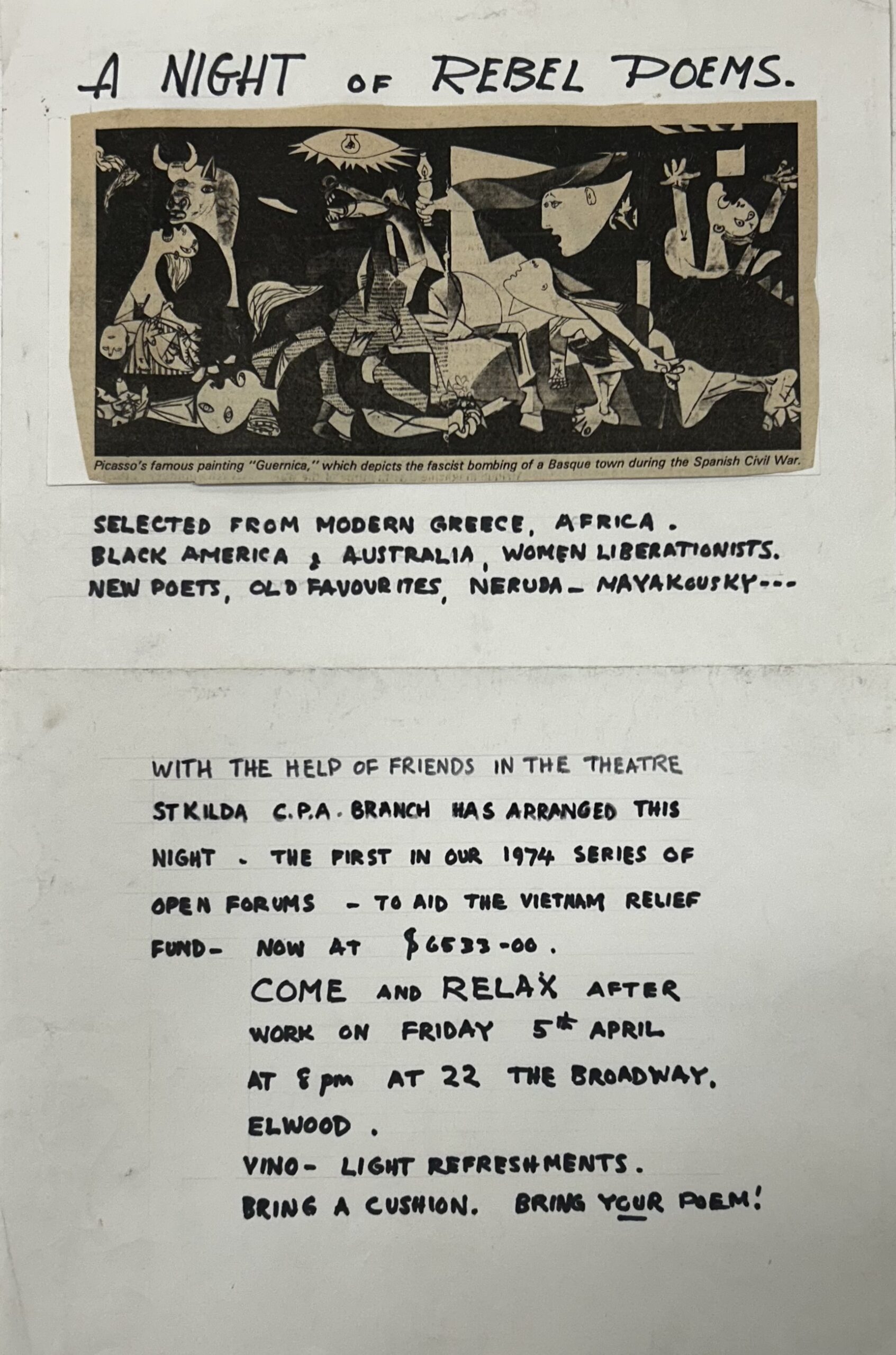
Left: Demo in Canberra during Menzies era, MS 17017 BOX 9/13; Right: A Night of Rebel Poems, St Kilda branch of the Communist Party of Australia, MS 17017 BOX 7/11
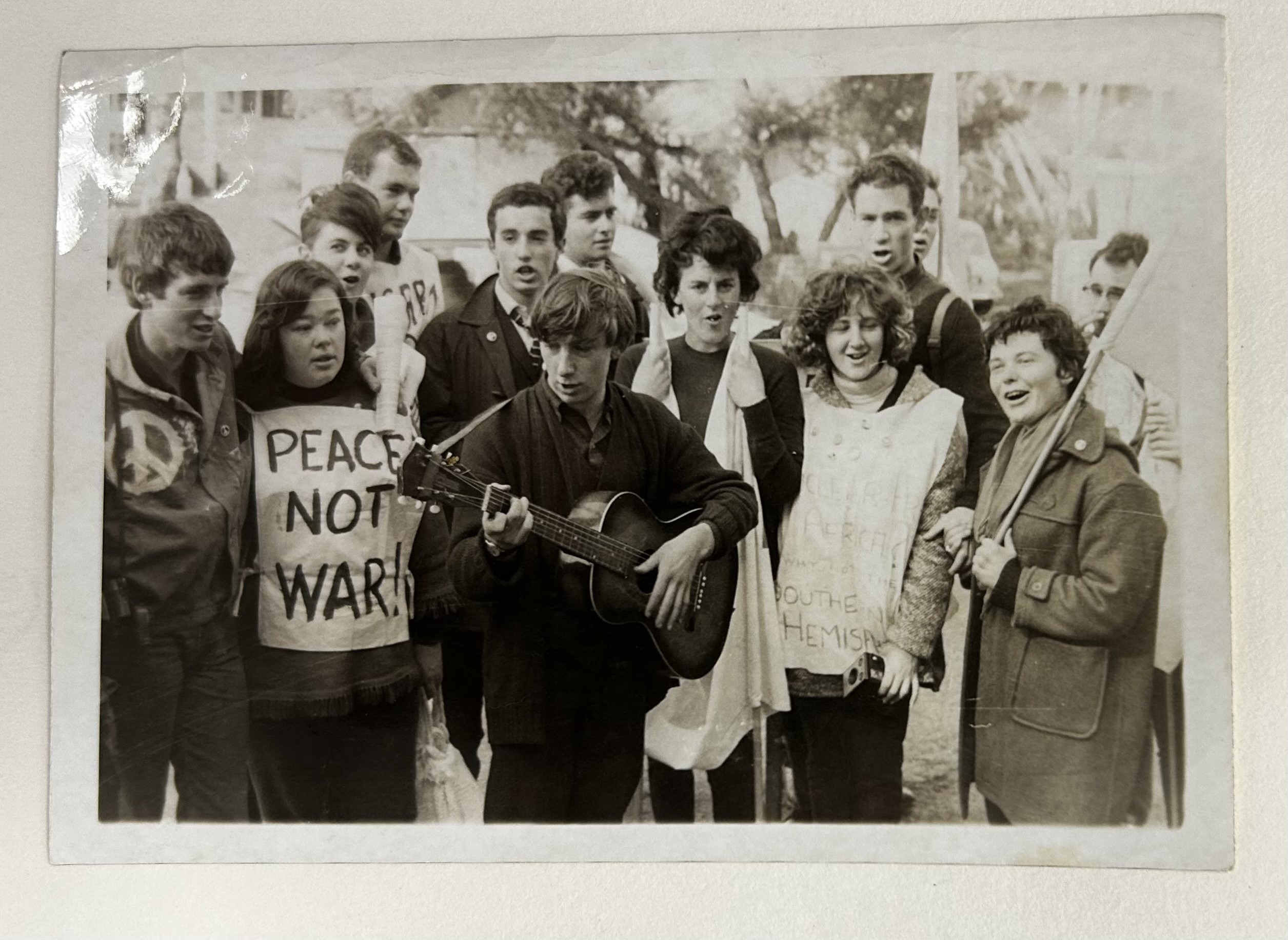
Art practice, 1960s-1970s
Though returning to full-time teaching for many years after her marriage to Vic O’Connor ended, she continued to exhibit with the Realist Group. In 1974, for International Women’s Year 1975, she was commissioned by the Melbourne City Council to create a statue of Mary Gilbert, the first migrant woman settler in the Port Phillip district. The life-sized bronze is situated in the Fitzroy Gardens, East Melbourne.
She also continued to write on feminism, politics and art. She wrote highly intelligent essays on various philosophical aspects of art and its role in society. Her writing was collated by her friends and family and published posthumously in a volume, Unfinished Work. The titles of the essays give a fair idea of the content of her writing. Essays on Social Realism include: ‘Some Thoughts on Sculpture: Why Realism?’, ‘Thoughts About a Revolutionary Art’ and ‘Problems of Ideology in the Arts’. On feminism and art, essays include: ‘The Art World: Where Have All the Women Gone?’, ‘A Little Paper on Sexism and Creativity’, ‘The Vexed Question of the ‘Woman Artist’’, and ‘Another Look at ‘Elitism’, and How Far Will ‘Female’ Imagery Take Feminism’. 3
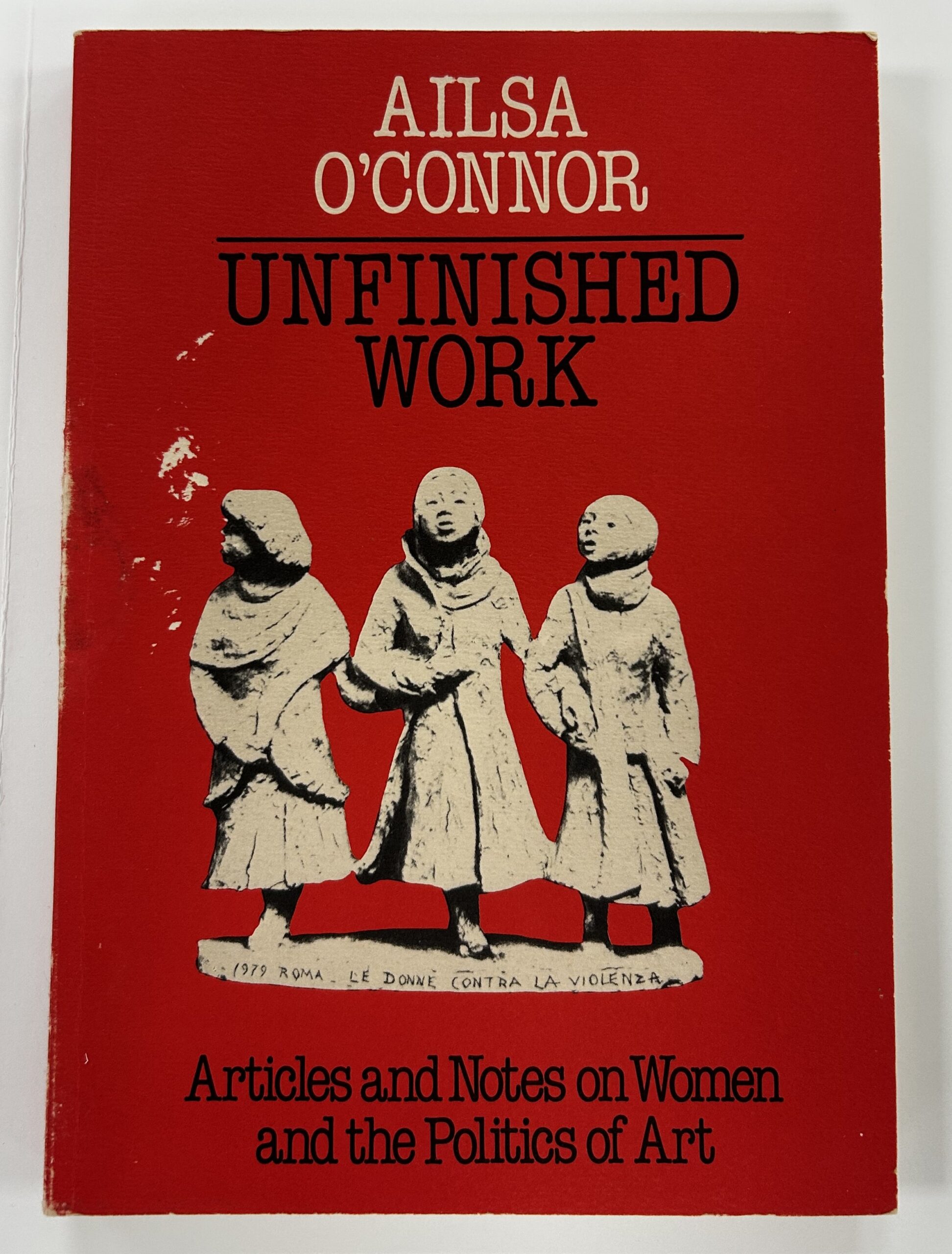
Ailsa O’Connor, Unfinished Work: articles and notes on women and the politics of art, Greenhouse, Richmond (Vic.), 1982
In response to the dismissal of the Whitlam Government in 1975, she and Noel Counihan initiated Permanent Red, a group of left wing artists who created work and organised protest events addressing nuclear threat, fascism, the Vietnam War, and protested the Liberal Party at the 1976 Federal Election.
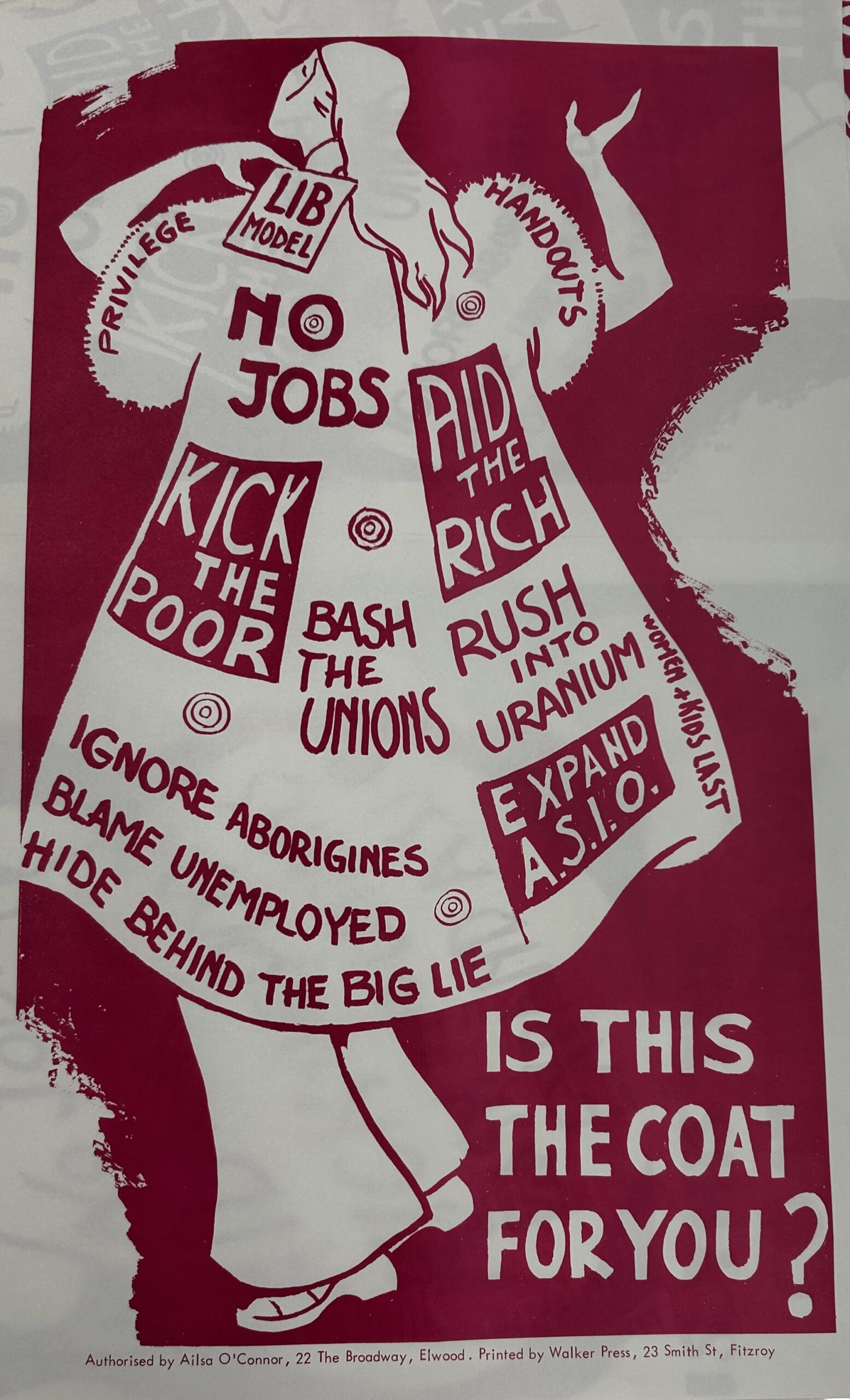
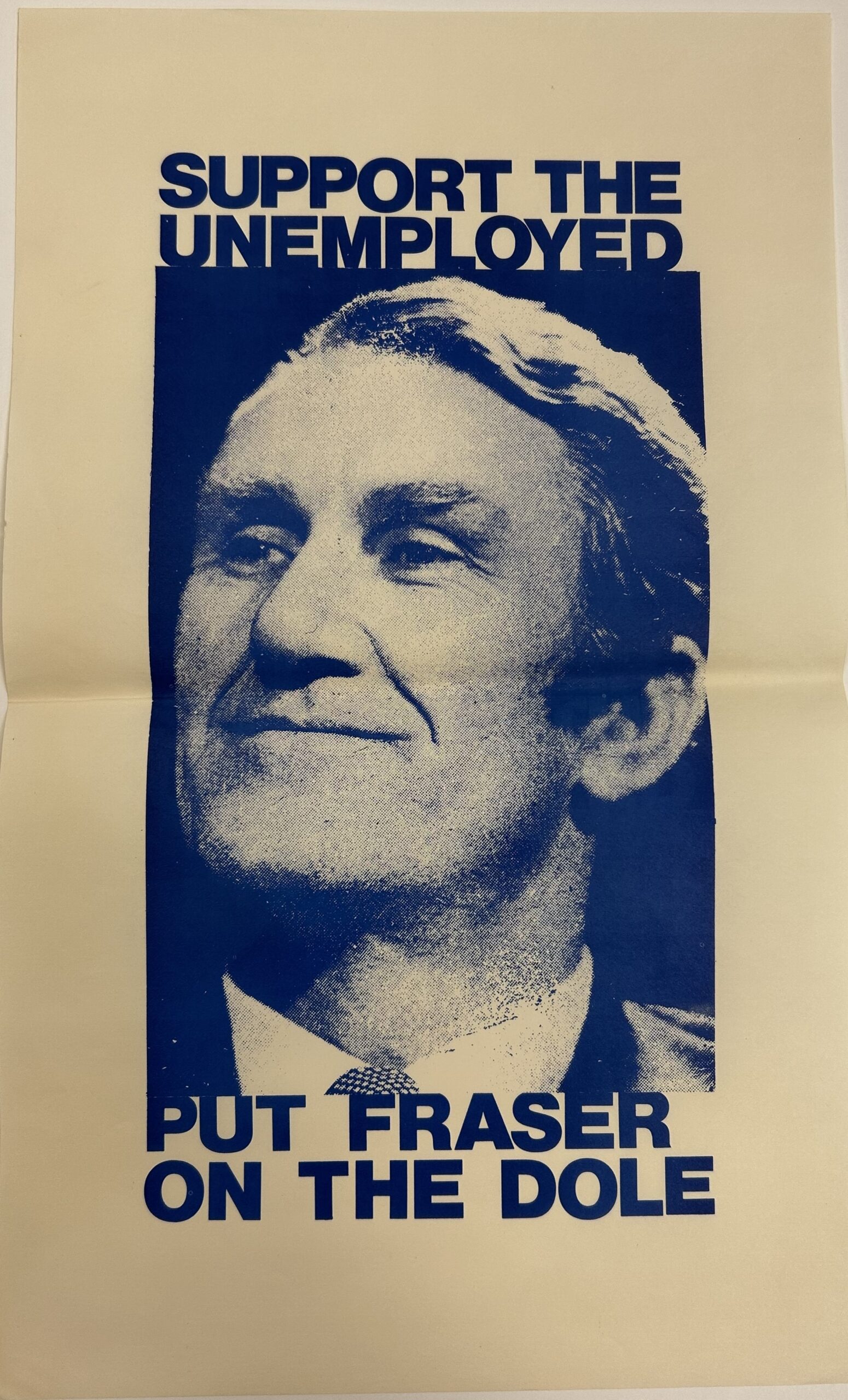
Permanent Red, Campaign posters relating to the Federal election of 1976, MS 17017 BOX 9
The 1960s and 1970s saw the art world move toward individualism, the rise of the concept of the ‘genius artist’, and the commodification of art by an expanding art market. Social realist art had fallen out of fashion. But this era also saw a new generation of left-wing artists looking towards the social advocacy of previous decades. Coupled with the momentum of the peace movement, second waive feminism and Community arts receiving official support with the election of the Whitlam government, artists like Ailsa O’Connor began to get more recognition both for their art and their political activism.
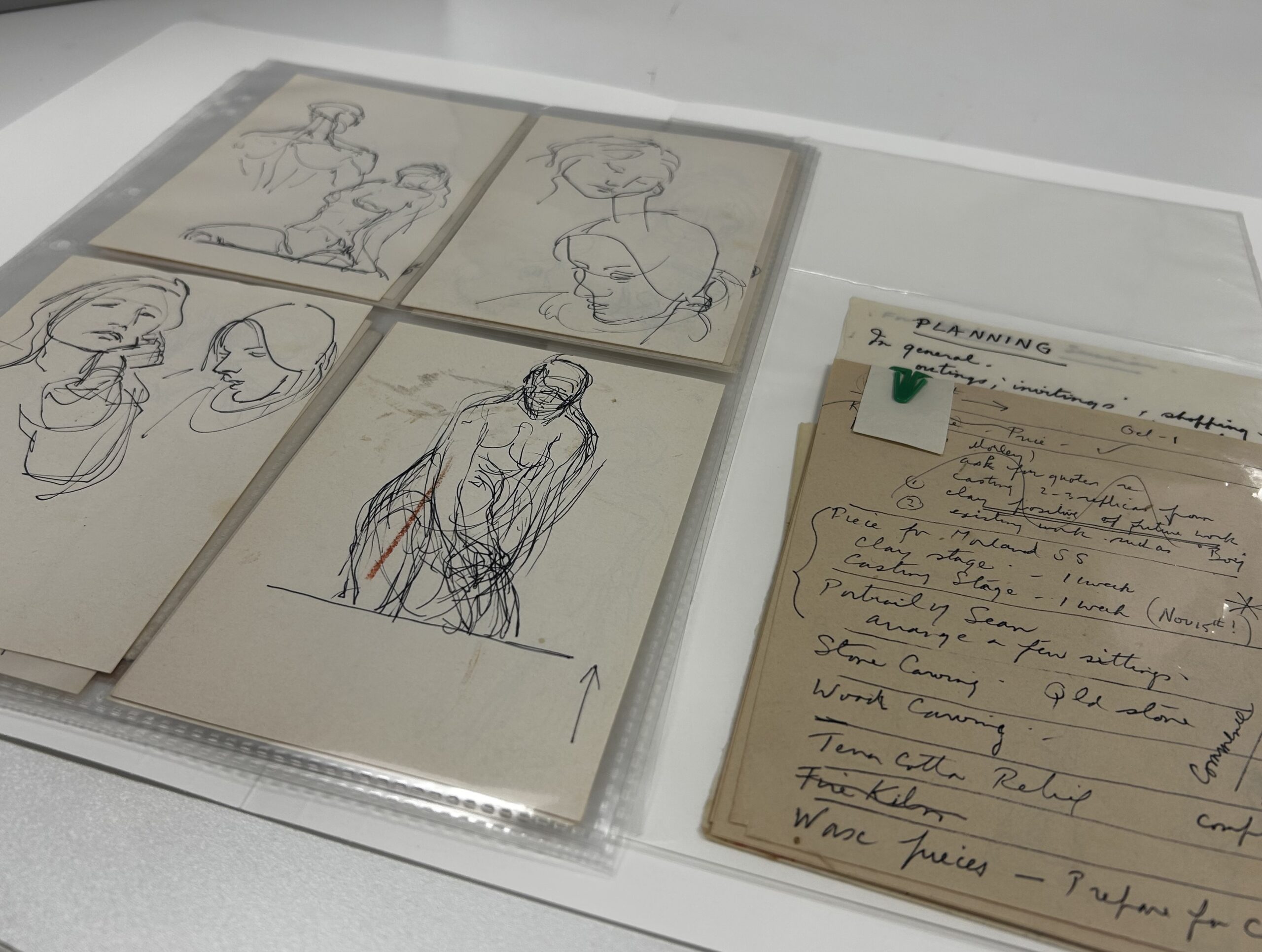
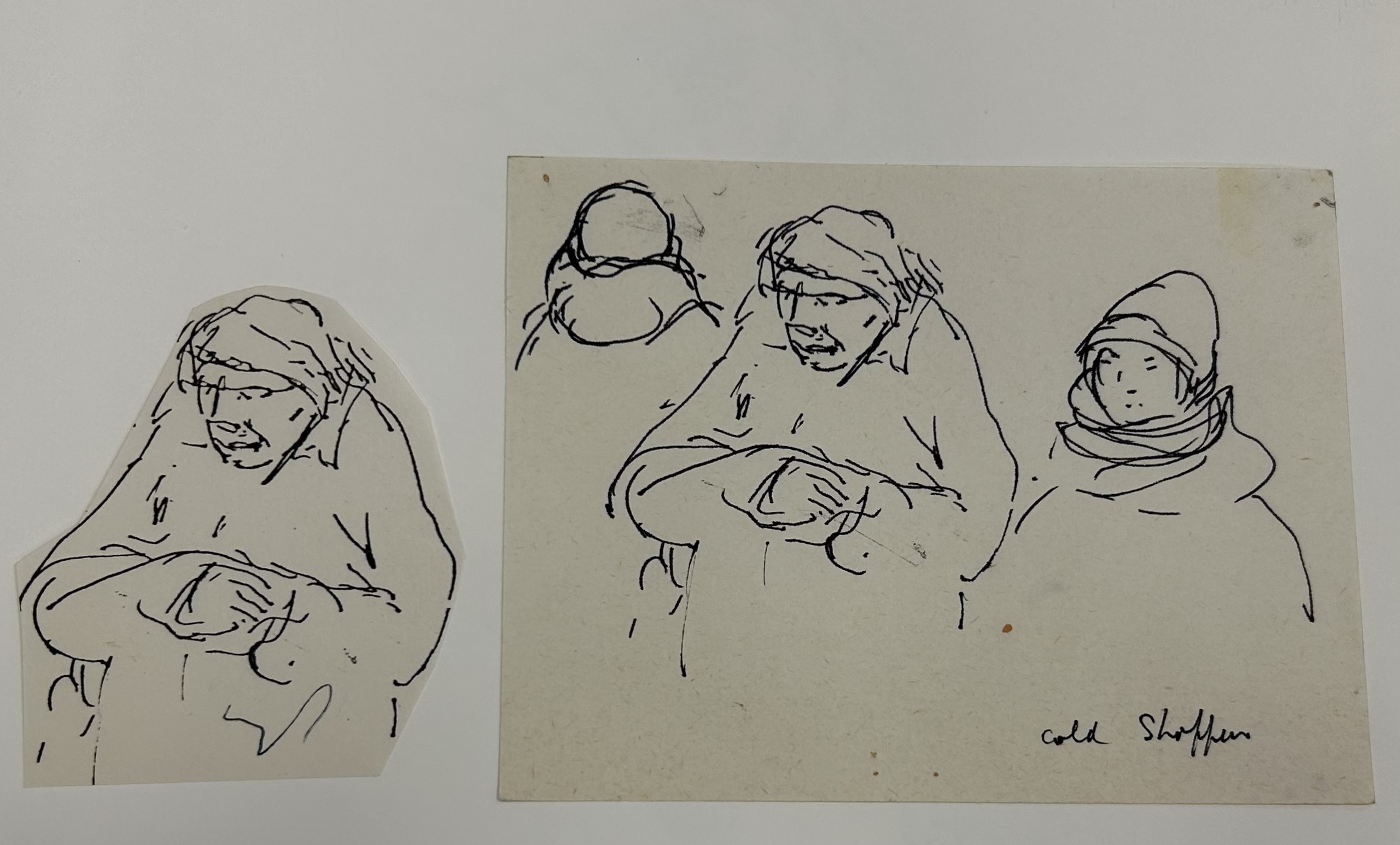
O’Connor’s career more resembles an intricate web than something lineal, and is summed up beautifully by the art historian Sandy Kirby:
Her own art had suffered from the demands of teaching, raising a family and fulfilling her political commitments, but she spent her last years bringing all these threads of her life together in her sculpture. Her work, always figurative, […] displaying a quiet dignity and deeply felt humanity through her depiction of women and children. 4
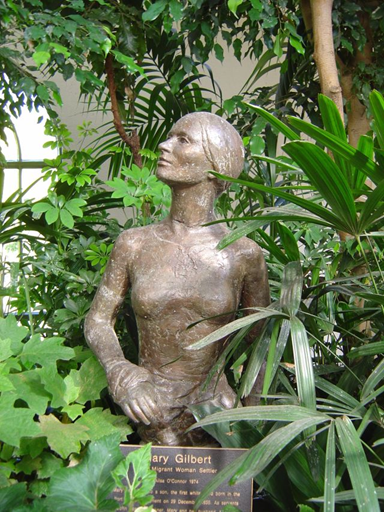
Ailsa O’Connor, Mary Gilbert, bronze, 1974. Situated in the Fitzroy Gardens. Life-sized statue of Mary Gilbert, first migrant woman settler in the Port Phillip district. Commissioned by the Melbourne City Council for International Women’s Year 1975. 5
References
- Ailsa O’Connor (1982), Unfinished Work: articles and notes on women and the politics of art, Greenhouse, Richmond (Vic.), p 41.
- Eureka, 1854 – 1954 : a folio of lino cuts (1954), Melbourne Popular Group, Melbourne
- O’Connor, ibid.
- Kirby, Sandy (1992), Sight Lines: women’s art and feminist perspectives in Australia, Craftsman House in association with Gordon and Breach, Tortola, BVI, p 45.
- Source of image: https://www.monumentaustralia.org/themes/people/settlement/display/32395-mary-gilbert


Great post! Respect. Go well!
Dear Olga,
Thank you for this! I knew Ailsa O’Connor when I was a youngster. She was head mistress at Moorabbin High School, and always encouraged us to think for ourselves. For a time we ran a small student newsletter/newspaper and, when she travelled overseas on long-service leave, she would write letters to us. I don’t know if any of this survives. I knew her as a caring person and remember her with much fondness.
Walter
Thank you so much for sharing this Walter. Very best wishes, Olga
Love this Olga. Thanks for sharing this important piece of writing about this amazing Australian Female Artist! I hope you now have time to make your own artwork. One day when you are ready to visit the SLV again, ld love to go there with you and dig through archives like this. x
I love Ailsa’s work and have several wonderful sculptural pieces. it is great to see her duly appreciated. Thankyou for the reminder of the wonderful woman that I knew. Margaret Pont.
Great post. I knew Ailsa in her latter years, though not well. Her strength alongside with her gentleness struck me. Thank you.
What an illuminating article Olga. With people like you caring for our state collection and championing individual stories, we learn how important our physical archives are.
Thank you Olga for your wonderful writing on Alisa remarkable story you have researched
Fascinated by this artist political activism and great works while working and raising children!
– a great inspiration !
Dear Olga
I also knew Ailsa when I was young. We lived nearby in Elwood and my dad was a member of the Communist Party like her; my mum was a feminist and activist and Ailsa was a good friend and part of their network in the area. I remember her as a kind person who had a knack for engaging well with children – you felt she took you seriously, regardless of age.
My memories include attending wonderful parties or soirees at her house in Broadway, at which people recited poetry with great passion; modelling for Ailsa and her drawing class in my young teens, in my bathers; and my brother and I sitting for our portraits with Ailsa, which were framed and hung at our house.
My dad was heavily involved in the struggle against the Junta in Greece, and like other Australian leftists Ailsa was always sympathetic and supportive. My dad and his friends smuggled Australian passports to resistance groups in Greece, and Ailsa was one of those who “lost” their passport and contributed in this way. I can say this now as all involved have passed on!
Thanks for your very evocative post and your work in researching and curating Ailsa’s archive!
Fionn
Your reminisces are very moving, and I especially love the anecdote about passports. Thank you so much for sharing. My very best wishes, Olga