
State Library Victoria members can access hundreds of databases from home (if your home is in Victoria). That’s millions of articles, magazines, archives, ebooks, videos, songs, audiobooks and more, available through the catalogue anytime. We’re taking a closer look at new and/or interesting databases as well as hidden gems from our collections. Read on for top picks and tips from Librarians.
Not a member yet? Sign up online first and reward your curiosity.
Today we’re looking at Proquest’s Trench journals and unit magazines of the First World War database.
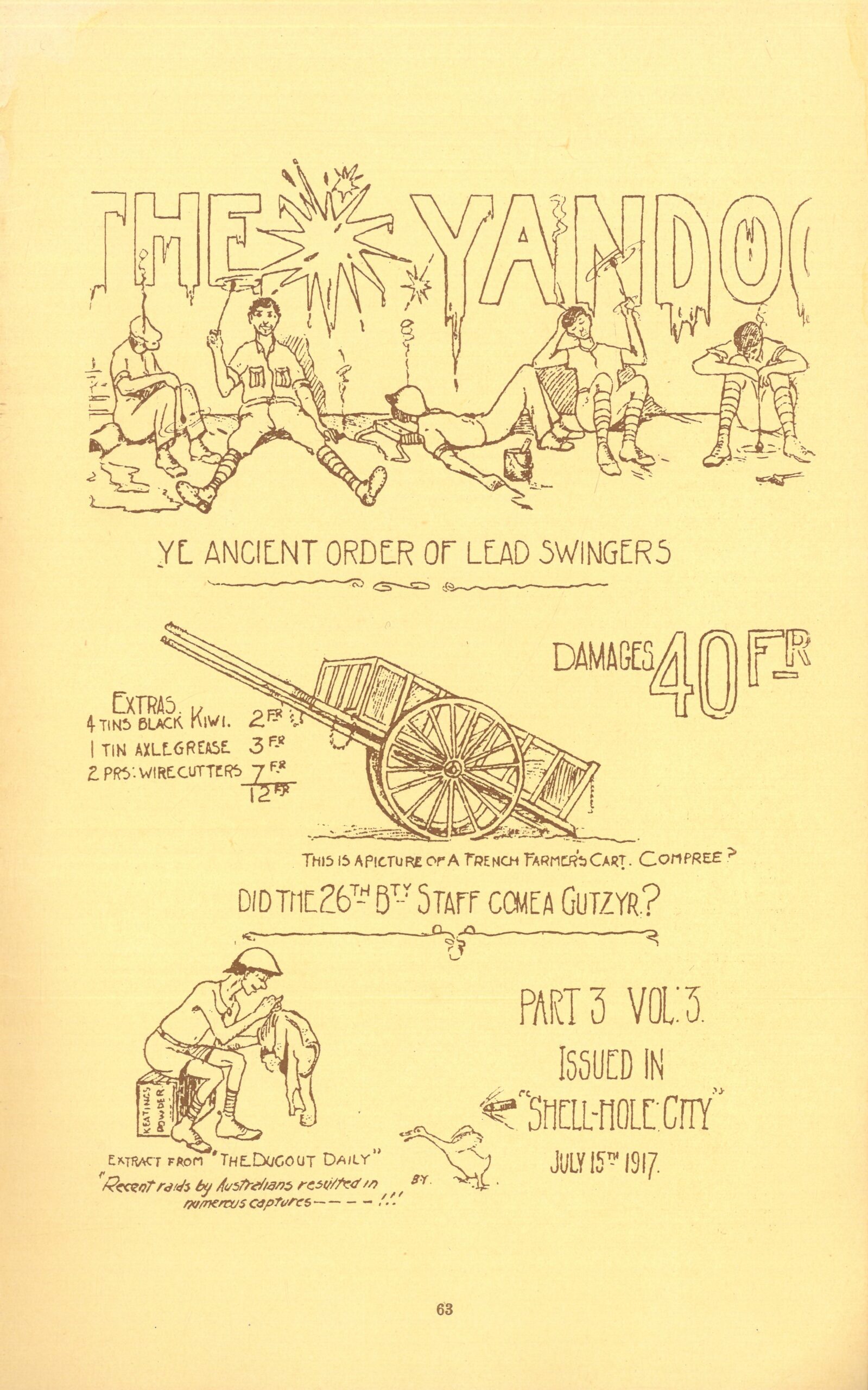
This database provides access to over 1500 rare trench journals and unit magazines of World War I, sourced from such leading archives as the Imperial War Museum, the Library of Congress and the British Library. These journals complement the State Library’s rich collection of World War I material.
The journals were published between 1914 and 1919, and were written and illustrated by service personnel from the infantry, artillery, air force, naval, supply and transport units, military hospitals and training depots of all combatant nations, including – Australia, New Zealand, the United States, Great Britain, Germany, Canada and France. Although the majority of the surviving journals originated from units based on the Western Front in France and Belgium, there are also magazines from units serving on the Eastern Front, in Gallipoli, Palestine, Mesopotamia, Egypt, Italy, Australia, New Zealand, Canada, India, Britain and America.
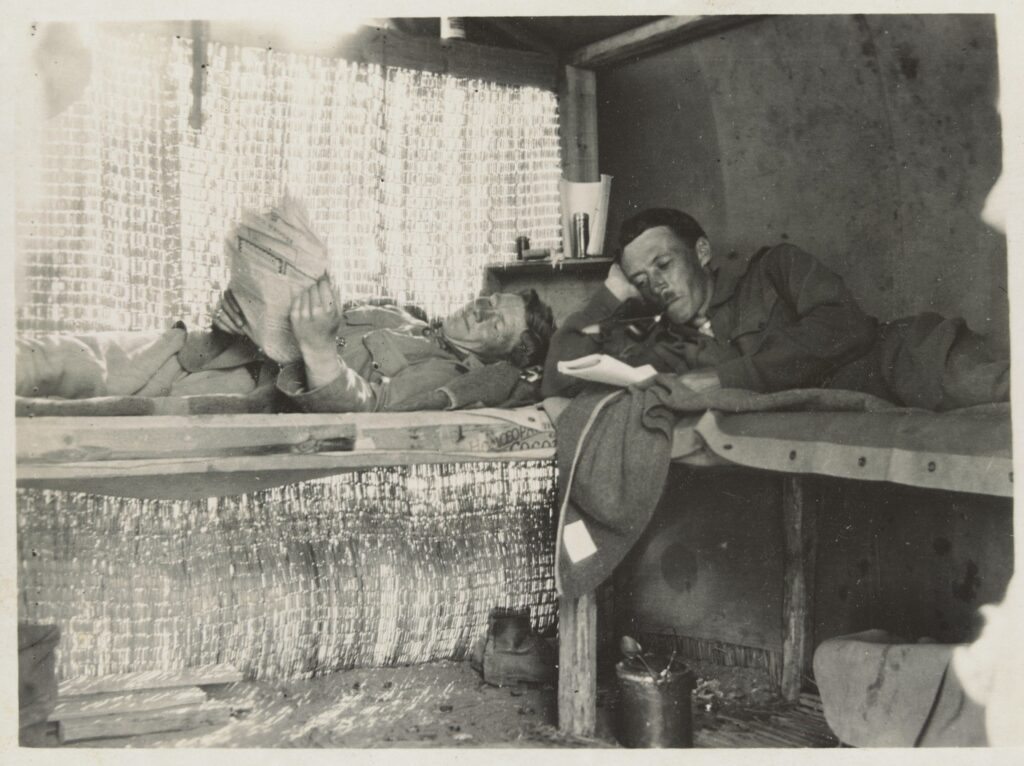
What makes this database so great?
Trench journals provide a fascinating insight into the thoughts and experiences of WWI serviceman and women and by documenting each unit’s circumstances and experiences they present a unique view of the war.
For the contributors, the journals were hugely important, as they provided an outlet for literary and creative expression. For the readers they were a morale booster, providing a welcome relief from their daily wartime experiences.
`Fundamentally, the trench press provided a communal voice for frontline soldiers, allowing them to implicitly, if not explicitly, establish a compact that was an important factor in their continued willingness to endure the unendurable.’ 1
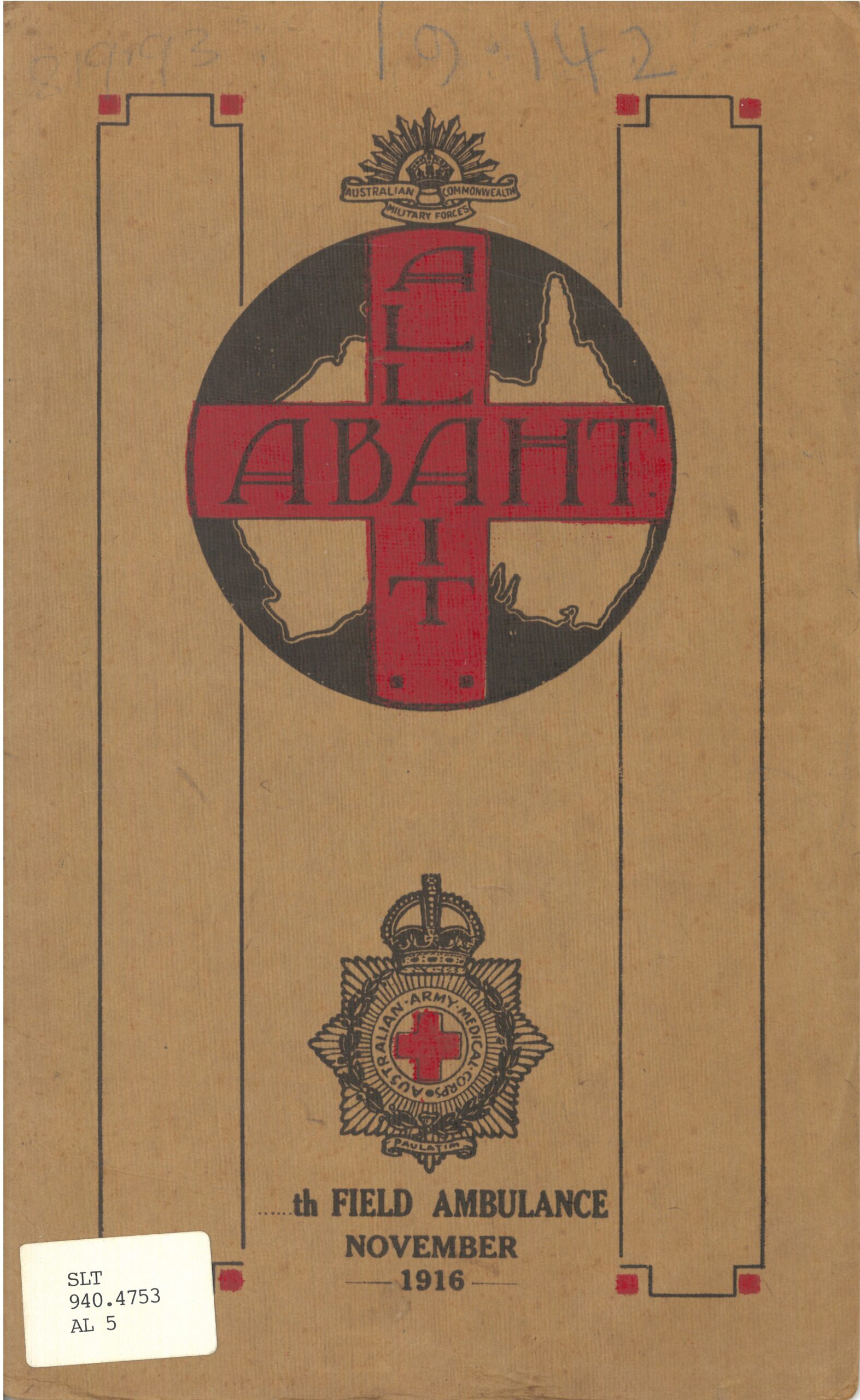
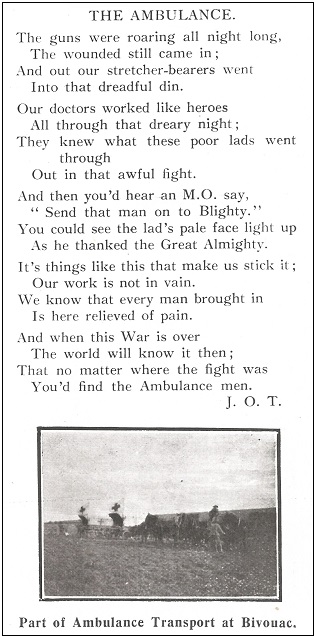
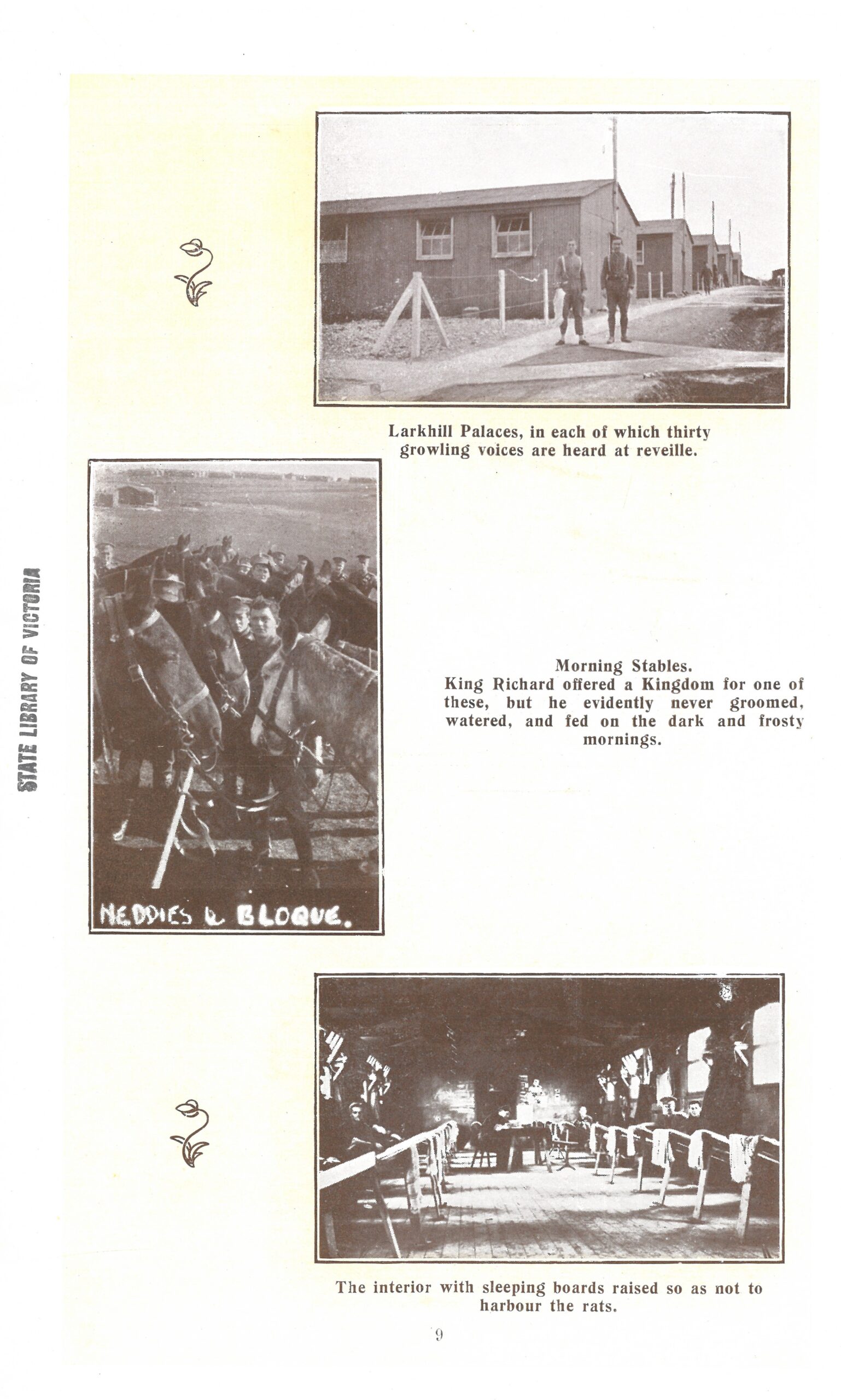
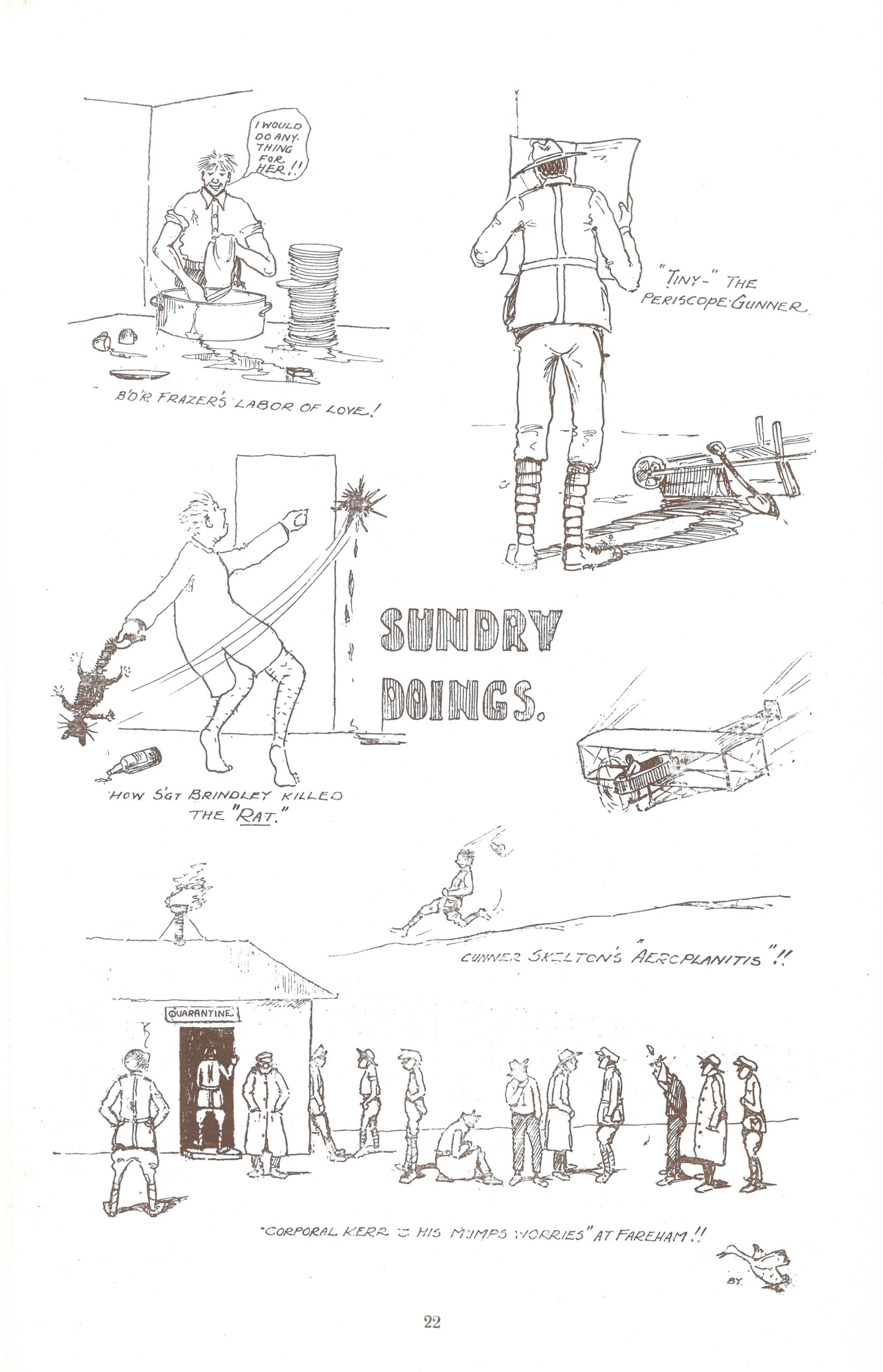
All Abaht It: With which is Incorporated the “Furphy Times”. The Journal of the – (10th) Field Ambulance (Australian Army Medical Corps), (November 1916), pp 1 and 11. State Library Victoria.
Highlights
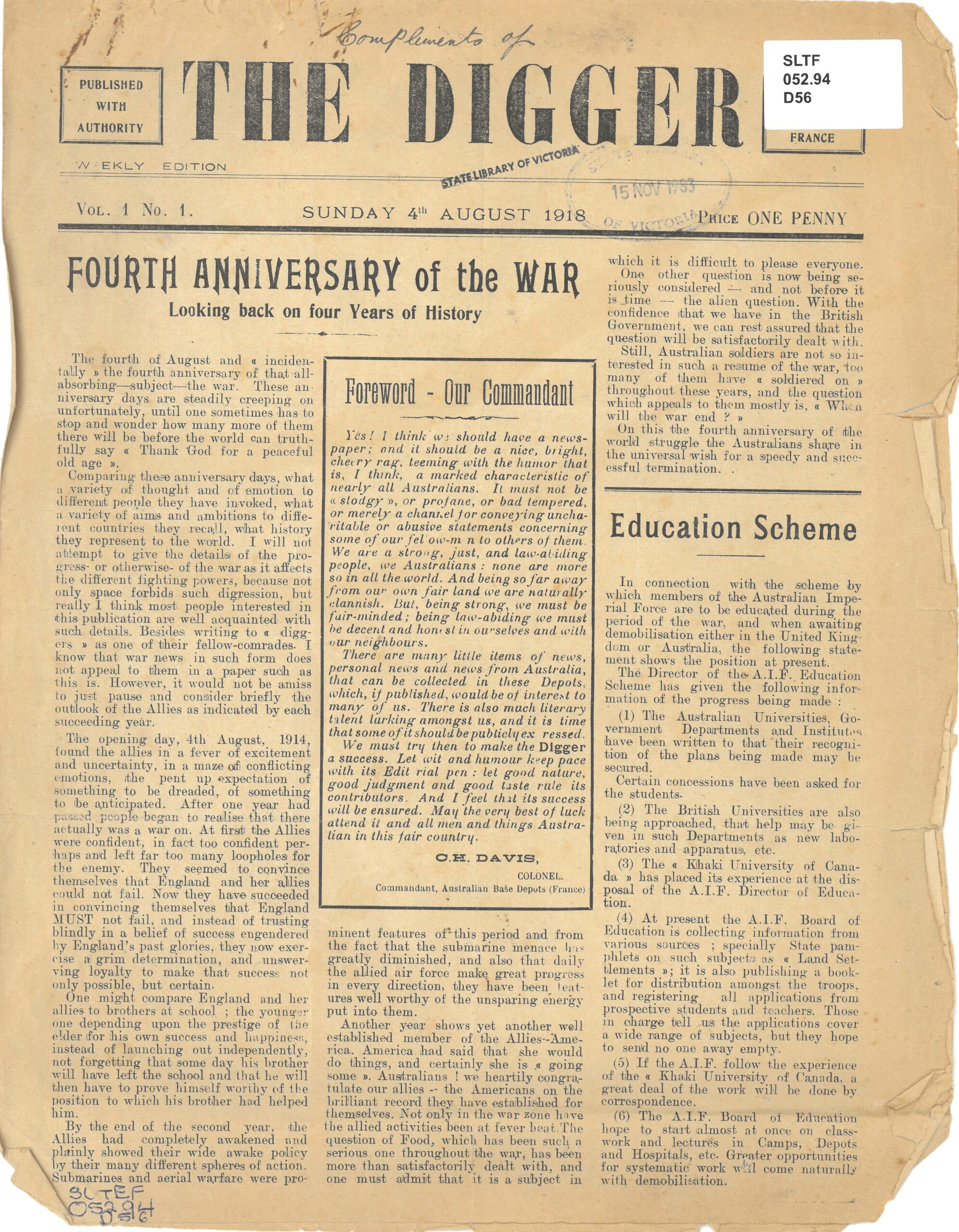
These trench journals are a valuable source of information, providing a unique social history of World War I. Within these titles you will find essays, accounts of daily activities, poetry, images and news from home. The desire to raise spirits meant that humour was an intrinsic part of these publications – so you will find many humorous stories, jokes, poems and satirical pieces.
As the editor of the Karoolian stated –
`the magazine tends toward perpetuating the bright side of our association with military life’. 2
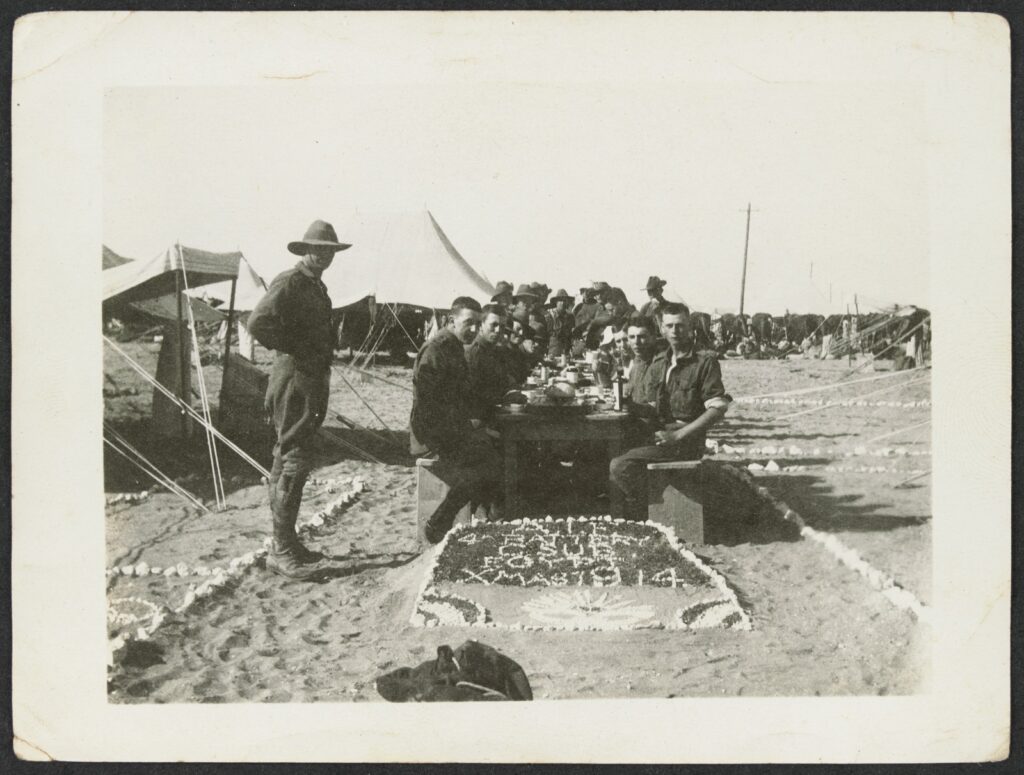
Browsing through these journals you will find numerous reports of football and cricket matches, boxing tournaments and competitions such as tug of war, darts and rough riding. Other activities included theatrical and musical performances; competitions; dinners, celebrations and formal military events.
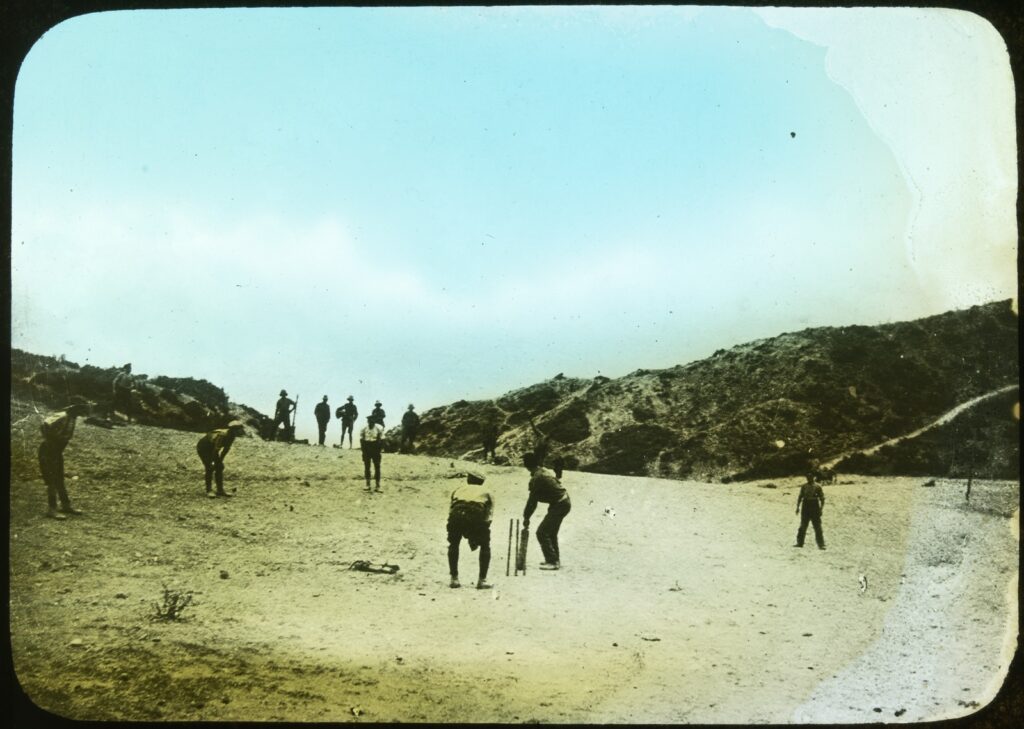
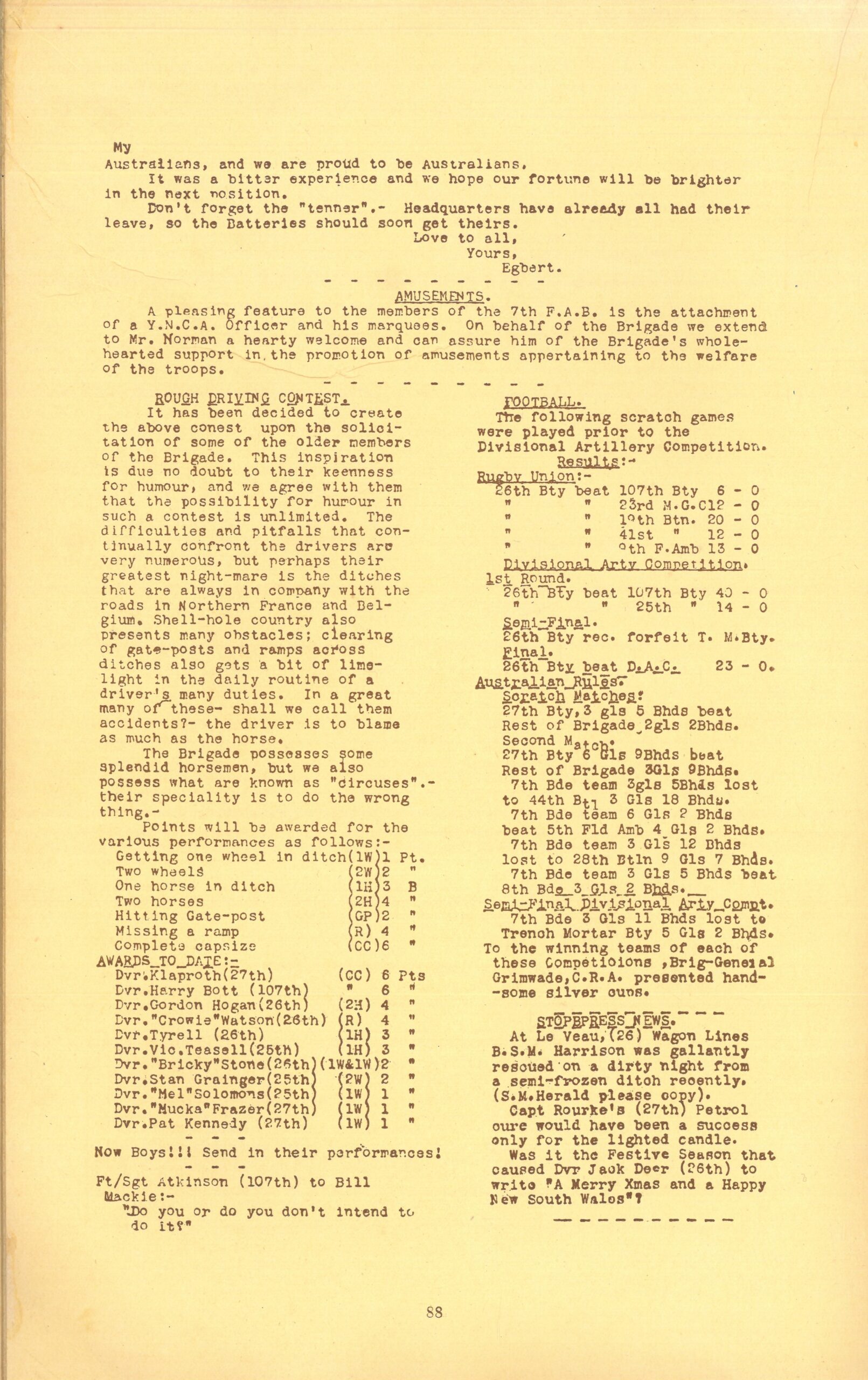
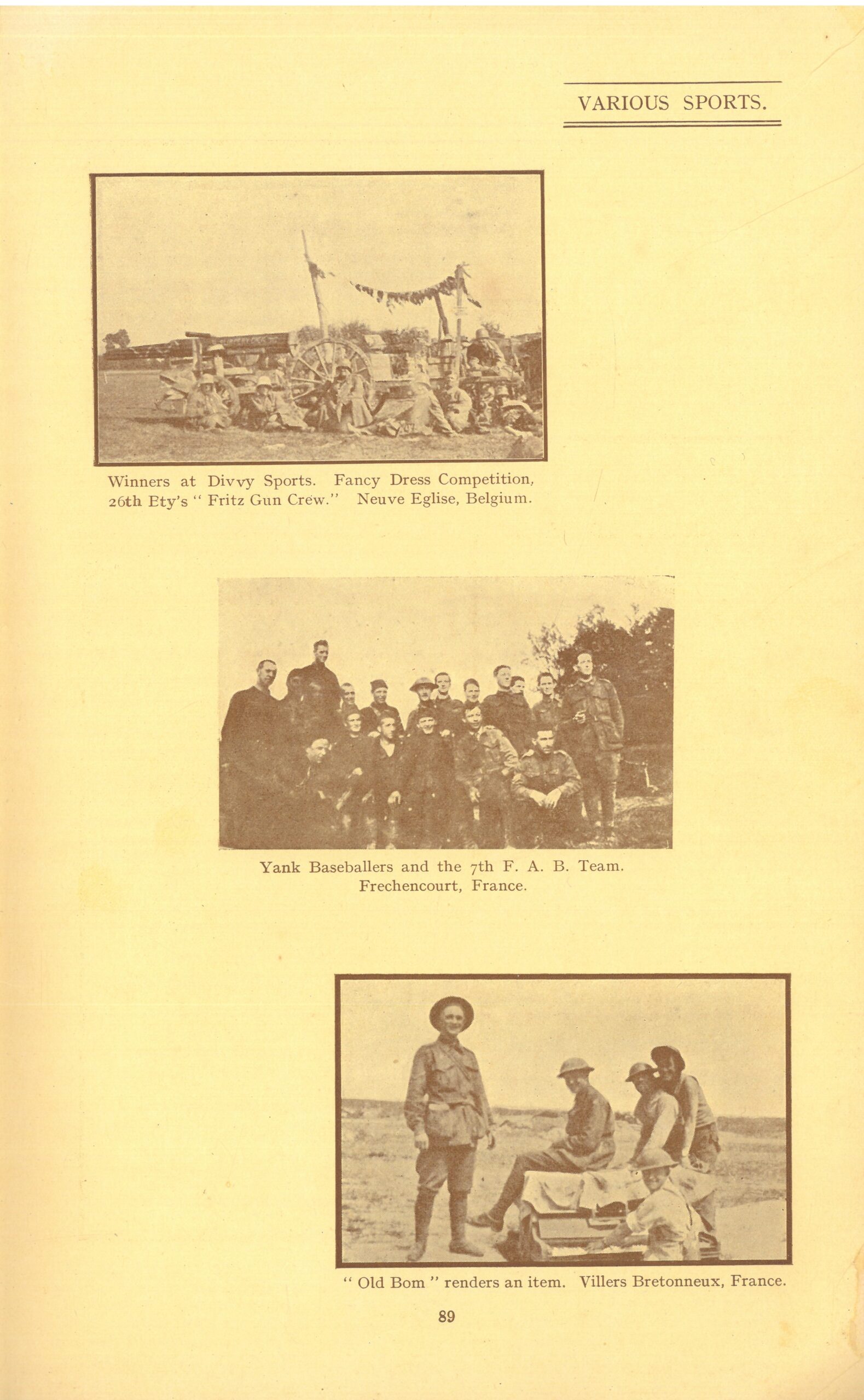
Various sports, (December 1917), The 7th Field Artillery Brigade Yandoo : containing publications of the organ of the 7th Field Artillery Brigade, Australian Imperial Forces …, pp. 88-89. State Library Victoria.
Australian titles
The database contains over forty journals produced by Australian forces. Titles include –
- Anzac Bulletin: Issued to Members of the Australian Military and Naval Forces in Great Britain, France and elsewhere, and to Australian Munition Workers in Great Britain; by Authority of the High Commissioner for Australia; 1917-1919
- The 7th Field Artillery Yandoo: Containing Publications of the Organ of the 7th Field Artillery Brigade, Australian Imperial Forces; 1916-1919
- The Kia Ora Coo-ee: The Official Magazine of the Australian and New Zealand Forces in Egypt, Palestine, Salonica & Mesopotamia; 1915-1918
- Honk! The Voice of the Benzine Lancers and Organ of the Gear-Box Musicians. Printed every sometimes for the Australian Ammunition Park; Jan-Dec 1915
- All Abaht It: With which is Incorporated the “Furphy Times”. The Journal of the – (10th) Field Ambulance (Australian Army Medical Corps); November 1916
- Barrak, The Camel Corps Review: The Official Organ of the Imperial Camel Corps; Cairo; July-September 1917
The Australian titles often feature `Digger’ or `Anzac’ slang – much of which was unique to the World War I era. If you’re curious about what some of these titles or phrases mean, you can find several useful slang dictionaries in our collection. Diggerspeak: the language of the Australian at war is a great publication to start with.
Search Tips
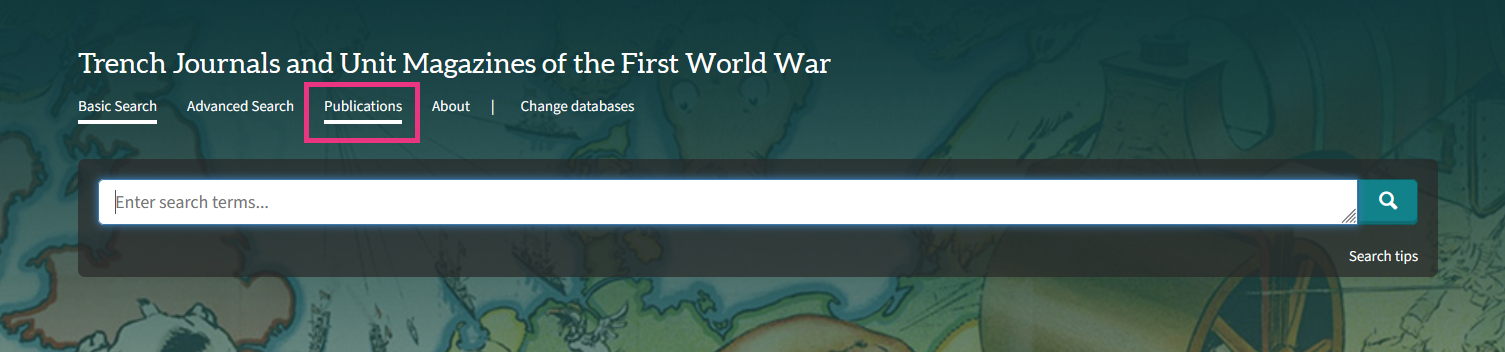
From the database home page you can perform a Basic keyword search. Or you can use the Advanced search option to search by keyword, or by the unit’s name, type or origin.
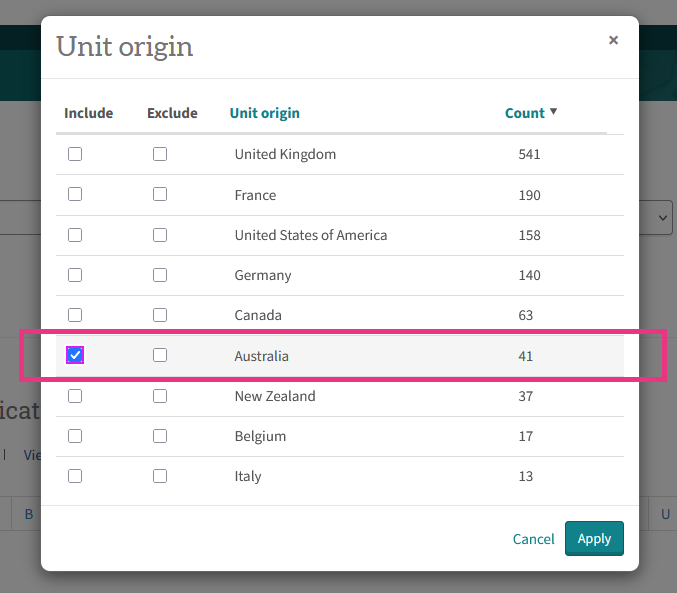
To filter the collection to titles produced by Australian service personnel, please follow these steps:
- Navigate to Publications.
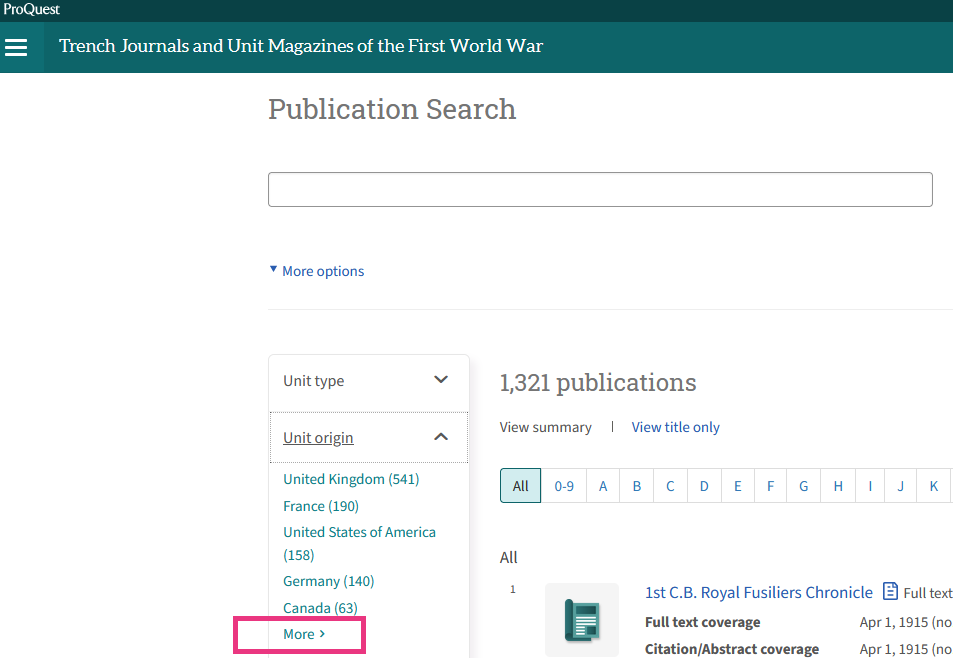
- Select Unit Origin.
- Click More to expand the full list of origins.
- Choose Australia from the options.
- Click the Apply button.
This will refine the results to 41 publications.
More to explore
We always welcome your recommendations for database trials — let us know what you’d like to see. Check out our latest databases on trial, and see a full list of all new and trial databases, by visiting our A-Z Databases page. If you have a research query or questions on how to use our online collections, contact us via our Ask a Librarian service.
For further information on how to research World War I resources please see the following guides and collections –
Australians in World War I – research guide
Researching your ancestors’ occupations – Armed forces – research guide
The First World War – online database
World War I Unit Histories – digitised collection
References
- Seal G (2013) The Soldiers’ Press: Trench Journals in the First World War, Palgrave Macmillan, p 220.
- Introducing ourselves, (September 1918) The Karoolian; the unofficial log of no. 1 Australian hospital ship Karoola’, p 1.

