
What do you need to know?
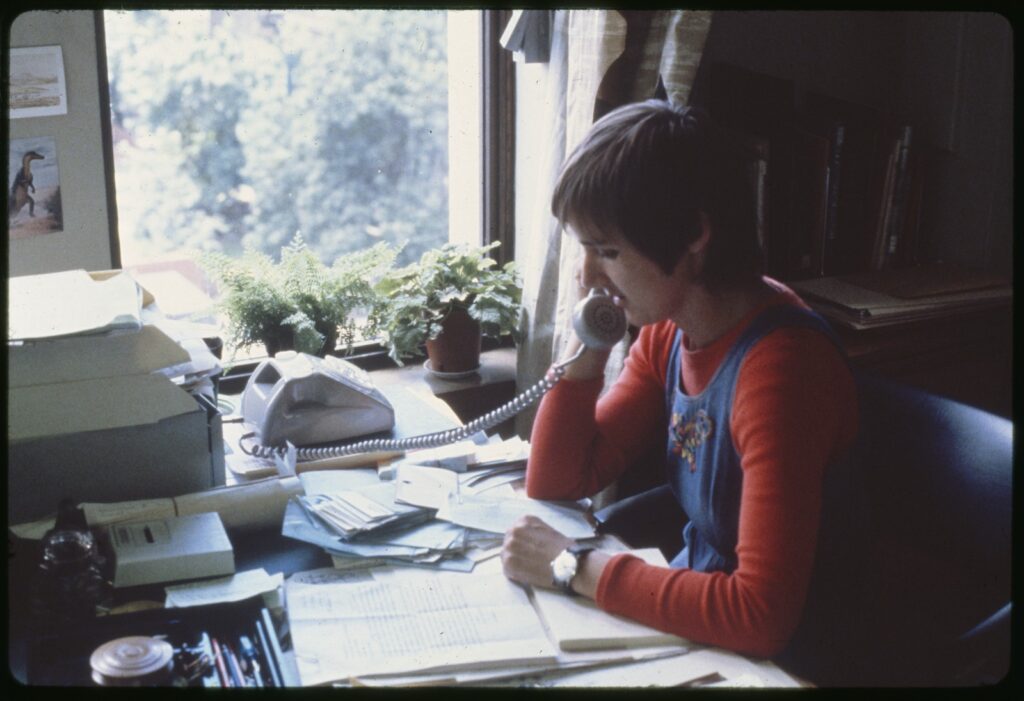
One of the coolest things about being a reference librarian at State Library Victoria: I never know what questions I’ll be asked. Some questions I will be asked regularly: Where is Ned Kelly’s armour? Where is that room with all the green lamps? Where is the printer? How do I join the Library? Can I borrow books? (No, but we have lots of ebooks and online resources) How do I use your catalogue? How do I research the history of my home? How do I search historical newspapers online? (Have you heard of Trove? It’s fabulous) I’ve hit a brick wall with my family tree, do you have electoral rolls? Can I get help here?
The questions I love the most are ones that expand my knowledge and skills. They reveal an item in the collection that I have never seen before or uncover a quirky or unexpected story from our past. Whether it’s finding out how the Myer Christmas windows started, researching a famous boxing kangaroo called Jack, or determining if there are secret tunnels underneath a seaside mansion, I am regularly reminded of how much fun it is to have a job where people from all walks of life come to you with their questions.
What is most important to me as a librarian is that – wherever possible – the asker gets an answer, or a pathway to find the information they need. My nerdy heart gets a little vicarious thrill when someone receives the exact piece of the missing jigsaw puzzle. The stuff they might not have found on their own.
Sometimes the stakes are higher than you might think – there are many different motivations that bring people to our Ask a Librarian service. Sometimes, curiosity brings you to us. You didn’t come with a question, but one occurs to you while you’re here. And that is something else that reference librarians do really well. They respond to curiosity.
Libraries in the Information Age
We are living in a particularly turbulent period of the Information Age.1 Thanks to ever advancing digital technologies, there has never been more information – much of it online – accessible to people. This is fantastic, but it also has its challenges. John Naisbitt observed in 1982 that society was ‘drowning in information, but starved for knowledge’2; no transformation is ‘more subtle, yet more explosive’.3 Librarian blogger Hana Lee Goldin goes further, describing our current state as ‘drowning in data and starving for sense.’4
This information overwhelm becomes even more problematic when you consider the ‘digital divide’, and the barriers that many people face to participation in the online world. Approximately one in ten Australians don’t have access to a personal computer or laptop at home.5 2% of Australians, or 540,000 people, still don’t have access to any internet at home, including through a mobile phone or other devices.6 Internet access is only part of overcoming the digital divide. Digital literacy skills are also essential, and libraries play a key and trusted role in fostering those skills in their communities.
Here to help
If you ask any of my librarian colleagues in Visitor & Information Services about why we chose to be reference librarians, it isn’t just because we love books and archives (though yes, we do tend to be avid readers and history lovers). It is because we like helping people and connecting them to the information they need. We love solving mysteries.7 Far from the trope of librarians running around shushing people – we’re a pretty affable lot. We love to help people find answers to their questions and we love locating particularly obscure or hard-to-find information in our collections that isn’t likely to be found via a Google or ChatGPT search.
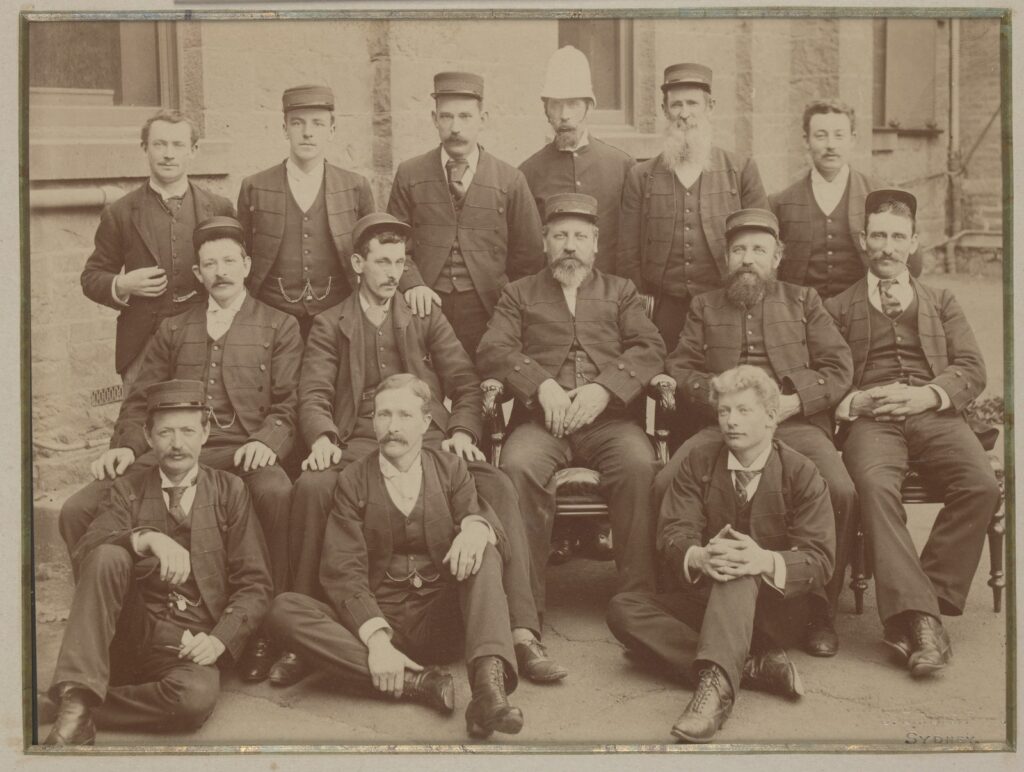
Our composition has changed a bit over time…
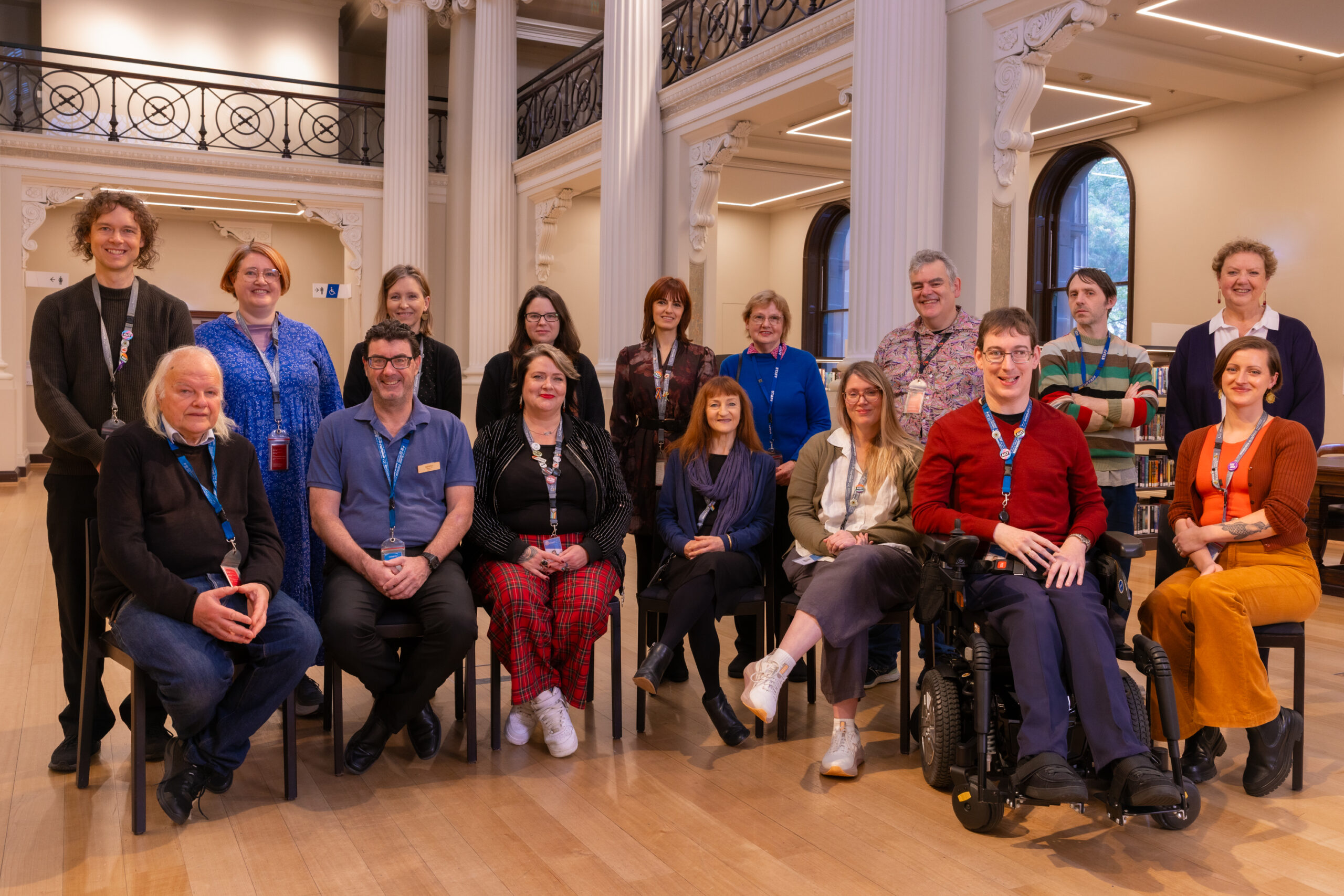
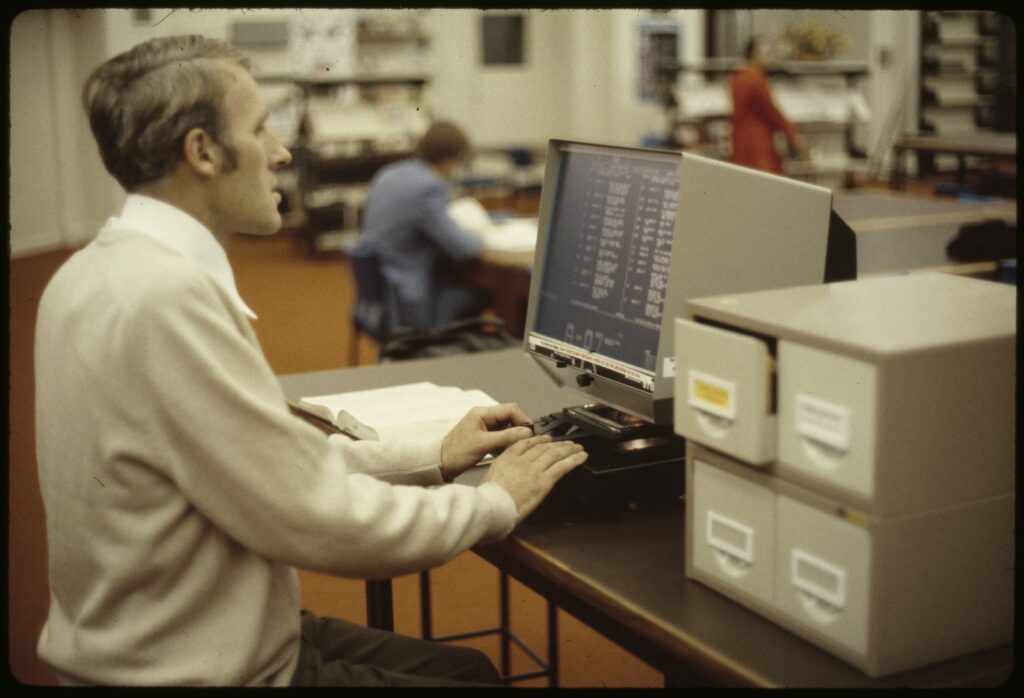
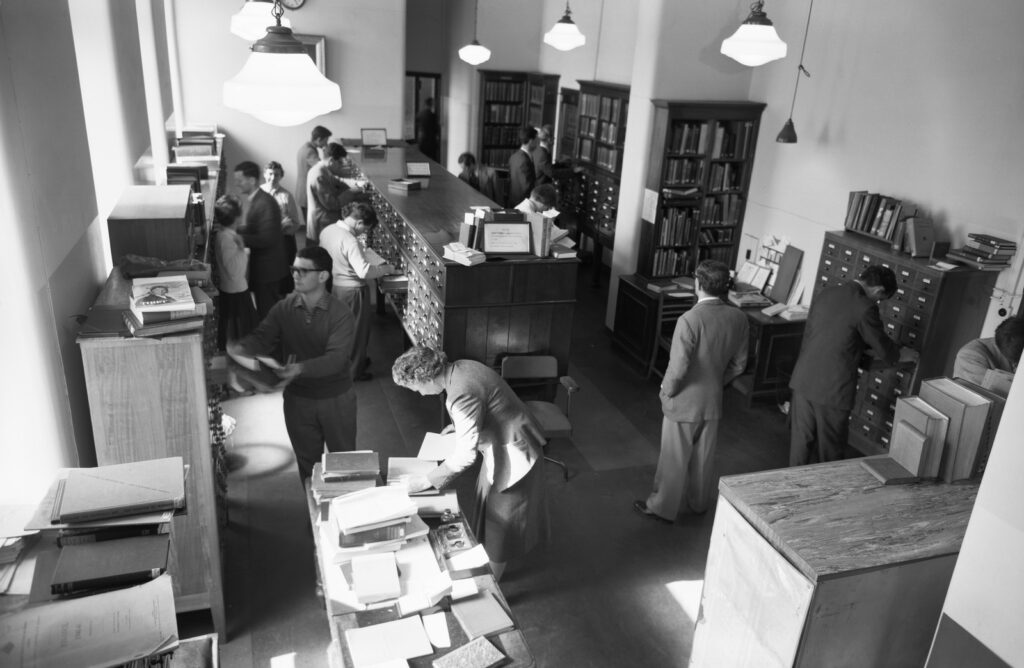
While reference librarians these days spend a lot of time researching through an internet browser and via digital and digitised collections (the more collections that are available and accessible online the better!), there is still a LOT of information that needs to be consulted the old-fashioned way: analogue. We spend a good chunk of our time traversing the city block that is the Library building, including subterranean storage spaces, to consult physical books, microfilm, newspapers, journals, unpublished manuscript collections, maps, images, ephemera. The list goes on.
We care very much about accessibility, equity, and community. We believe in the democratic power of libraries. We want to use our specialist skills – and share knowledge – to help people to find information, because we know that the Information Age requires information and digital literacy to navigate effectively.
Ask a Librarian service
Underpinning our research and information services is our service philosophy. At its most aspirational, it is about providing access to knowledge with the belief that the Library is a place of learning and discovery for all (but especially Victorians), in the broadest sense possible. We aim to be an active voice for learning, knowledge and culture, and through our work, strengthen the diverse communities we represent.8
You might be a seasoned researcher, or coming to the Library for the first time. You might be a student, or a student of life, writing a book, or doing family history research. You might live close to the Library, or on the other side of the world. Our reference service is open to everyone.
You can ask us your questions in person, on the phone, or online 7 days a week. We might be able to answer your question on the spot or refer you to a resource that can – but sometimes we need to dig a little deeper.
A typical response might include recommending specific collection items, whether digitised or physical, consulting collection items for those unable to visit us in person, or referring you to one of our many research guides or online databases. We provide tips for research strategies and can show you how to search and understand our online catalogue, how to order material from storage, how to order copies of collection items, and how to navigate the various reading rooms in the Library. We tell you who, what, where and how; we’re not gatekeepers, we’d rather you had your own set of keys. If we can’t answer your question, we try to refer you to someone who can.

And – one of the unfortunate realities of research, particularly historical research, is that sometimes we can’t find the answer. Sometimes, it doesn’t exist (at least not in a handy discrete form) or hasn’t survived. Sometimes the answer could be found, but it would require extensive searching or analysis of information that we are not able to undertake. There are limits to what we can do, to ensure equitable access to our services.
But we do try to provide a roadmap to searching our collections, with tips on how to navigate the increasingly complex task of researching information online, some of it potentially unreliable. This includes information that is well outside the search net of generative Artificial Intelligence like Chat GPT.9 Every time you ask a question, our own knowledge and skills grow, as does our ability to think outside the box.10
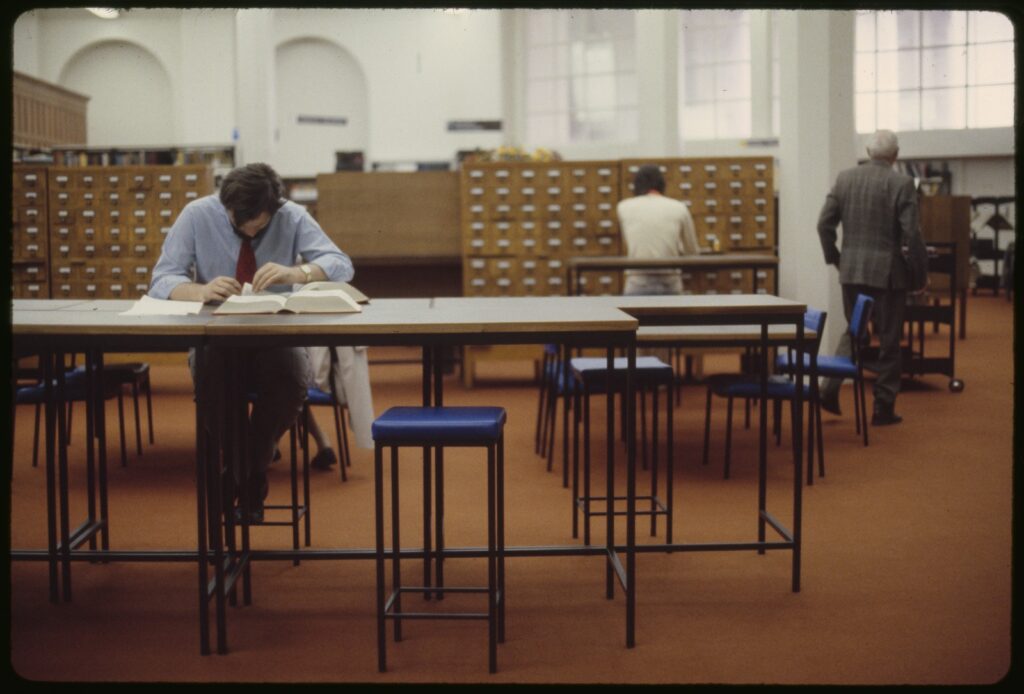
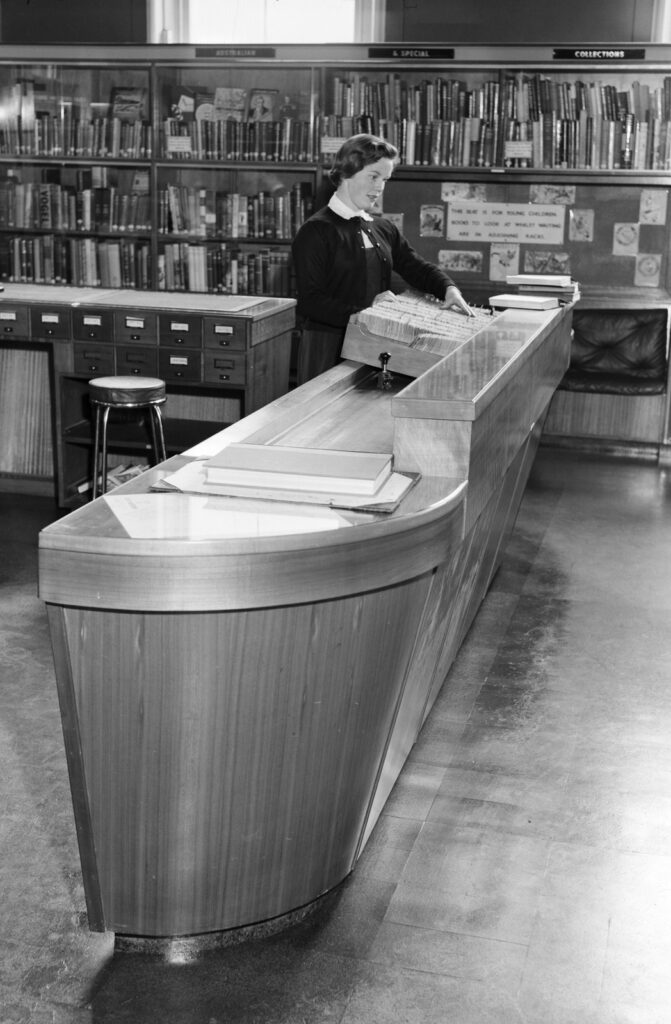
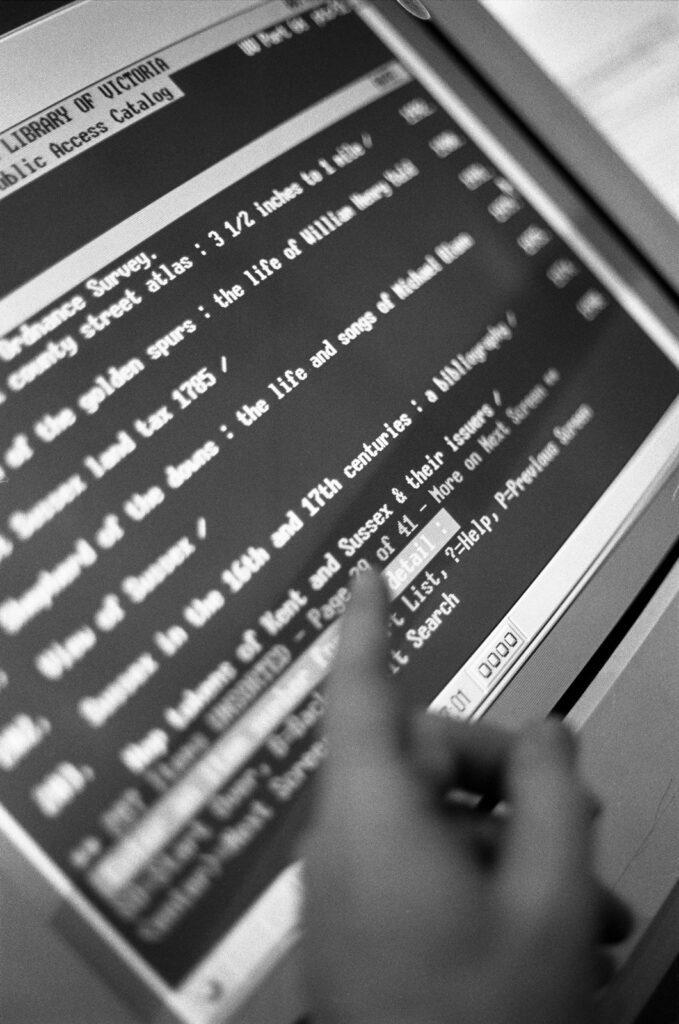
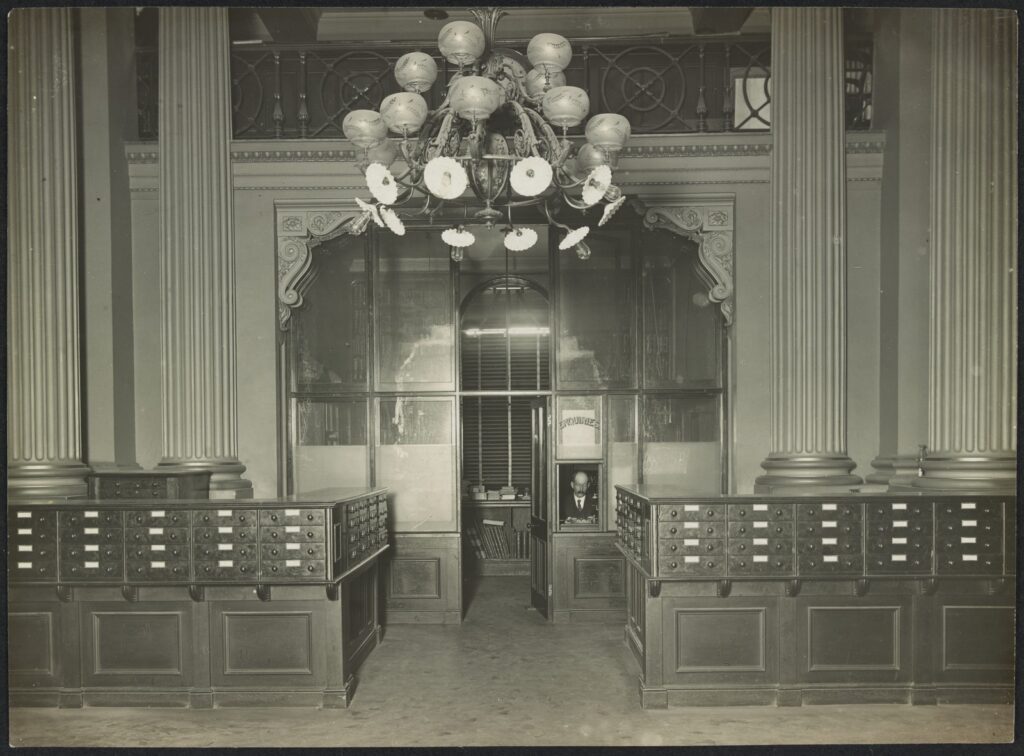
With advances in technology, the way we seek and access information is constantly changing, but whether you are consulting a card catalogue or a search engine, the fundamentals are largely the same. As librarian blogger Hana Lee Goldin comments: ‘The skills that matter remain consistent across eras, even as the tools change.’11 Because when it comes to information literacy, access – as crucial as it is – is only one part of the journey.12
Reference librarians seek to build information and library literacy to assist people to navigate the Information Age, and the State Library collection – in all its complexity and scope. This includes knowing where and how to start, which questions to ask and how to ask them, and how to think critically and evaluate sources. Because information is not always neutral – it can get lost or mislabelled, hidden, or weaponised.13
Specialist generalists
In addition to having deep subject specialties, reference librarians need to know a little about a lot. We don’t know everything, but we aim to point you in the right direction. As the nature of information changes, as information seekers change, as technologies and mediums change, so does our skillset – and we need to apply it every day to best meet the needs of the person in front of us (physically or digitally) in that moment, whatever their ability.
As we celebrate the Library’s 170th anniversary, reference librarians remain a human element in a search process that is increasingly digital, and we are there to help, as we have always been. We don’t want you to feel overwhelmed by information; we want to empower you, to give you a map for the maze.
So if you’re struggling with your research, can’t find the information you need, have hit a roadblock or don’t know where to start, ask a librarian and we’ll try our best to help.
‘I’m so grateful for this extremely detailed response. Thank you for your time and energy. These are really useful pointers and I will jump in and have a look. I feel like I have a map in the maze.‘ – Ailsa, Ask a Librarian user
Further reading
Pavlovski, N (2026) ‘ChatGPT as a Tool for Library Research – Some Notes on Why I’m Now Hesitant‘, Choice (Association of College and Research Libraries) [website], accessed 3 June 2026.
Robinson H (2025) Beyond the books culture, value, and why libraries matter, Wakefield Press, Mile End, South Australia.
Hana Lee Goldin’s substack Card Catalog
Browse State Library Victoria research guides, including our Misinformation research guide
Browse other State Library Victoria blogs written by reference librarians
References
- ‘That period in the history of the world in which possession or provision of information is seen as a key element in society’, ‘Information Age’ (2026), Macquarie Dictionary Online [online database], Pan Macmillan Australia, accessed 28 April 2026. Some might call it the Misinformation or Disinformation Age. See our Misinformation research guide for further resources.
- He continues, ‘Uncontrolled and unorganized information is no longer a resource in an information society. Instead, it becomes the enemy…’, Naisbitt J (1982) Megatrends: ten new directions transforming our lives, Warner Books, Inc, New York, p 24.
- As above, p 11.
- Goldin H L (2025) ‘What It Actually Means to Live in the Information Age‘, Card Catalog [website], accessed 23 April 2026.
- Thomas J, Barraket J, Wilson C, Holcombe-James I, Kennedy J, Rennie E, Ewing S and MacDonald T (2020) ‘Measuring Australia’s Digital Divide: The Australian Digital Inclusion Index 2020‘, RMIT University, Centre for Social Impact Swinburne, Telstra, Melbourne, p 17.
- Department of Infrastructure, Transport, Regional Development, Communications, Sport and the Arts (2025) ‘Digital exclusion in Australia: Evidence from the Household, Income and Labour Dynamics in Australia (HILDA) survey‘, Commonwealth of Australia, p 4. This does not count the number of Australians who have low quality internet speeds or struggle to meet rising internet costs. This data also underrepresents internet usage in remote and very remote Aboriginal and Torres Strait Islander communities.
- One of our family history librarians, Ann Copeland solved one recently, Webb C (16 April 2026), ‘Librarian’s skills and a ray of light identify fallen World War I soldier‘, The Age, accessed 16 April 2026. Note that this article is paywalled. If you are a Victorian resident member of the State Library you can access the article as it appeared in the print version of The Age 17 April, 2026, p 2, via The Age and Sydney Morning Herald Digital Editions (2006— ) [online database].
- History and vision | State Library Victoria
- Which often looks impressive on the surface, but is subject to ‘hallucinations’ (where it makes up an answer when it can’t find one), and will confidently present these as truth. See Goldin H L (2025) ‘How to Spot AI Hallucinations Like a Reference Librarian‘, Card Catalog [website], accessed 23 April 2026.
- And we get asked a lot of questions, see our 2024-25 Annual report.
- Goldin H L (2025) ‘“Look It Up” Doesn’t Mean What It Used to Mean‘, Card Catalog [website], accessed 23 April 2026.
- ‘Today, everyone has access to roughly the same information. The differentiator is the ability to evaluate, synthesize, and apply that information wisely’, Goldin H L (2025) ‘What It Actually Means to Live in the Information Age‘, Card Catalog [website], accessed 23 April 2026.
- As above.


Thank you Kylie for a wonderful article. I’ve often wondered about how to access some of the resources of SLV. I’m continuing to do lots of family history research and genealogy in general and have come across forebears that worked for a variety of Victorian and Australian agencies and businesses that are no longer in existence and I’m curious to learn more about those organisations. As I transition to retirement I’ll have more time to do some research with the assistance hopefully of some of the SLV team.
Hi Martin, I’m glad you enjoyed the blog. We have some great research guides that might be of interest: Companies in Australia (https://guides.slv.vic.gov.au/companies) which gives tips and resources for current and historical information about Victorian and other Australian companies, and Researching your ancestors’ occupations (https://guides.slv.vic.gov.au/occupations). Please reach out via https://www.slv.vic.gov.au/interact-us/ask-librarian if we can assist. Kylie
Thank you for such a wonderful article. These blogs are always a great read and this one, in particular, has left me with a greater appreciation and understanding of the workings of “our” library
Well done Kylie. There are times you need to consult to see why you cannot find information as well. The records maybe lost or moved and may have changed formats – hardcopy was replaced by microfiche or microfilm. The thrill of finding the answer is sometimes the most satisfying thing – when you get told the answer and you ask yourself ‘why didn’t I think of that?’ Keep up the good work.
What a brilliant article!
Great blog Kylie.