
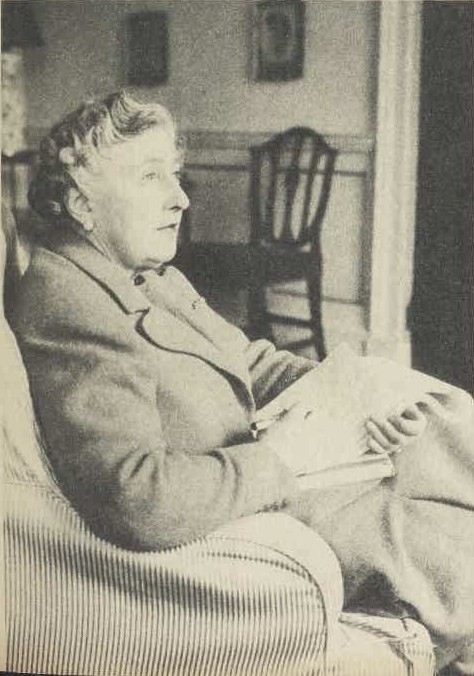
In 2026, armchair sleuths all over the world will celebrate the legacy of Agatha Christie on the 50th anniversary of her death. For a woman who once described her books as ‘of no importance’,1 she has left a remarkable impact on literature.
Christie is recognised as the highest selling author of all time. She holds the Guinness World Record as the most translated author in history and, in 1971, was made a Dame for her contributions to literature. This contribution was the development of crime fiction as a serious literary genre. Christie was one of the leading authors of the golden age of detective fiction, a period between the two World Wars that first awarded her the title as the undisputed ‘Queen of Crime’.
For such an influential writer, it might be surprising to learn that the collection at State Library Victoria was lacking in Agatha Christie novels. This decision was likely influenced by the Library’s historic focus on research collections, separate from the popular fiction you might find in your local public library.
In 2025, the library embarked on a special ‘Agatha Christie project’ to acquire first edition Christie titles in time to celebrate her anniversary year. The project was generously supported by the Women Writers Fund and the Helen MacPherson Smith Trust, to ensure that the work of such a significant female author is represented in the state collection.
As an Agatha-obsessed Librarian, the privilege of acquiring these titles has been mine, and over the past year I have spent many blissful moments scrolling the websites of rare book sellers to handpick a selection of titles, some of which will now go on display in the 2026 World of the Book exhibition which will open on the 4th of July. Here are some of the titles you can expect to see:
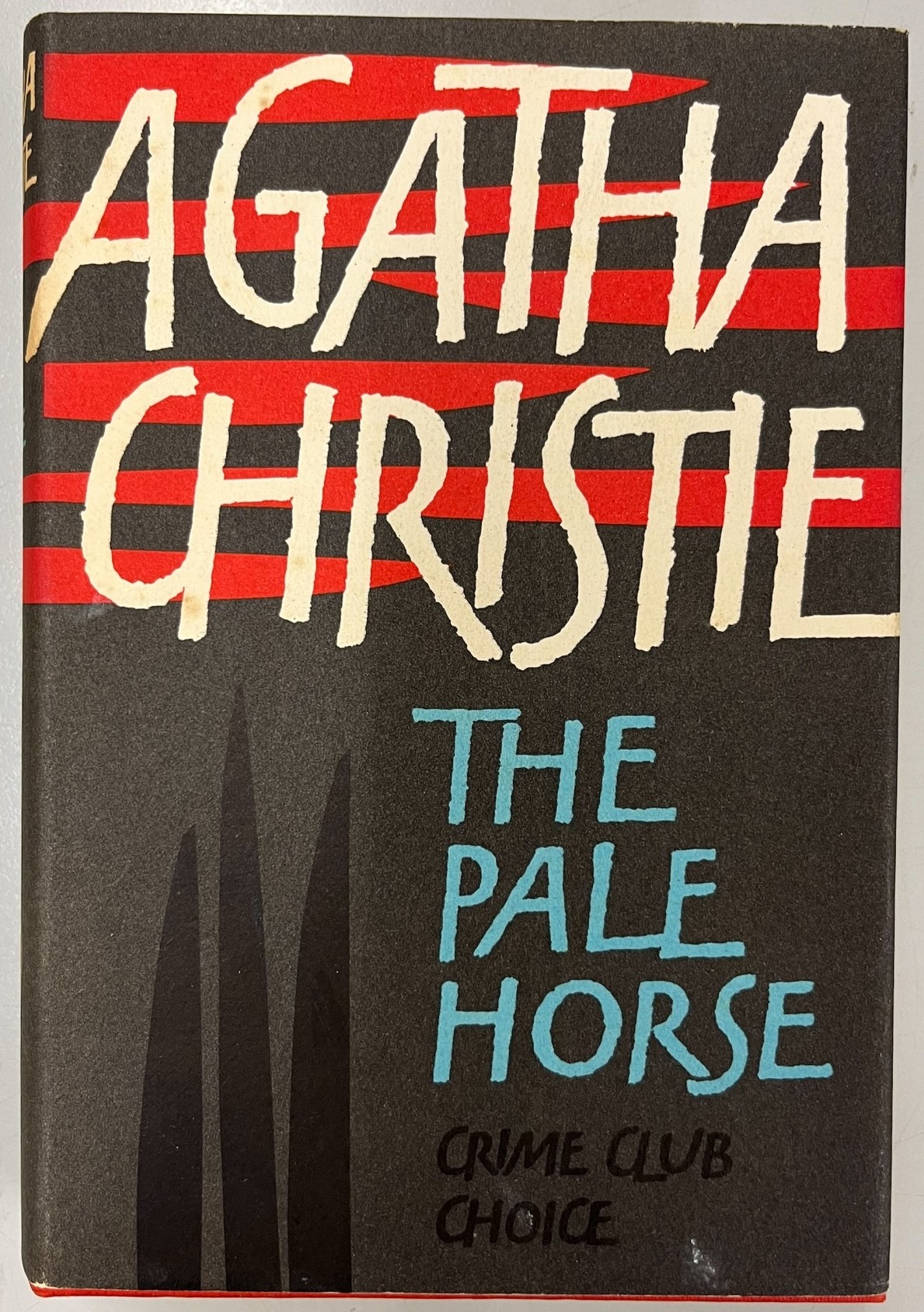
Sparkling Cyanide (1945) and The Pale Horse (1961)
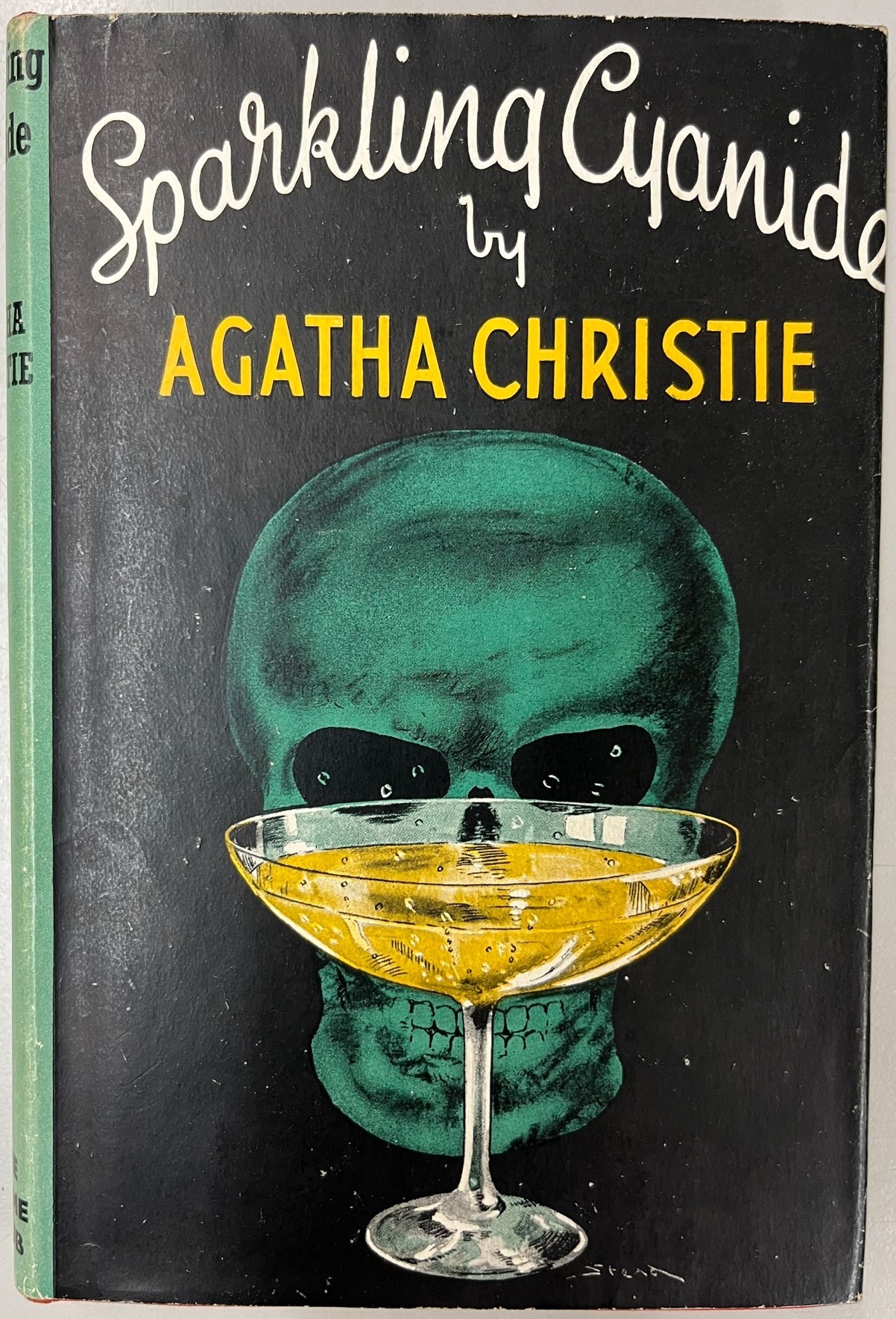
This UK first edition of Sparkling Cyanide has a striking cover design and a plot that centres around a subject Christie was an expert in — poison. Christie trained as a nurse during the First World War, before moving into the dispensary where she developed an in-depth knowledge of poisons. In total, Christie killed 80 of her fictional victims with poison.2 Cyanide, arsenic, strychnine and thallium were just some of the deadly substances in her repertoire. With so many dead bodies, Christie had to find inventive ways of introducing the poisons to her victims, including through a poisoned dart, an allergy puffer laced with prussic acid, and in a death that the English would find truly abhorrent — poisoned marmalade.
Christie didn’t always use her knowledge of poisons to kill. Her talent for accurately depicting symptoms of poisoning proved lifesaving on more than one occasion. In her novel The Pale Horse, Christie described the symptoms of thallium poisoning — hair loss, headaches and nausea — which helped catch a serial killer in 1971, saved a husband from his murderous wife in 1975 and assisted a nurse to treat a sick child in 1977.3
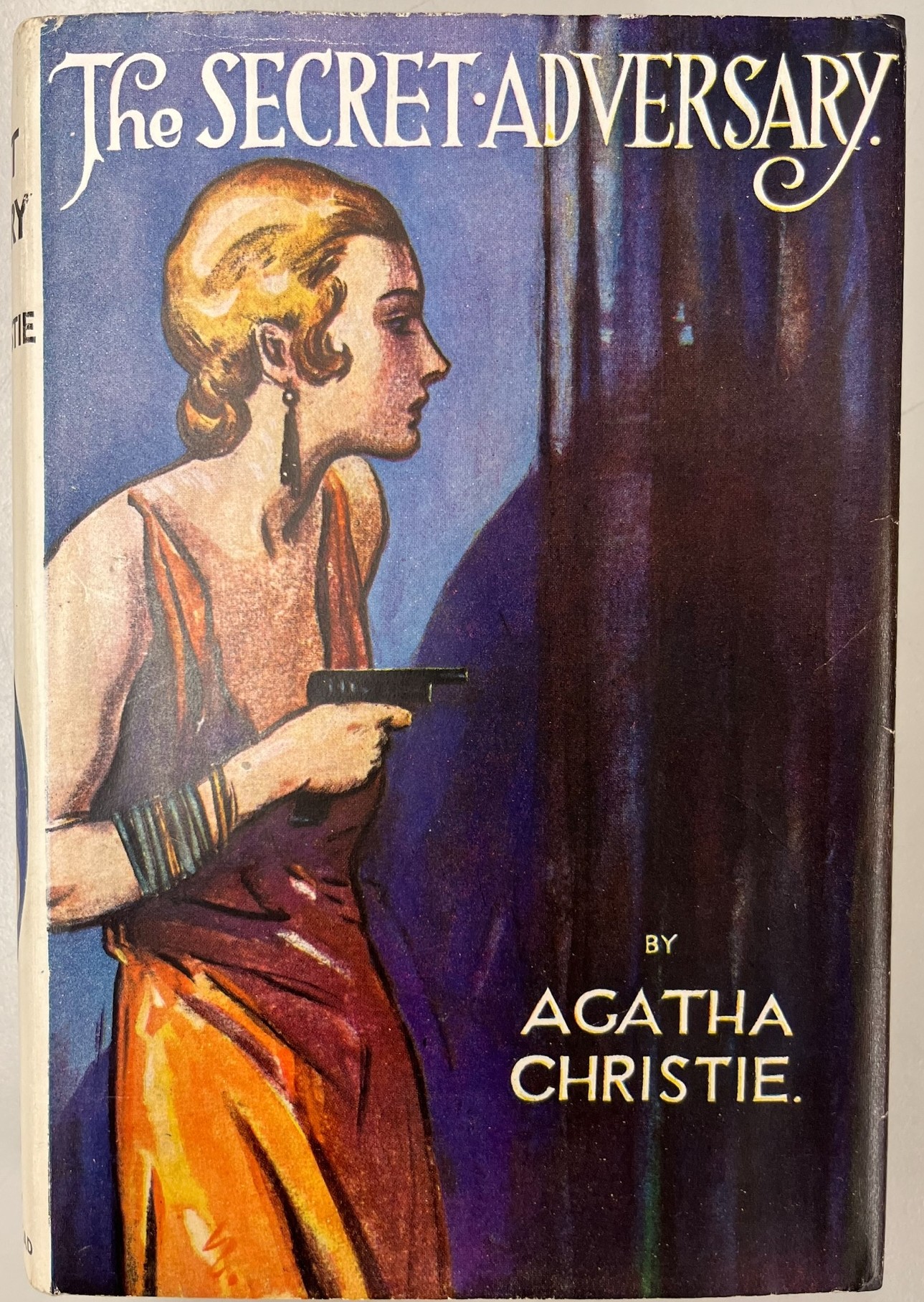
They Came to Baghdad (1951) and The Secret Adversary (1933)
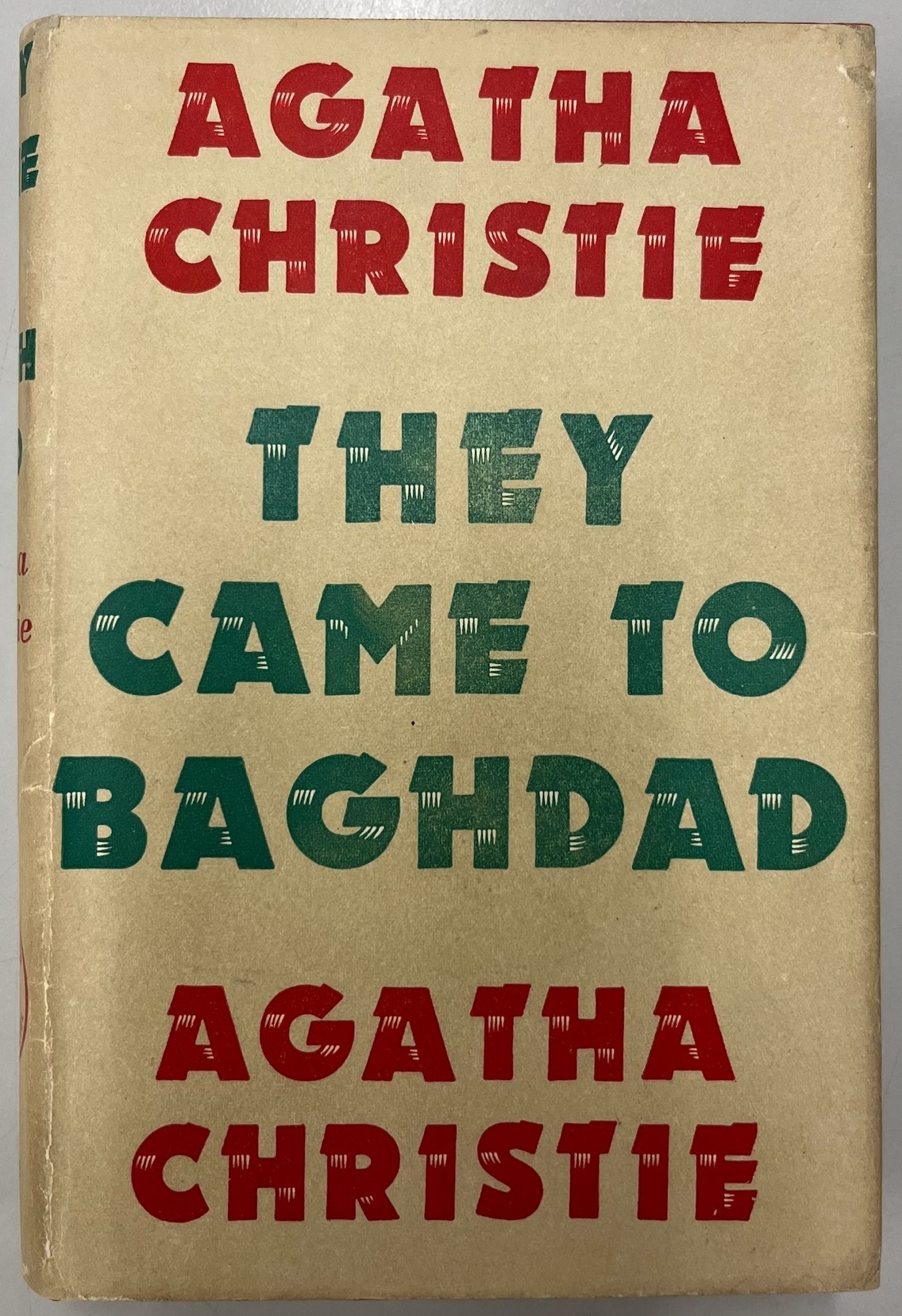
They Came to Baghdad is an adventure-thriller novel featuring a strong female protagonist named Victoria Jones. This UK first edition is significant because it is set in Iraq, a place where Christie spent some time with her second husband, Max Mallowan, who was an archaeologist.
Agatha loved to travel (even though she suffered terribly from seasickness) and her enthusiasm for adventure is best exhibited in the dedication in her second novel, The Secret Adversary, which reads, ‘To all those who lead monotonous lives in the hope that they may experience at second hand the delights and dangers of adventure’. The book was published the day before Christie set off on a nearly year-long round-the-world trip as part of the British Empire Mission, where she visited Australia and spent some time in Melbourne.
Our copy of The Secret Adversary is a 1933 ‘cheap edition’, published by The Bodley Head to capitalise on Christie’s growing fame in the 1930s. By this time, Christie had left The Bodley Head and moved to Collins as her preferred publisher, as they offered her much better terms. The Bodley Head retained the rights for Christie’s first six novels, and re-released them with new artwork, such as our copy which features Tuppence Beresford (another of Christie’s strong female protagonists) on the cover.
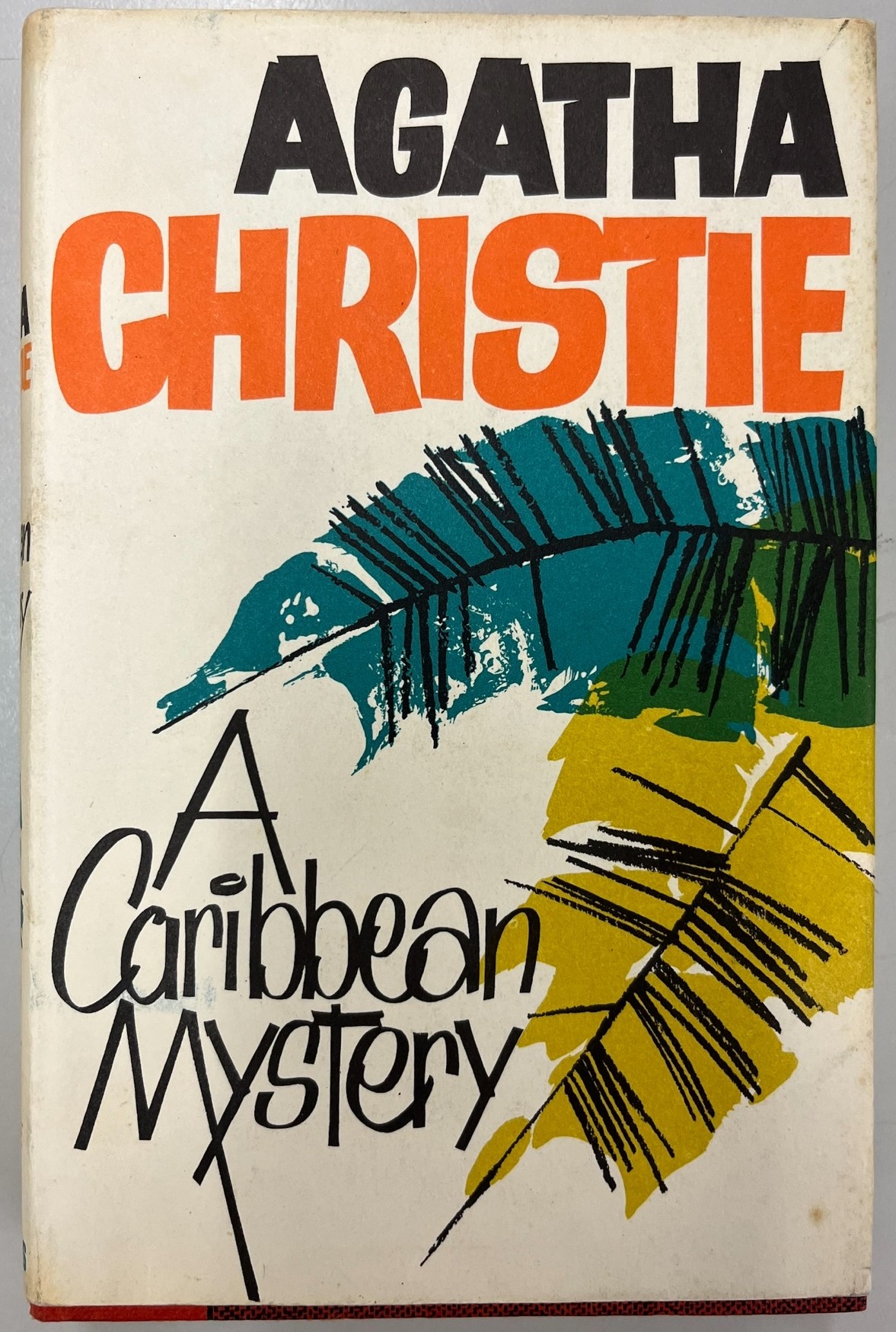
4.50 from Paddington (1957) and A Caribbean Mystery (1964)
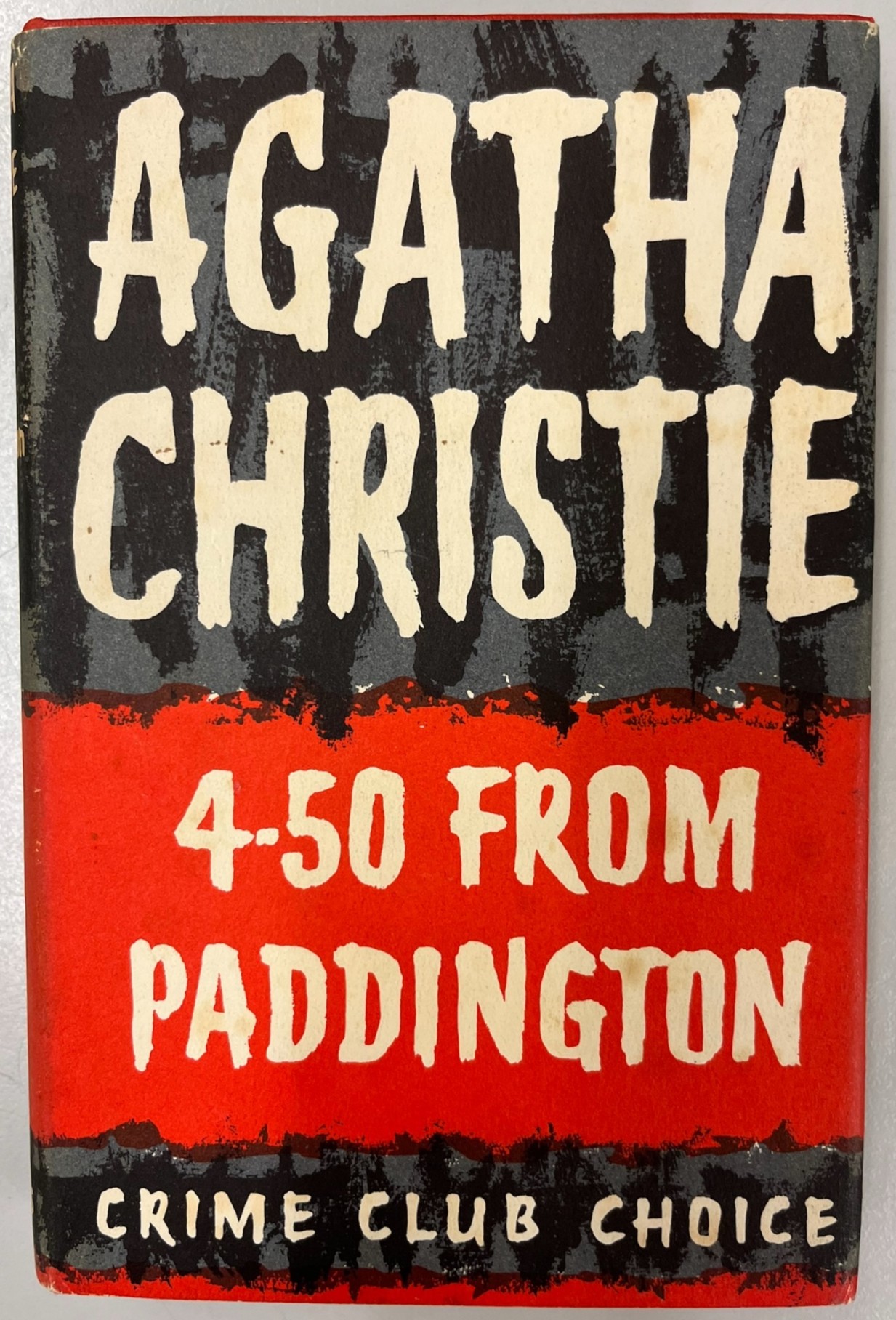
Christie has become synonymous with luxury train travel. Although you might immediately think of Poirot when you think of a mystery set on a train, my favourite is 4.50 from Paddington. This novel features Miss Marple, the spinster sleuth with an ear for village gossip. Christie once wrote, ‘Miss Marple has some faint affinity with my own grandmother, also a pink and white pretty old lady who, although having led the most sheltered and Victorian of lives, nevertheless always appeared to be intimately acquainted with all the depths of human depravity’.4
A Caribbean Mystery is the only Miss Marple mystery set abroad, with the mystery taking place in the West Indies. In 1928, Agatha had intended to travel to the West Indies but at the last minute was convinced to change her plans and travel on the Orient Express to Istanbul and then on to Baghdad.5 The decision would prove life-changing in more than one way. The journey inspired one of her most famous novels, Murder on the Orient Express, and also introduced her to Leonard and Katharine Woolley and the world of archaeological digs. It was on one of the Woolley’s digs in 1930 that Christie met Max Mallowan, who she subsequently married in Edinburgh later that year.
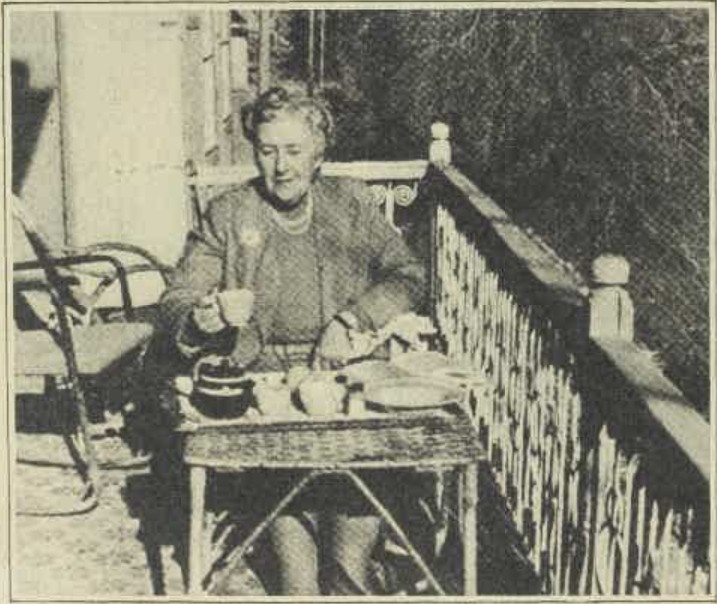
Over the course of her 55-year career, Christie published more than 80 books, including detective novels, thrillers, short story collections, memoirs, a book of poetry, and six novels under the pseudonym Mary Westmacott. These books, which were plotted and written while working in a hospital dispensary, at her homes in Devon, Oxfordshire and London, and in a tent on archaeological digs in the Middle East, continue to delight, excite and intrigue readers. You, too, can celebrate the legacy of Agatha Christie with a visit to the 2026 World of the Book exhibition at State Library Victoria, where more than 20 first-edition Christie novels will be on display.
References
- Gonzalez, A F (1970) ‘The gentle Duchess of death’, Canberra Times, 12 November 1970, p 28.
- Reynolds, C (2012) ‘Agatha Christie’s Methods of Murder’, The Home of Agatha Christie [website], accessed 15 April 2026.
- Agatha Christie Limited (2026) ‘The Pale Horse’, The Home of Agatha Christie [website], accessed 15 April 2026.
- Christie, A (1953) Miss Marple and the thirteen problems, Penguin Books, London, p 6.
- Christie, A (1977) An autobiography, Collins, London, p 361.


Hi. Such an interesting life this lady had.
Can’t wait to attend the talk next week.
I have a hardcover of Ordeal by Innocence 1959 UK edition which I am will to donate if that’s of any interest.
Otherwise a great collection. Will you be collecting “The Saint” books? These are all getting quite rare too. I’m happy to donate my complete set if they are of interest.
Hi Cindy,
If you complete our online form ‘Offer collection material to the library‘ someone from the team will get back to you.
thanks,
Melissa
My favourite editions are those which feature the beautiful, evocative, and often slightly haunting covers by the artist Tom Adams. One of my favourite books is a collection of his covers for Christie’s’ novel with the background to each cover, often featuring his comments.
His covers certainly are eye catching! We have the book about his cover designs in the collection- a fascinating read!
Another way to make women authors available to the public would be for the library to subscribe to the Hathi trust- then thousands of on line books could be available for members to view online for free.
My humble contibution to the great dame is the novel Almost Agatha Christie based on the play Agatha Crispie.