
State Library Victoria members can access hundreds of databases from home (if your home is in Victoria). That’s millions of articles, magazines, archives, eBooks, videos, songs, audio books and more, available through the catalogue anytime. We’re taking a closer look at new and/or interesting databases as well as hidden gems from our collections. Read on for top picks and tips from Librarians.
Not a member yet? Sign up online first and reward your curiosity.
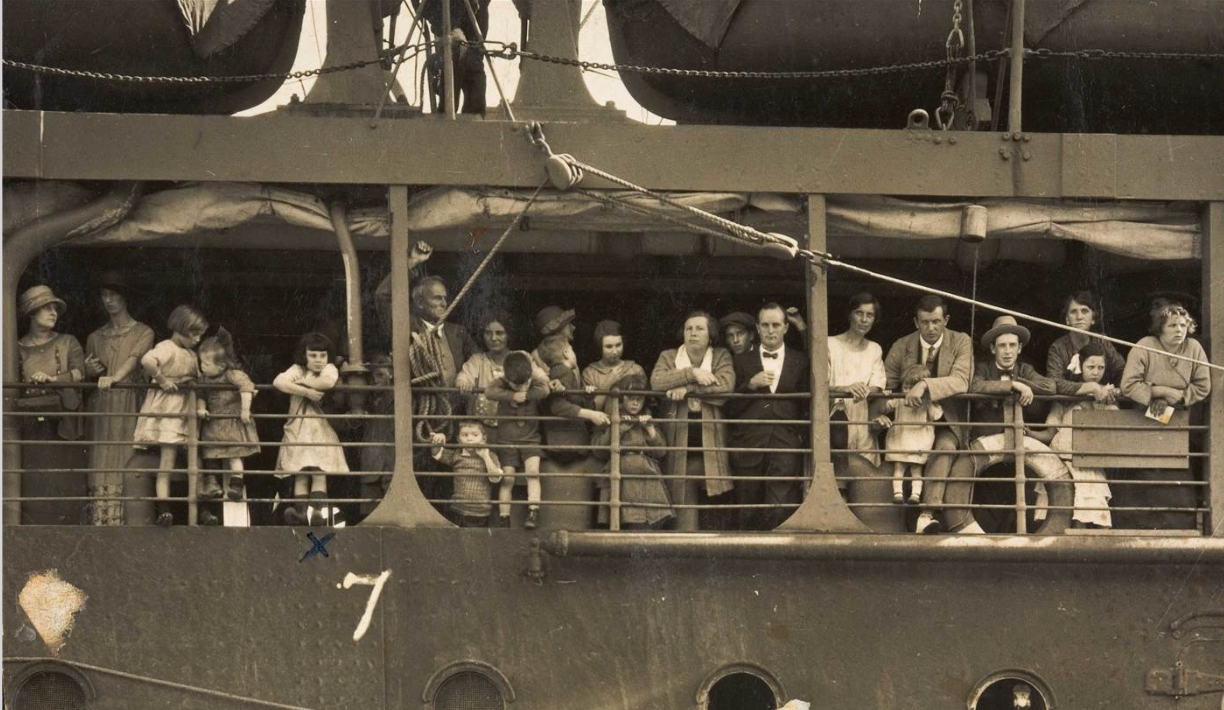
Today we look at Migration to New Worlds, a multi-archive database of sources relating to migration from Great Britain, Ireland, mainland Europe, and Asia to Australasia and North America. The database comprises of two modules:
The Century of Immigration (1800 to 1924) which covers all aspects of the migration experience, from motives and departures to arrival and permanent settlement, and The Modern Era which focuses on the growth of colonisation companies and emigration societies in the 19th century, the activities of immigration and welfare societies, and the plight of refugees and displaced persons throughout the 20th century.
What makes this database so great?
Migration to New Worlds presents a unique insight into the personal stories and experiences of migrants in the 19th and 20th centuries. It consists of diaries, correspondence, photographs, maps, oral histories and other primary documents, which have been selected from more than 25 archives, libraries and museums, including the British Library, National Archives (UK), University of Melbourne Archives, Maritime Museum of Tasmania, Museums Victoria, National Archives of Australia and the National Library of Ireland.
Although much of the collection focuses on the migration of Europeans to North America, it can be used to supplement the material that focuses on Australia, and can help answer some often asked questions, such as: what motivated our ancestors to leave their homeland; what was the ship’s voyage like, what happened to people once they arrived and what would their early experiences in a foreign country have been like?

Finding collection items
Click on the Introduction tab to find information on the Nature and Scope of the material included in the database. On this page there is also a category called Thematic Areas, which lists the documents that make up Migration to New Worlds. They are indexed by such themes as: motives for immigration; departures – port conditions and organisation; journey conditions; arrivals – ports and early experiences; displaced persons and refugees; and responses to immigration.
Use the Advanced search option to perform complex searches, or select the Search directories option to browse through a list of selected keywords, people, ships, ports and places.

Some highlights
Here are a few selected highlights from the database.
Shipping advertisements
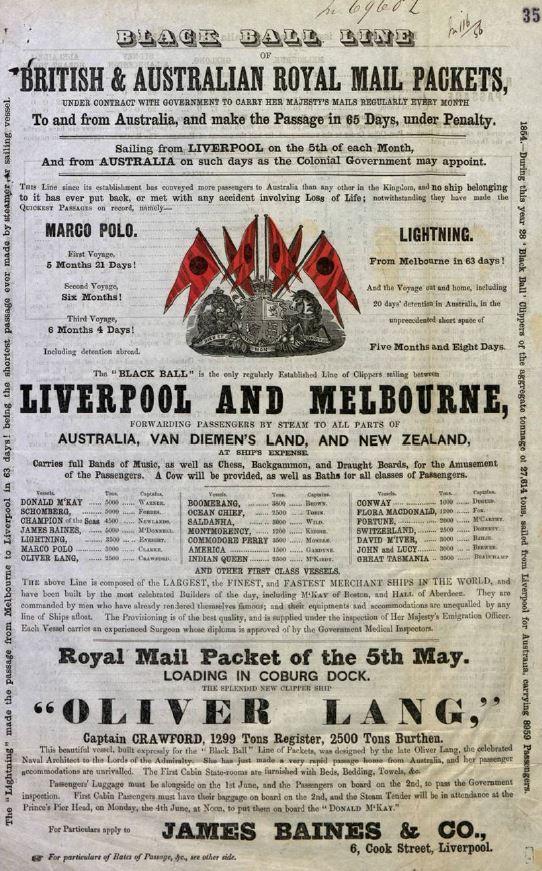
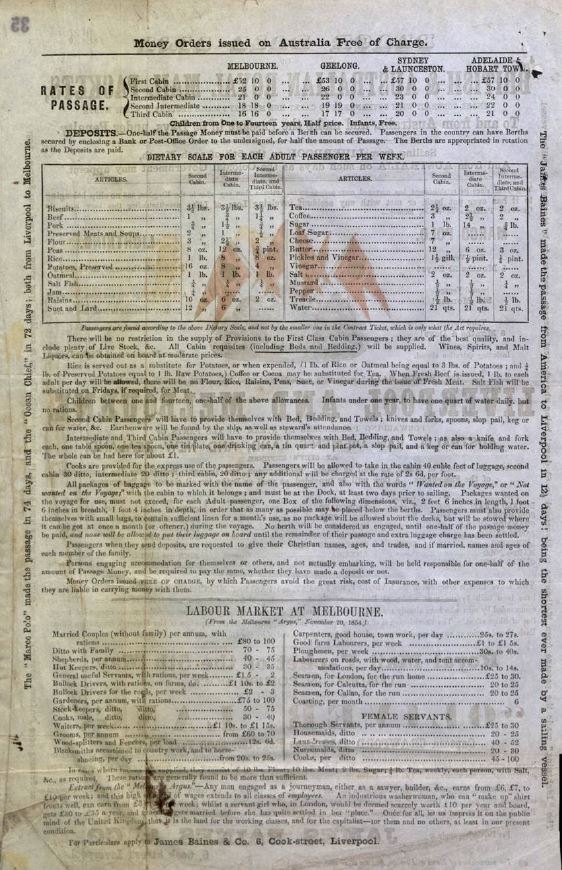
This advertisement for the Black Ball line of passenger ships would have provided useful information for potential emigrants who were deciding which ship to journey on. On the poster you can see: the length of the journey, the rate of passage, baggage allowance and the dietary scale of food provided each week. There was also information on the labour market in Melbourne, listing the salaries for in-demand professions such as: servants, bullock drivers, farmhands, labourers and seamen.
As an incentive to choose a Black Ball ship, this particular advertisement emphasised that their vessels carried ‘full bands of music, as well as chess, backgammon, and draught boards, for amusement of passengers’ and, perhaps even more desirable: ‘A cow will be provided as well as baths for all classes of passengers.’
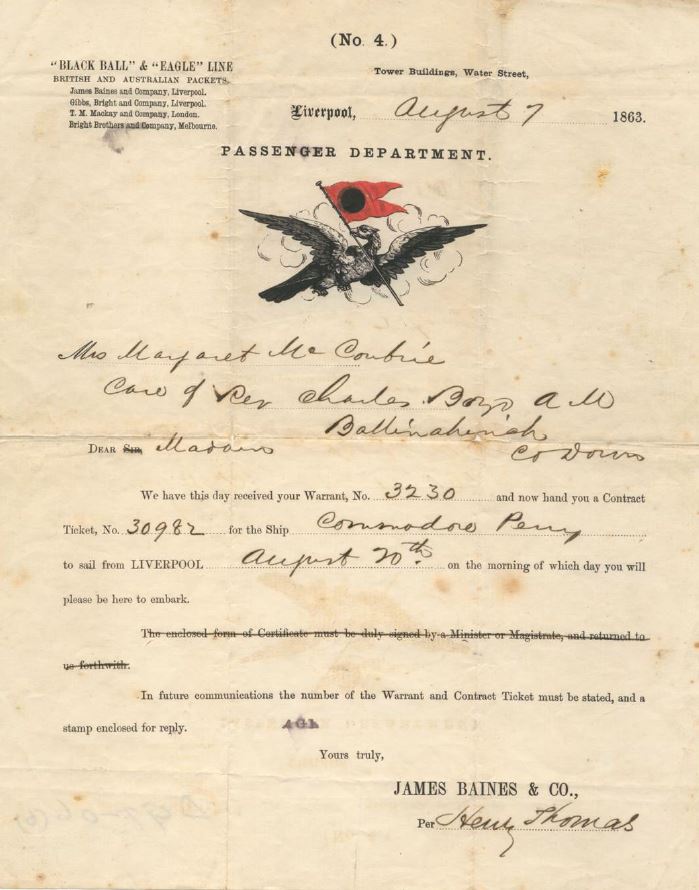
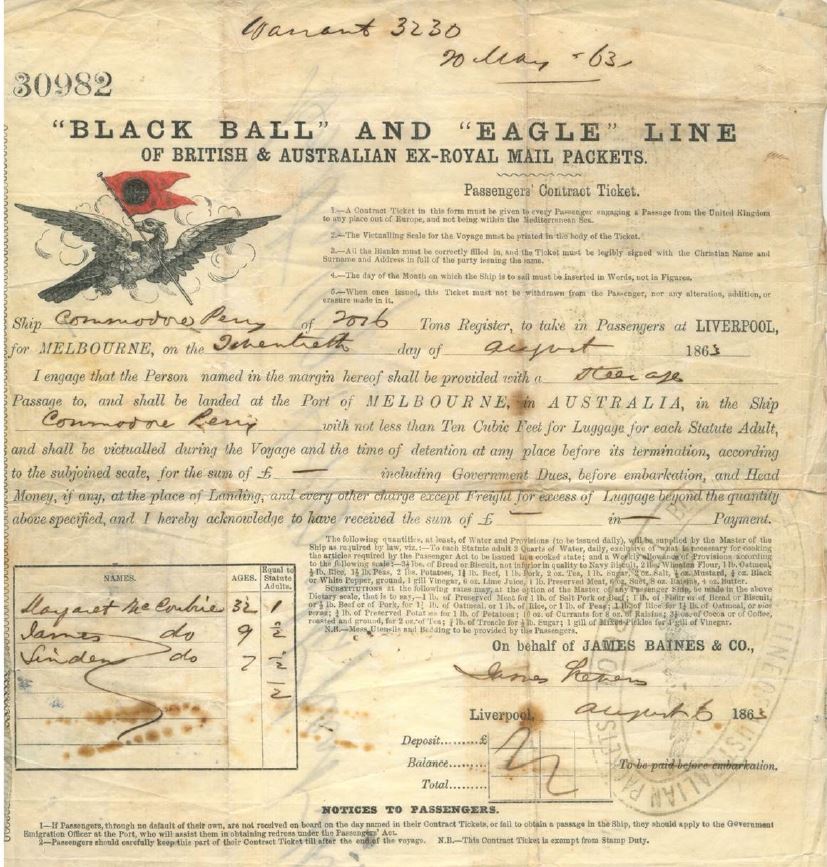
Passenger contract ticket
Very few 19th century passenger contract tickets have survived to the present day, so it’s interesting to finally see an image of one. This ticket is for Margaret McCombie (McCombrie) and her two children, who sailed to Australia on the Commodore Perry in 1863. Contract tickets were issued to every passenger who ‘engaged a passage from the United Kingdom to any place out of Europe… not being within the Mediterranean sea’. The tickets usually included a copy of the victualling scale, the amount of luggage space provided and date of departure.
Emigrant guides
In the 19th century there was a large market for emigrant guides and tracts. These fascinating publications provided advice for anyone contemplating immigrating to Australia and usually contained information on how to: choose a good ship, prepare for the journey, manage shipboard life and adjust to life in the colonies.
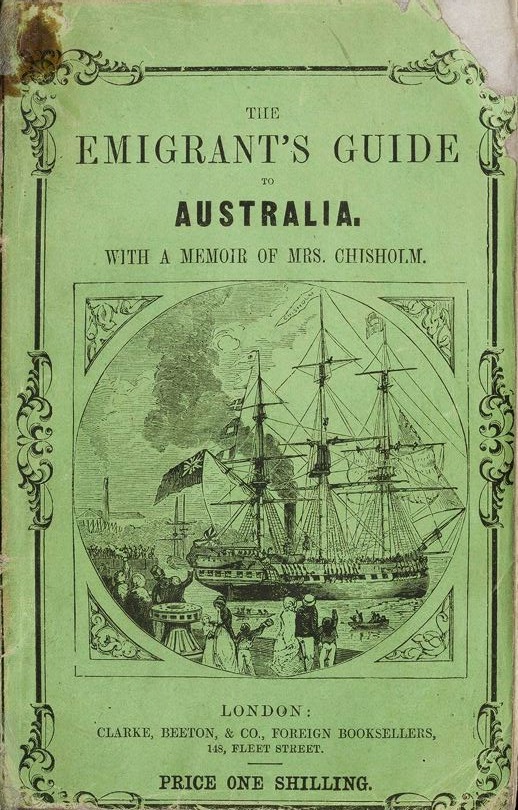
Several 19th century emigrant guides can be found on Migration to New Worlds, including the Emigrant’s guide to Australia: with a memoir of Mrs. Chisholm, published in 1853. This guide lists numerous rules and regulations on how to behave onboard the ship, medical advice, household hints, bush cookery recipes and information on the Port Phillip district and life on the goldfields. It also includes a list of recommended supplies to pack, such as: preserved vegetables, meat and milk, a ham, cheese, a jar of pickles, mess utensils, an iron pot, a folding chair, a light iron bedstead, and, if you could afford it, a soda-water machine.
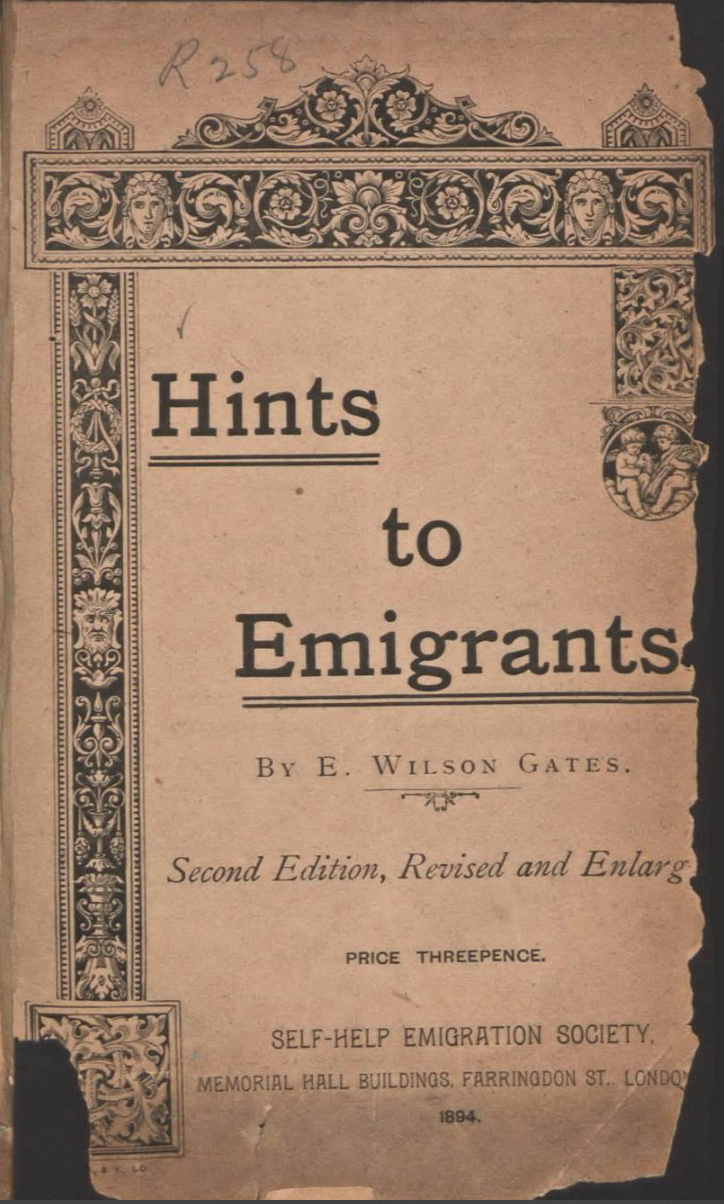
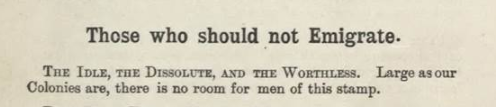
The Hints to emigrants pamphlet provides intending emigrants with information on how to get to the colonies, describes life in Canada and Australasia and includes a section on who should emigrate, who should think twice, and who should not emigrate.
You can find many other emigrant guides and tracts through both the State Library Victoria’s catalogue and the Trove website.
Colonization circulars 1843-1863
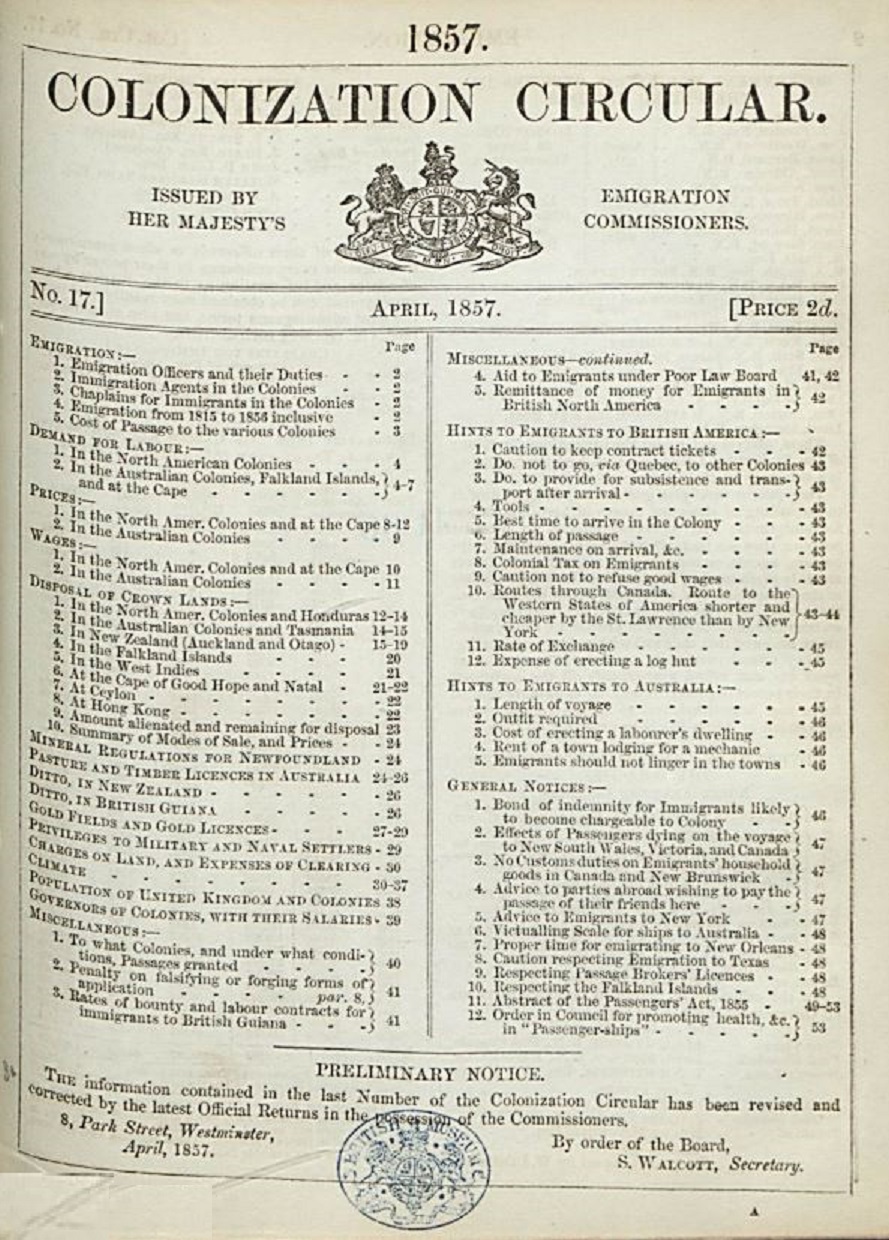
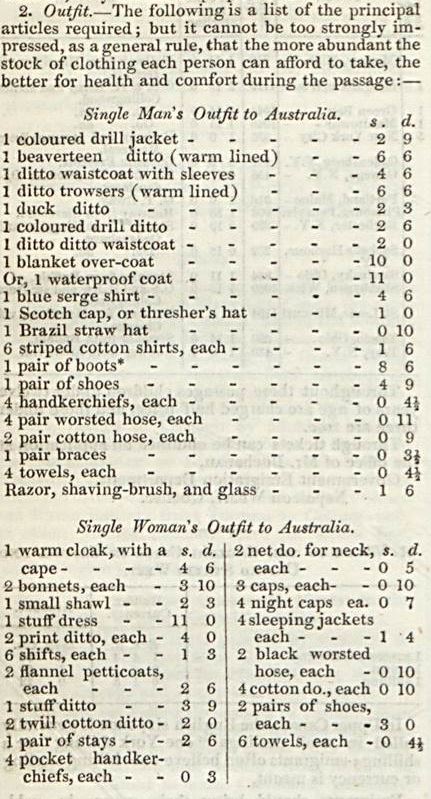
Issued by the Colonial Land and Emigration Commissioners, these occasional (later annual) Colonization Circulars were designed to provide emigrants and emigration officials with important information on immigration issues and life in Australia. They regularly listed the names and duties of current Emigration officers, prices, wages and labour demands in the colonies, the cost and length of passage to the various colonies, suggested outfit requirements and notes on assisted passage schemes.
Shipboard diaries and correspondence
On Migration to New Worlds you can find a great selection of shipboard diaries, journals and correspondence. Written by people who had journeyed to Australia, these documents describe various aspects of their journey: the living conditions, day-to-day tasks, social activities, weather reports, ill health, boredom, and homesickness.
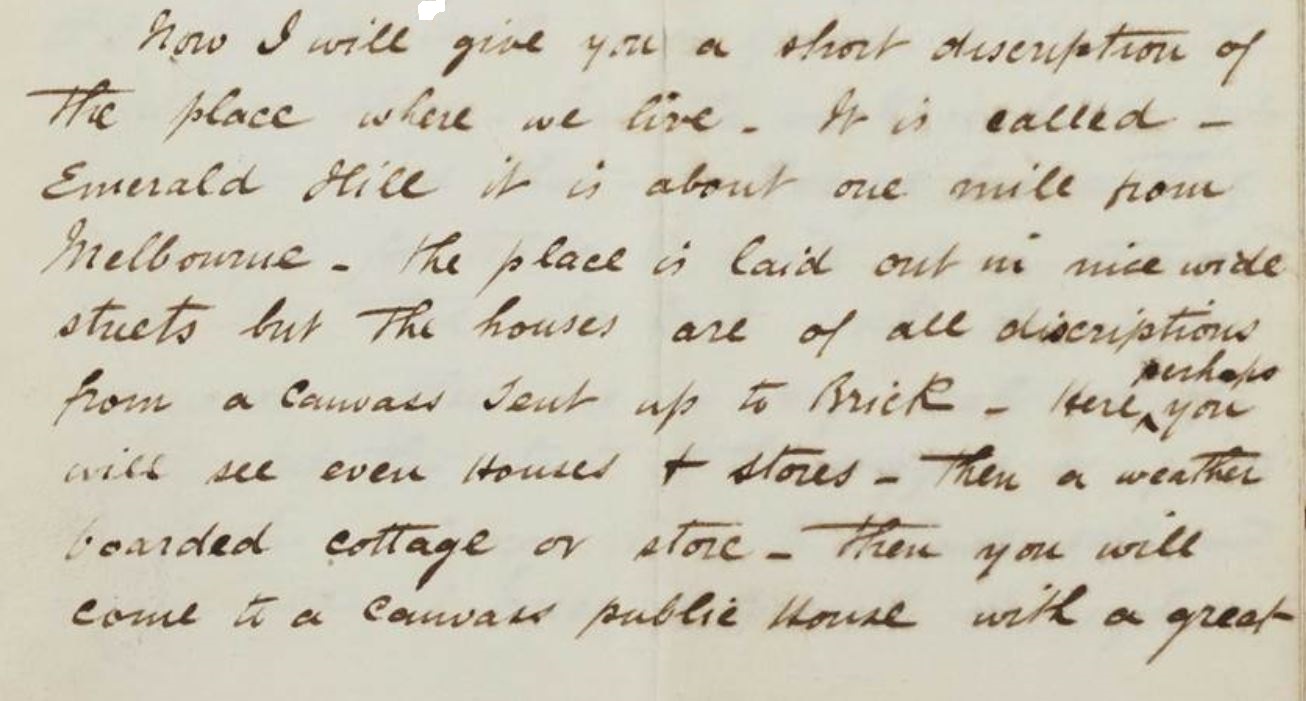
A Letter from John Hollway After Arriving from England in Melbourne provides a valuable insight into the kind of experiences a migrant might have had when first landing in Australia. Written by John Hollway only four days after his arrival in Melbourne on 18 October 1852, it describes the daily life on board the ‘Panama’ and then reports on his initial view of Melbourne and his success in finding accommodation and employment.
Now I will give you a short description of the place where we live. It is called Emerald Hill it is about one mile from Melbourne – the place is laid out in nice wide streets, but the houses are of all descriptions from a canvas tent up to brick. Here perhaps you will see even houses and stores – then a weather boarded cottage or store – then you will come to a canvas public house with a great flag and a flaming sign with “Board and lodgings” in fact you would think you were at some fair or races on a very large scale, for I dare say there are 500 houses scattered over some miles.
The following excerpt, from Alfred Elder’s diary was written on 1 June 1875, during his passage to Melbourne.
Weather very fine, there was a beautiful sunrise, there is not a ripple on the water if we had been in a sailing ship we would have stood still. After dinner a swell came on and when were sitting at tea the dishes began to slide from side to side, the ship was rolling so much, in the forenoon we got notice that the 1st and 2nd class would have a concert aft on the poop at 7.30 there was a good attendance but the best fun was the forms (benches) and chairs with the people sliding from one side to the other, they had up the piano from the saloon, but they had to lash it to the deck, there were songs from 1st, 2nd & 3rd class passengers it was all over at 10 o’clock, there was a collection taken… for the benefit of the Merchant Seaman’s Orphan Asylum.
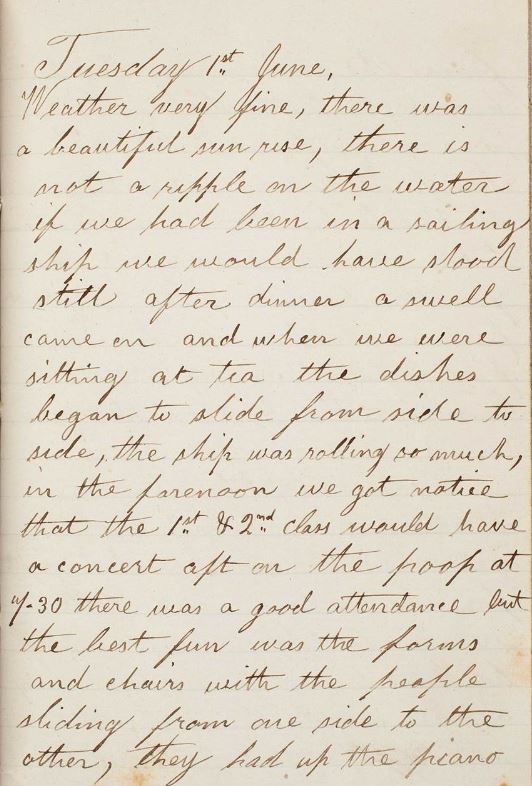
These publications compliment the large collection of shipboard diaries already held in our collection.
Shipping lines
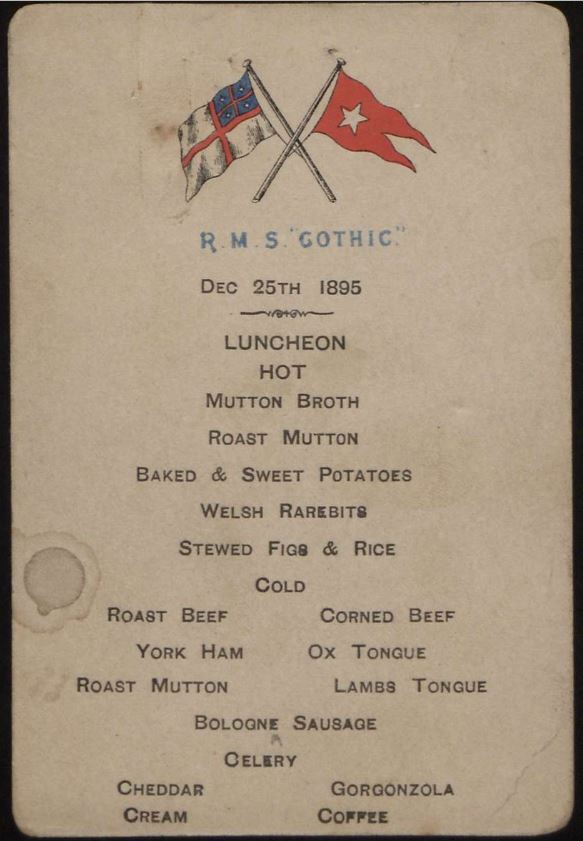
The growth of mass migration in the 19th century, saw many of the major shipping lines compete to build larger, faster and more affordable ships, that also catered for many of the finer aspects in life. This is evident in the impressive Christmas lunch menu of the Royal Mail Ship Gothic, December 1895.
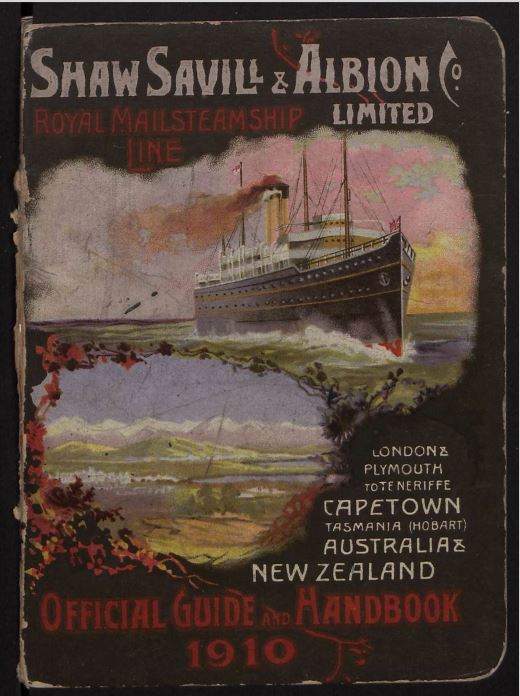
Shipping companies also produced high quality travel brochures, promoting their services. This brochure from the Shaw Savill and Albion Company Limited, includes a full description of the fleet, prices for single and round-the-world tickets, and photographs of the interiors of their ships and specific destinations.
Emigration schemes
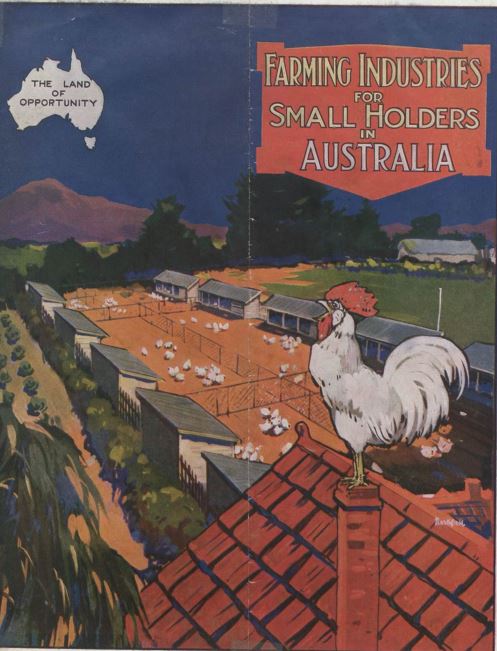
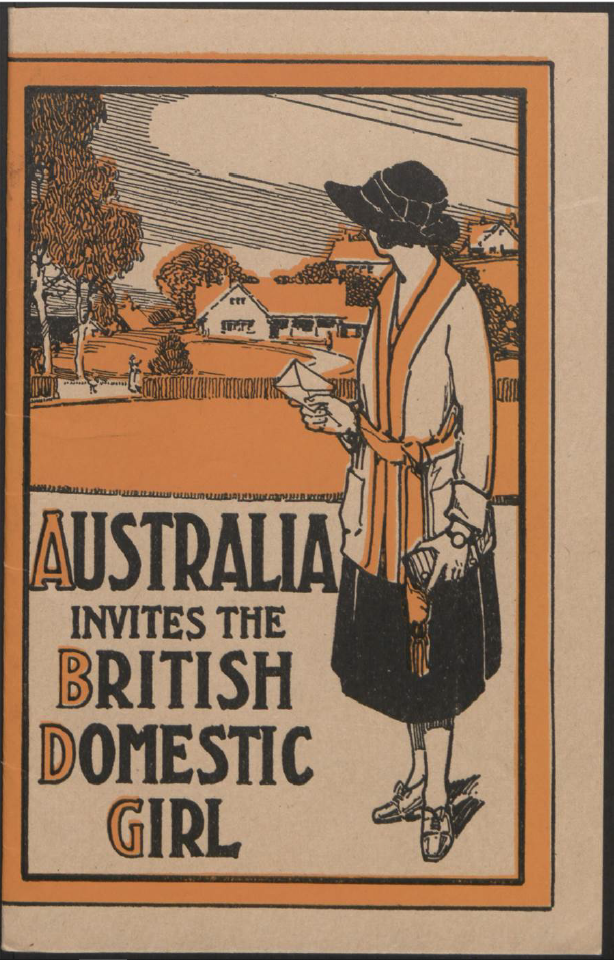
In the 20th century, the Australian government implemented numerous emigration schemes, aiming to populate the country and build a stronger economy. Many of these schemes targeted particular groups — some were created to get men working in the industrial, agricultural and mining industries, whilst others were aimed at attracting single women, who would hopefully provide much needed domestic labour.
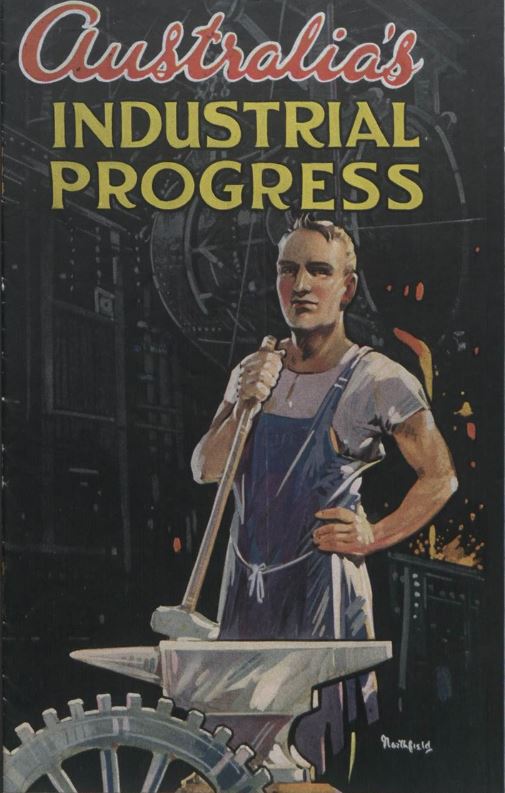
Life in Australia
To help new settlers adapt to life in Australia, the government produced a series of guides — many of which were given to people before they actually arrived. The guides provided information on housing, education, learning English, social services, employment and entertainment.

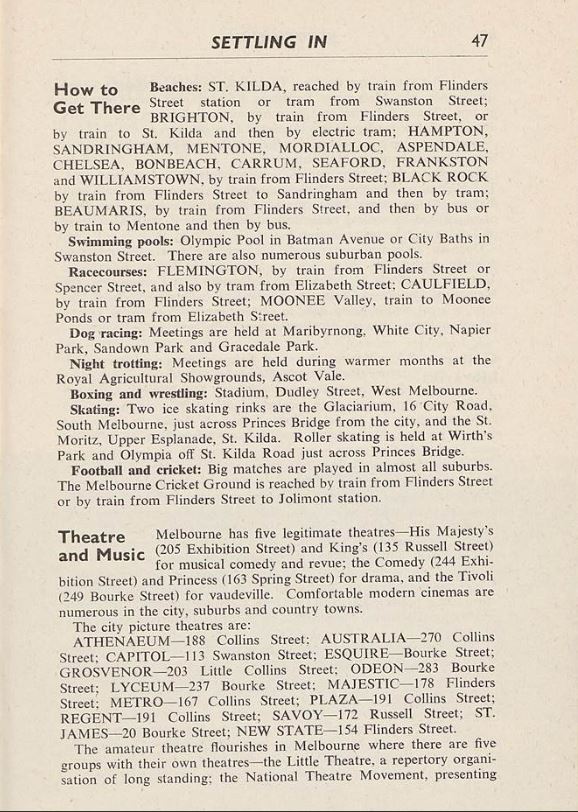
Settling In. A Guide for your Early Days in Australia, 1952
We hope you find plenty of other interesting material while exploring Migration to New Worlds. See a full list of all of our databases, including databases on trial, by visiting our A-Z Databases page.
Do you have a research query or questions on how to use our online collections? Ask a Librarian.
More to explore
Your ancestor’s world — 19th century Victoria
This blog includes snapshots from our collections and beyond, to help you build a picture of the journeys undertaken and of the Victoria your ancestors may have inhabited in the 19th century.
Online collection spotlight: Life at sea
Read about the Life at sea database, which brings together material from maritime archives and heritage collections in England and the United States. Voyage through the 17th and 18th centuries and discover what life was like during the Golden Age of Sail with a fascinating collection of artefacts, diaries, memoirs and artwork from those who experienced the open waters first hand.
To the land of Hope! Mid-19th century voyages from the UK to Victoria
This blog explores some often overlooked aspects of a migrant journey, including their motivation for emigrating, leaving home, arriving at the port of departure, the voyage and life on board the ship.
Victorian immigration and emigration research guide
Provides information on researching Victorian assisted and unassisted passenger lists, outward journeys and crew lists.


Having just completed an account of my ancestors’ migration to Australia, I shall explore the new database with interest. One of my ancestors left Birmingham, UK for Melbourne in 1851 (a gold miner); two brothers arrived in VDL from Yorkshire in 1832 (convicts); and my grandfather and great uncle migrated to Melbourne from Birmingham, UK in 1912 (they were joiners). I have many documents relating to these movements which may be of interest.
Hi Peter, It sounds like you’ve had great success with your family history research! To find other records relevant to your family, you might like to explore some of our family history research guides. In particular our guides on Ships and Shipping, Researching your Victorian ancestors, and Victorian immigration and emigration should lead you to a range of primary sources, records, and indexes relevant to researching the migrant experience. Kind regards, Ann
I’m interested in my ancestors journey by ship from Tovo Santa Agata in Northern Italy near Switzerland in the 1890’s
They were the Senini’s and Armanesco’s.
The settled at poverty point in Walhalla.
Hi Michelle. You can access a range of passenger lists through the Ancestry database (available here at the State Library Victoria and in all Victorian public libraries). You can also access Victorian passenger lists through the Public Record Office Victoria Passenger records website. Not all ships have a detailed description of their journey, however if you go to the Ships journey page of our Ships and Shipping research guide, you will find a selection of resources that may help you to identify if a log or description of the voyage exists. Good luck! Ann
Thank Ann, a great read with some handy references. One of my ancestors travelled back from Liverpool to Melbourne with his 10 years old daughter. They arrived on the “Great Britain” on 24 December 1861. Also on board was the English Cricket team on the first visit to Australia. The newspaper reports were quite extensive. I have tried to imagine what it must have been like for a little 10 year old girl from Leeds travelling to Melbourne with her father, who she had not seen for seven years, arriving to such welcome put on for the cricket team. I know that I would have been overwhelmed. Thank you once again
Hi Max, Thank you so much for sharing your story. What a fantastic piece of family history you have uncovered! Like you, I’m always trying to imagine what it would have been like for those who immigrated to Australia in the 19th century. What extraordinary people they were. Kind regards, Ann