
Do you want to do a deep dive into medical folklore? Have you ever wondered why people make fun of jazz? What were the building blocks of modern horror movies? Have you wondered why Asperger’s syndrome was removed from the DSM? Or thought about the social impact of the human papillomavirus vaccine? Do you need a primer on literary theory? On climate hazards? On planetary systems? And just what did Herman Melville’s short stories reveal about his thoughts on slavery?
Oxford Academic Books has you covered.
State Library Victoria members can access hundreds of databases from home (if your home is in Victoria). That’s millions of articles, magazines, archives, ebooks, videos, songs, audiobooks and more, available through the catalogue anytime. We’re taking a closer look at new and/or interesting databases as well as hidden gems from our collections. Read on for top picks and tips from Librarians.
Not a member yet? Sign up online first and reward your curiosity.
Today we’re looking at Oxford Academic Books.
What makes this database so great?
With over 500,000 ebooks, Oxford Academic Books has something for every big brain and every aspiring big brain! Specialising in serving scholars, students, practitioners and researchers, this database is wonderful for anyone who wants to build a deeper understanding of their specialisation.
Oxford Publishing (and thus Oxford Academic Books) places a premium on high quality research and you will often find appendices or linked material containing methodologies, analysis codes used and updates to the research. This means that the way conclusions are reached is more transparent and can be more thoroughly interrogated by readers and fellow researchers. In this age of misinformation, disinformation and data opacity, it’s nice to be able to access this kind of detail.
Covering subject areas from quantum physics to the medieval roots of the romance novel, the Oxford Academic Books database is for those who want to get into the details, those who like to find a trail and follow it as far as it goes.
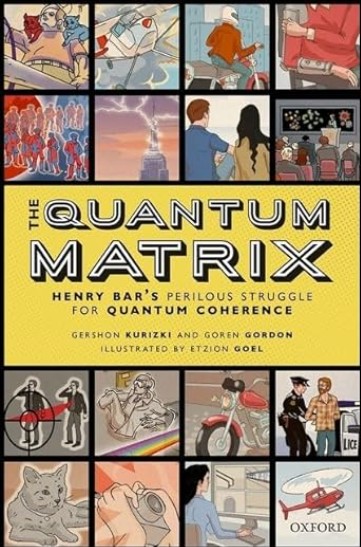
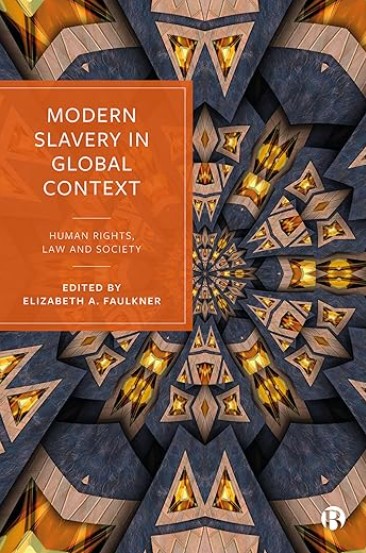
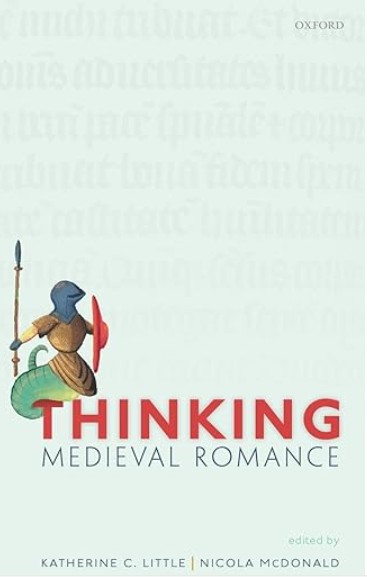
Left to right: Kurizki G and Goren G (2020) The Quantum Matrix: Henry Bar’s Perilous Struggle for Quantum Coherence, Oxford University Press; Faulkner E (ed.) (2024) Modern Slavery in Global Context: Human Rights, Law, and Society, online edition, Bristol University Press, Bristol; Little, K.C and McDonald N (eds) (2018) Thinking Medieval Romance, Oxford University Press, England.
Searching and saving
Oxford Academic Books has many of the features we have come to expect from a modern database such as searching within the full text of a book, constructing complex searches and exporting citations. This database has a number of other features which users can employ to their benefit. Create a free personal account in Oxford Academic Books and you can set up ‘New book alerts’. These can be tailored to your specific areas of interest and can be delivered daily, weekly, fortnightly or monthly – you get to choose. Signing up for these alerts doesn’t relegate you to an onslaught of marketing emails either, you can log in and manage your preferences for what kinds of promotional material you’d like to see (if any).
Some highlights
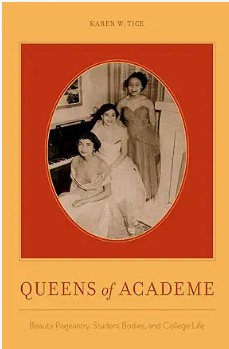
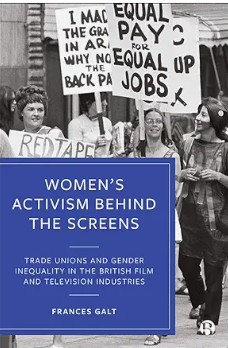
Multi subject databases like Oxford Academic Books really are for everyone. The database offers browsing by keywords and recommended reading so you don’t need to know all the ‘right’ words to embark on your research journey. Navigating from the ‘Subject’ menu is a good way to start. From there you can build your vocabulary as you drill down, subject heading by subject heading. Starting with a very simple keyword search for ‘women’ and following the subject headings yielded the below results (among many others). These are all of a piece, but the thread from beauty queens to the British television industry or to racial justice shows the value of a multidisciplinary database. Specialist databases are wonderful but the research journeys possible in Oxford Academic Books show the value and possibilities of interdisciplinary research.

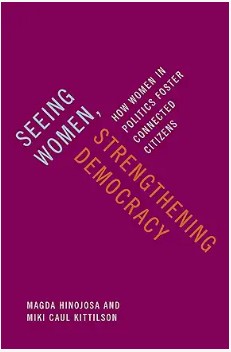


Left to right top: Malkani B (2024) Racial Justice and the Limits of Law, Bristol University Press, Great Britain; Hinojosa M and Kittilson MC (2020) Seeing Women, Strengthening Democracy: How women in politics foster connected citizens, Oxford University Press, New York; Brown, KE (2020) Gender, Religion, Extremism: Finding women in anti-radicalization, Oxford University Press, New York.
Left to right bottom: Tice KW (2021) Queens of Academe: Beauty pageants and campus life, Oxford University Press, New York; Kohn AA (2004) Shooters: Myths and realities of America’s gun cultures, Online edition, Oxford University Press, New York; Galt F (2020) Women’s Activism Behind the Screens: Trade unions and gender inequality in the British film and television industries, Policy Press, Bristol.
Some more highlights and a deep dive
One of the impressive features of this collection is the depth of information available. A search for mycology (that’s the proper name for the study of mushrooms and fungi if you aren’t familiar) returns over 6000 results! Limiting that to books led me to the impressive collection pictured below, by famous mycologist Nicholas P Money. Mushroom is probably the best-known of his books and is a comprehensive rundown on just what a mushroom is, how they function, the facts and myths around them as well as some historical context. The Triumph of Fungi and Mr Bloomfield’s Orchard focus on similar themes with a stronger focus on history and on the more strange and unusual kinds of fungi out there.
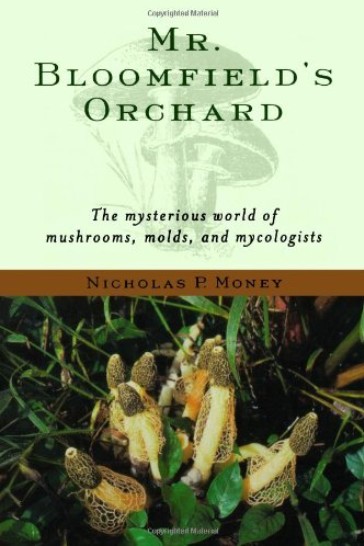
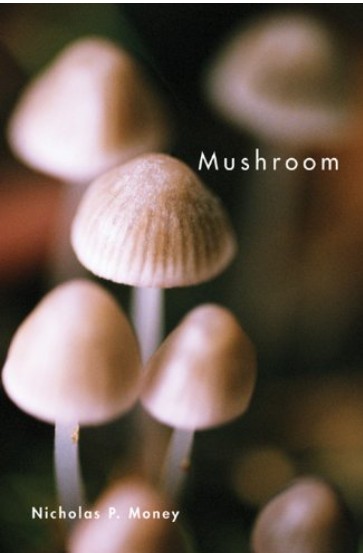
Left: Money NP (2002) Mr. Bloomfield’s Orchard: The Mysterious World of Mushrooms, Molds, and Mycologists, online edition, Oxford University Press, New York. Right: Money NP (2011) Mushroom, Oxford University Press, New York.
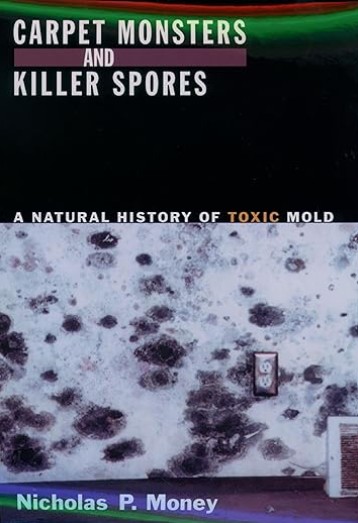
Carpet Monsters and Killer Spores: A natural history of toxic mold is a stand-out in this author’s work and in its ability to make mycology relevant and approachable to all sorts of readers. The book is written in a very accessible style and is full of personal anecdotes. One such tells the story of the author’s early struggles with asthma (likely due to carpet mold) and his appreciation of the asthma inhaler (only invented in the 1960s) as a literal life-saver for this author and others. It’s one of the many examples in Oxford Academic Books of approachable science education that leads scholars and us everyday folks on journey after journey of discovery.
We hope you enjoy exploring Oxford Academic Books, you might enjoy other databases, check out our A-Z databases page.
We always welcome your recommendations for database trials – let us know what you’d like to see. Check out our latest databases on trial, and see a full list of all new and trial databases, by visiting our A-Z Databases page.
Have a research query or questions on how to use our online collections? Ask a Librarian.
More to explore
- If you enjoyed this blog, you might enjoy similar multi-subject academic databases like Informit Search and JSTOR.
- If you would like an overview of multi-subject databases, check out this blog post by one of our Librarians.
- For the little-big-brains, take a look at Britannica Kids.

