
Being a librarian at State Library Victoria is sometimes like being a detective. You start with a person or an object, and then you follow the threads, investigate the leads and then by the end, you have (hopefully) a clearer picture of the stories and memories held in our collections.
While researching the life of Detective John Christie for another blog, I came across a manuscript item that piqued my interest. Rather blandly called Papers of George Edwards, 1870-ca. 1930 in the catalogue, this item is not what you might expect.
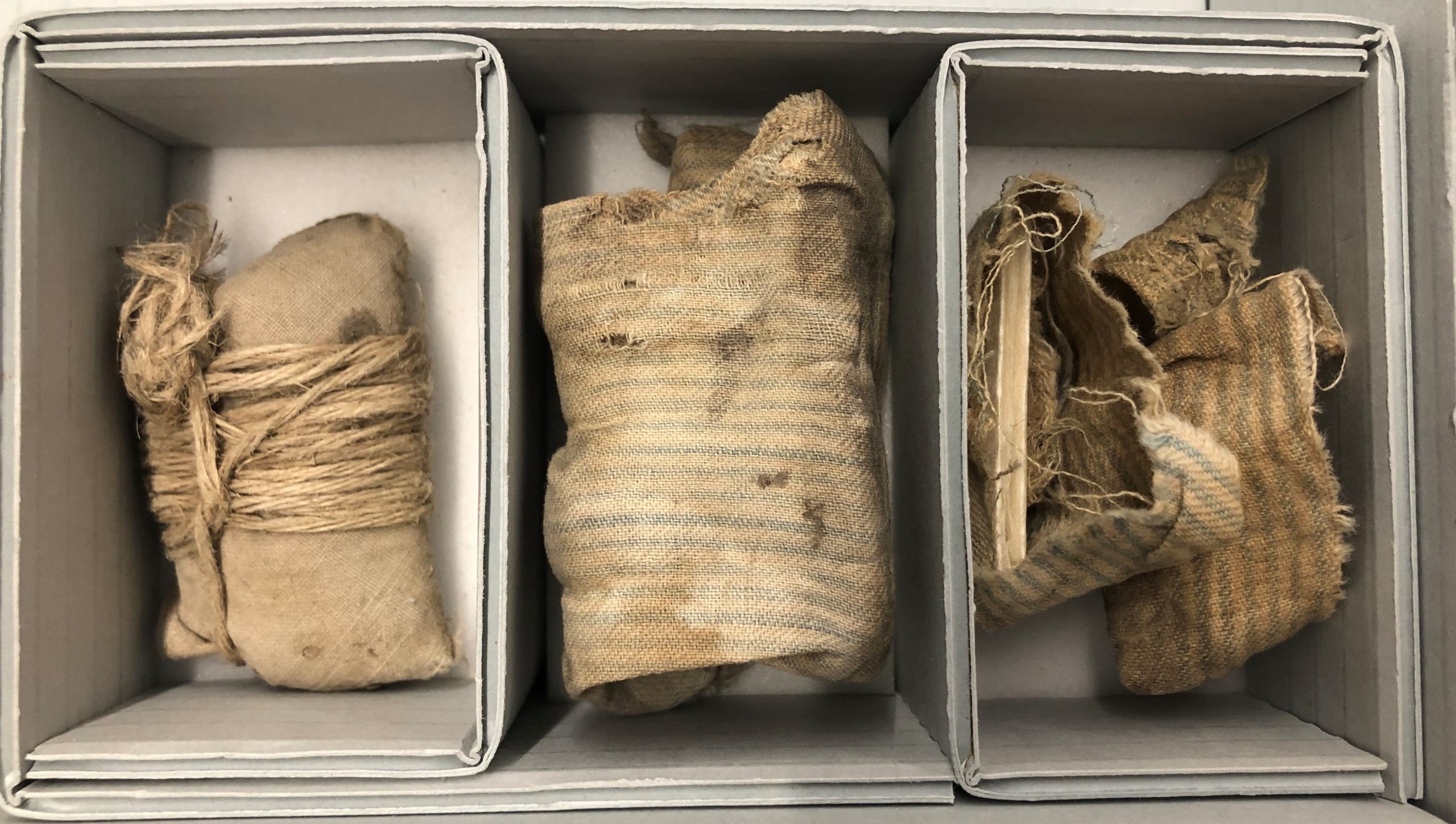
Written on scraps of contraband paper, bundled tightly in material torn from prison sheets and then tied with twine, these papers record the thoughts, feelings and surprising creative output of George Edwards who was serving time in Pentridge Prison in the 1870s for housebreaking and receiving stolen goods. George called his own papers ‘A short chronicle of the sorrows of George Edwards’— a title which deserves further investigation.
Alias George
In the 1800s, before the invention of identity cards, it was easy for people to change their name, assuming new identities to disappear from an old life and create a new one. Australia was a particularly appealing destination for those wishing to start afresh. You could board a ship in England as one person and then arrive in Australia 140 days later a completely new one.
It’s not surprising then to discover that the name ‘George Edwards’ was an alias. His first prison record, which is digitised on the Public Record Office Victoria website, lists George’s true name as Ernest Somerville, and his other known aliases as William Phillips and George Brown.
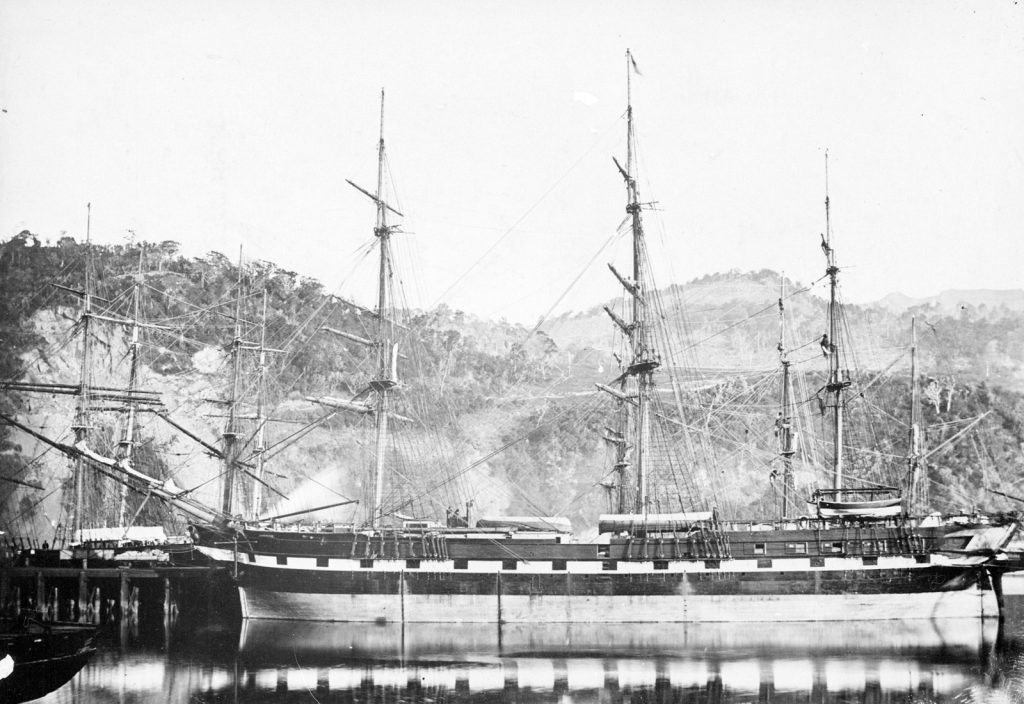
George/ Ernest sailed from London to Melbourne onboard the passenger ship Dover Castle, arriving in August 1865. He wasn’t yet a criminal, he was a 17-year-old free migrant with ‘merchant’ listed as his occupation.1 But how and why did Ernest become George?
The importance of being Ernest
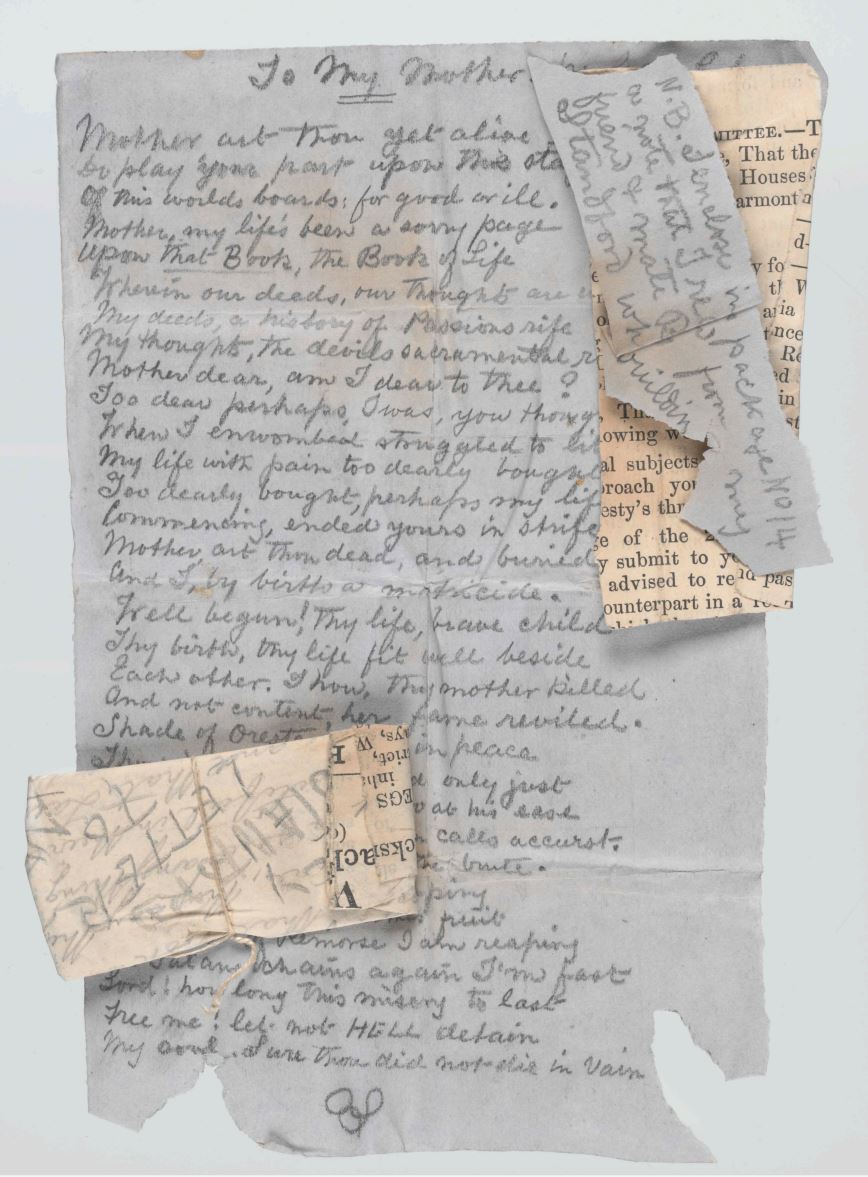
Ernest Somerville was born in 1847 in Sheerness on the Isle of Sheppey, a remote area of Kent with a history of pirates, smugglers and maritime pursuits. It’s possible that Ernest’s mother died giving birth to him, as he seems to have carried this guilt with him as a heavy burden. In one of his prison papers, George/ Ernest wrote a poem called ‘To my mother’, in which he says, ‘mother, art thou dead and buried…and I by birth a matricide’.2 There is no mention of a father figure, and in another letter, he describes himself as an orphan, so it’s likely that Ernest never knew his father.
At the 1851 census, the orphaned Ernest was living in London with Lois Purvis, a former bookseller and her son George Purvis, a pupil teacher. Perhaps this influence was what inspired Ernest’s creative talents. From an early age he was ‘passionately fond of reading’,3 and his novels of choice were the tales of Dick Turpin and Jack Shepherd, real historic criminals whose misdeeds had been made popular in the gothic romance novels of William Harrison Ainsworth.

Ainsworth’s exciting tales of highwaymen and thieves ruffled a few feathers when they were published in the 1830s, as there were concerns that his portrayals of the real criminals glorified a life of ill-repute and was contributing to a rise in youth delinquency and crime.4 In Ernest’s case, these concerns proved justified, and he writes in his papers that, ‘with my mind formed upon such literature at an early age can it be wondered that I am what I am’.5
Ernest’s youth also seems to have been marred with ill-health and an early introduction to alcohol, ‘At about 12 years of age, I was extremely delicate, and beer and wine were given me to strengthen me, thus the taste for strong drink was formed’.6
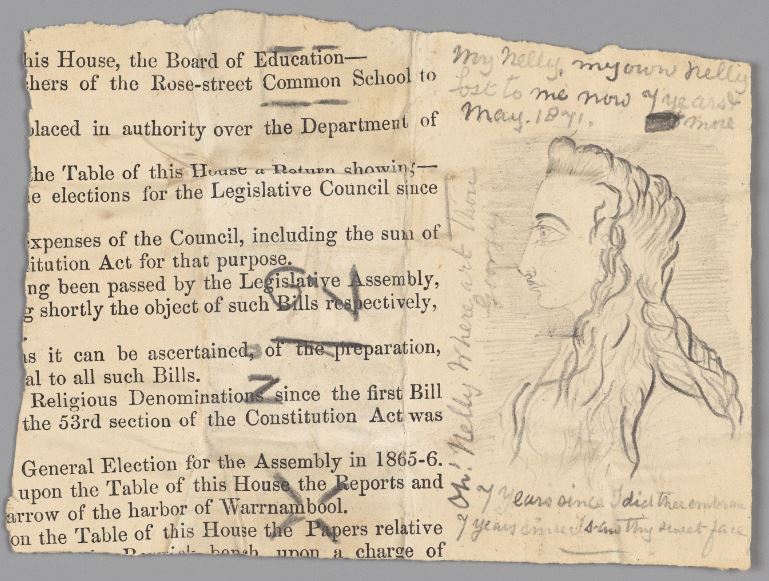
An orphan, roaming the streets of London with a taste for strong alcohol and a head full of the perceived glamour of highwaymen sounds like something from a Charles Dickens novel. George/ Ernest doesn’t reveal much in his papers about his life in London, nor does he directly mention his guardian apart from to say that he was an ‘unspoilt’ child. We do know though that he had a sweetheart named Nelly, who he left behind when he departed for Australia.
Mischief in Melbourne
Why Ernest decided to leave his sweetheart and life in London is unclear but there is a hint that he may have found himself in hot water with the law. He writes in his papers that he left London with £50 in his pocket, which was a fairly large sum for a 17-year-old orphan to have acquired legitimately.
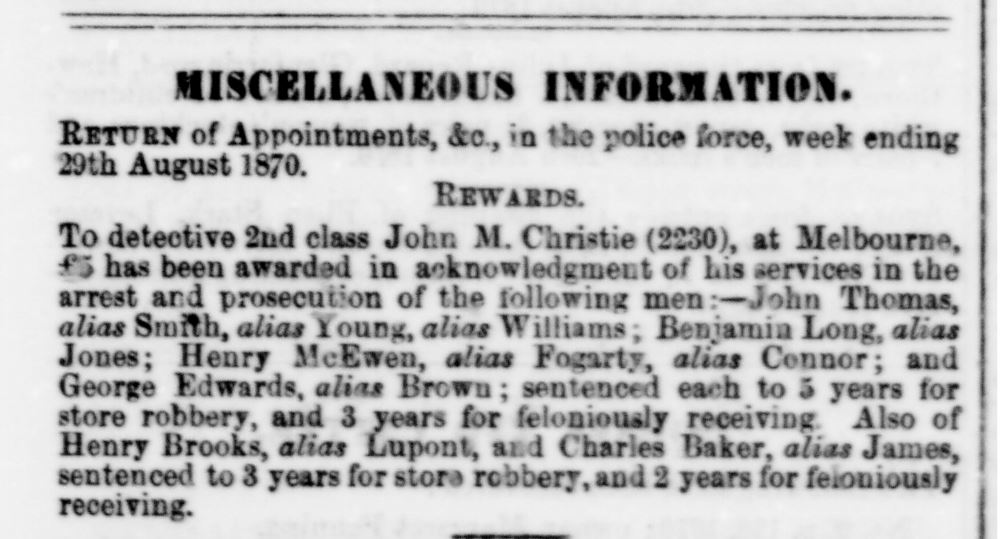
What happened to Ernest once he arrived in Melbourne in 1865 is a mystery, as he isn’t recorded again on official documents until April 1867 when he was arrested, as George Edwards, for receiving a stolen watch. This crime earned him 18 months’ hard labour at Pentridge Prison. In September 1868, he got another 18 months’ hard labour for stealing books, this time under the alias William Phillips. His luck really ran out in 1870 when he crossed paths with the infamous Detective John Christie. Charged with shop breaking and receiving stolen goods, Ernest, as George Edwards, was sentenced to a total 8 years’ hard labour at Pentridge Prison.
Prison blues
George found the prospect of eight long years behind bars difficult to cope with. In many of the papers written in the early days of his sentence, he rages against the perceived injustice of his sentence and the alleged corruption of Detective John Christie, who he often refers to as a ‘perjurer dog’, a ‘scoundrel’ and a ‘fiend’.7
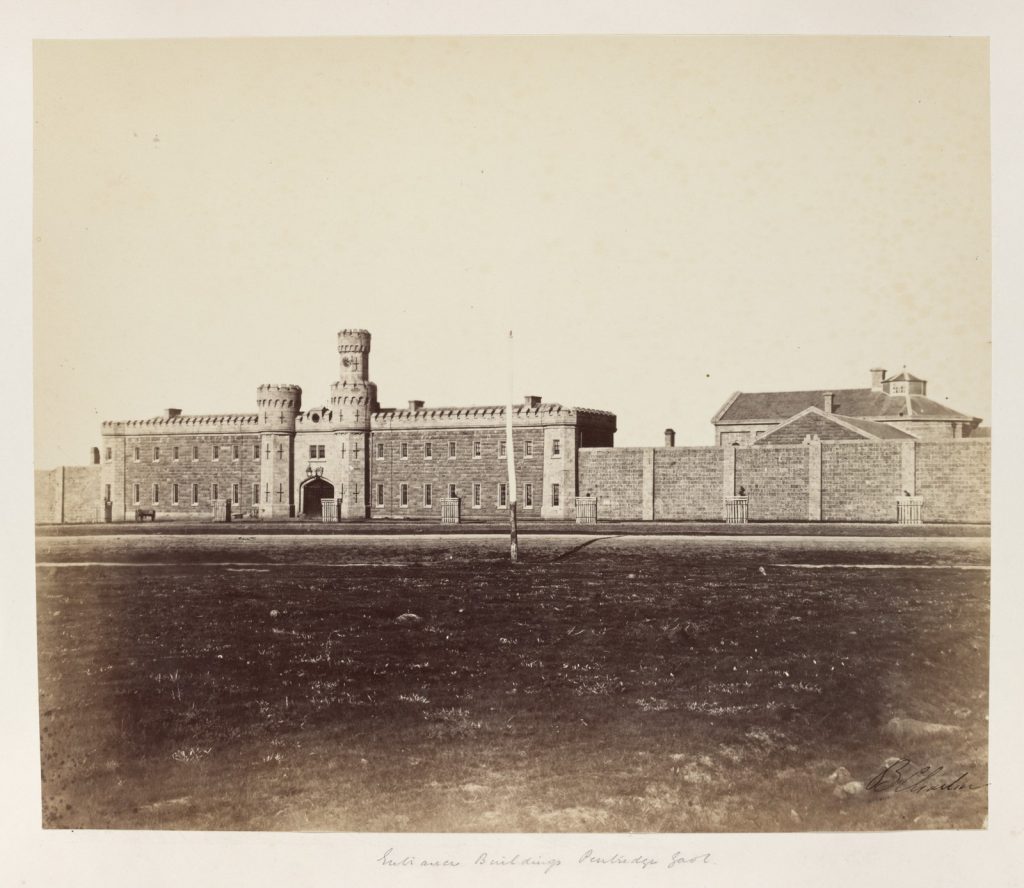
Conditions inside Pentridge were extremely tough. On arrival into ‘B’ Division, George would have started his sentence with the obligatory six-week isolation period, in which he was kept confined to his cell for 23 hours each day. When he left his cell for his allotted one hour of exercise, in which he was allowed to shuffle noiselessly around a small exercise yard, he would have been forced to wear a canvas mask over his face to conceal his identity from other inmates. George would have been stripped of his name and referred to only by his prisoner number.8
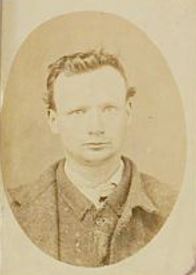
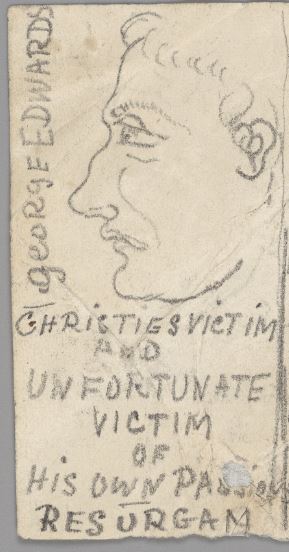
Left: Photo of George Edwards from his prison file, Central Register for Male Prisoners, Public Records Office Victoria; VPRS 515. Right: Self-portrait drawn by George Edwards; MS 13664. Detail of photo by SLV Digital Production team at State Library Victoria.
History buffs will note that at the same time George was serving his sentence at Pentridge, the notorious Ned Kelly was also an inmate, having been convicted of horse stealing and sentenced to hard labour. Ned was briefly an inmate in 1873, but its unlikely the two ever spoke as communication between inmates was strictly controlled. Ned Kelly is quoted as having said of his time in Pentridge that he ‘would rather face the gallows, than go to gaol again’,9 and the sentiment seems to have been shared by George, who described the prospect of his years behind bars as ‘such misery’, and ‘I am in hell’.10
All the world’s a stage
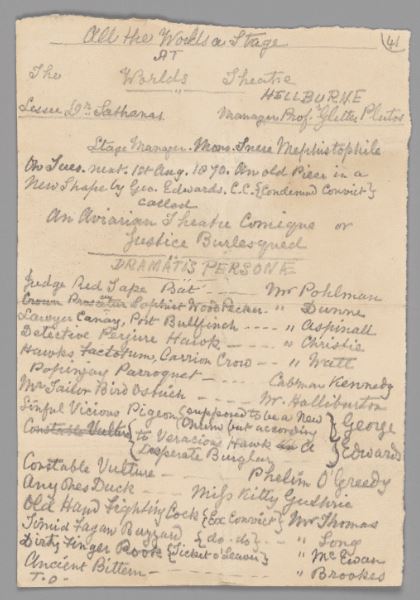
With communication between prisoners restricted, George found other creative ways to express himself and pass the time. His papers reveal his interest in learning Latin, Greek, German, French and Hebrew, as well as arithmetic and the sciences. But it is his creative talents that shine most. He began work on a play which shows his knowledge of literature, as he called it ‘All the world’s a stage’, a reference to Shakespeare’s play As You Like It and the famous line ‘All the world’s a stage, and all the men and women merely players’.
He also showed his talents at satire, setting his play in Hellburne (instead of Melbourne), and categorising it as ‘Justice Burlesqued’. His play was based on his own trial and featured characters such as ‘Judge Red Tape’, ‘Constable Vulture’, and a female called ‘Any Ones Duck’, who he identified as being based on ‘Miss Kitty Guthrie’.11 Unfortunately, nothing of the play beyond his ‘Dramatis Personae’ has survived in his papers.
Through his poetry, George shows a softer, more sensitive side, as well as his interest in nature. His poem ‘Lines on a bird’ shows the joy he found in watching birds from his prison cell. In other papers he marvels at the species of ants that he finds in the exercise yard and how they can all live so harmoniously together, stating that ‘man might learn a very humbling lesson from the ants’.12
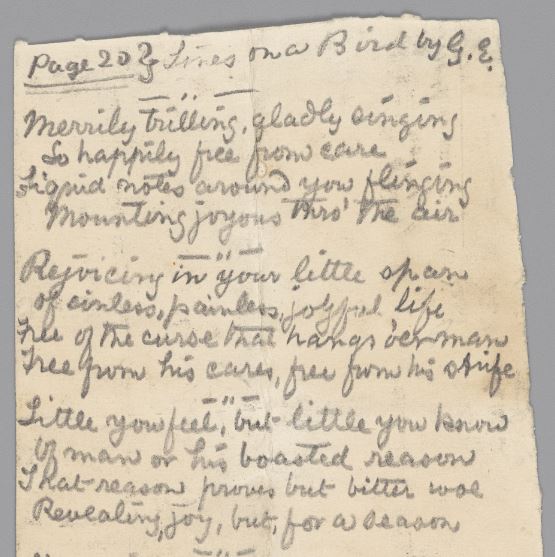
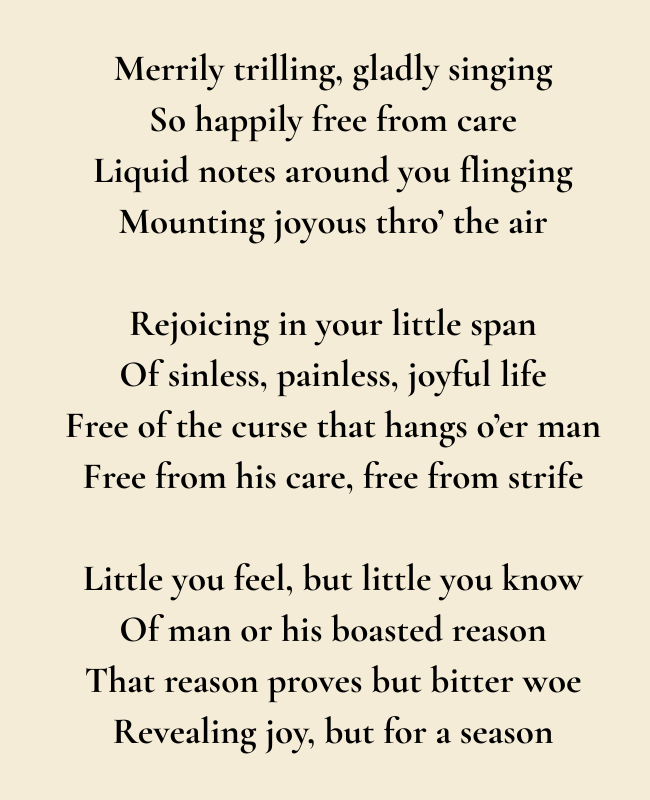
Left: Handwritten copy of start of ‘Lines on a bird’; MS 13664. Detail of photo by SLV Digital Production team at State Library Victoria. Right: Typed transcript of the beginning of the poem
The creative works that have survived seem to have been created in the first few years of George’s sentence, and his prison charge sheet shows that he was frequently reprimanded for having contraband paper and pencils, and for communicating with fellow inmates. His papers were tightly bound and secreted away in wall crevices, behind ventilators, and in his mattress, but we’ll never know how many of his papers were found by prison guards and destroyed. The ones we hold in our collection are the lucky survivors.
No end to sorrow
When George left prison in mid-1877, it wasn’t to be a long parting from the ‘hell’ of Pentridge. By December 1878, George, now living under the alias Henry Summers, was arrested for burglary and sentenced to three years hard labour. His prison register shows that for the rest of his life he was in and out of prison under a myriad of different names, George Edwards, George Somerville, George Cole, Edward Trevenna and George Hubert Legard (also written as Le Gard), in Melbourne and in Bendigo.
As he endured his prison sentences, he continued to write and was frequently caught with contraband paper and pencils, although none of these papers survive in our collection. His last reprimand on his second prison charge sheet, dated 11 February 1909, states that he was caught with having a lead pencil. He was finally released from prison on the 18th November 1911, aged 64.
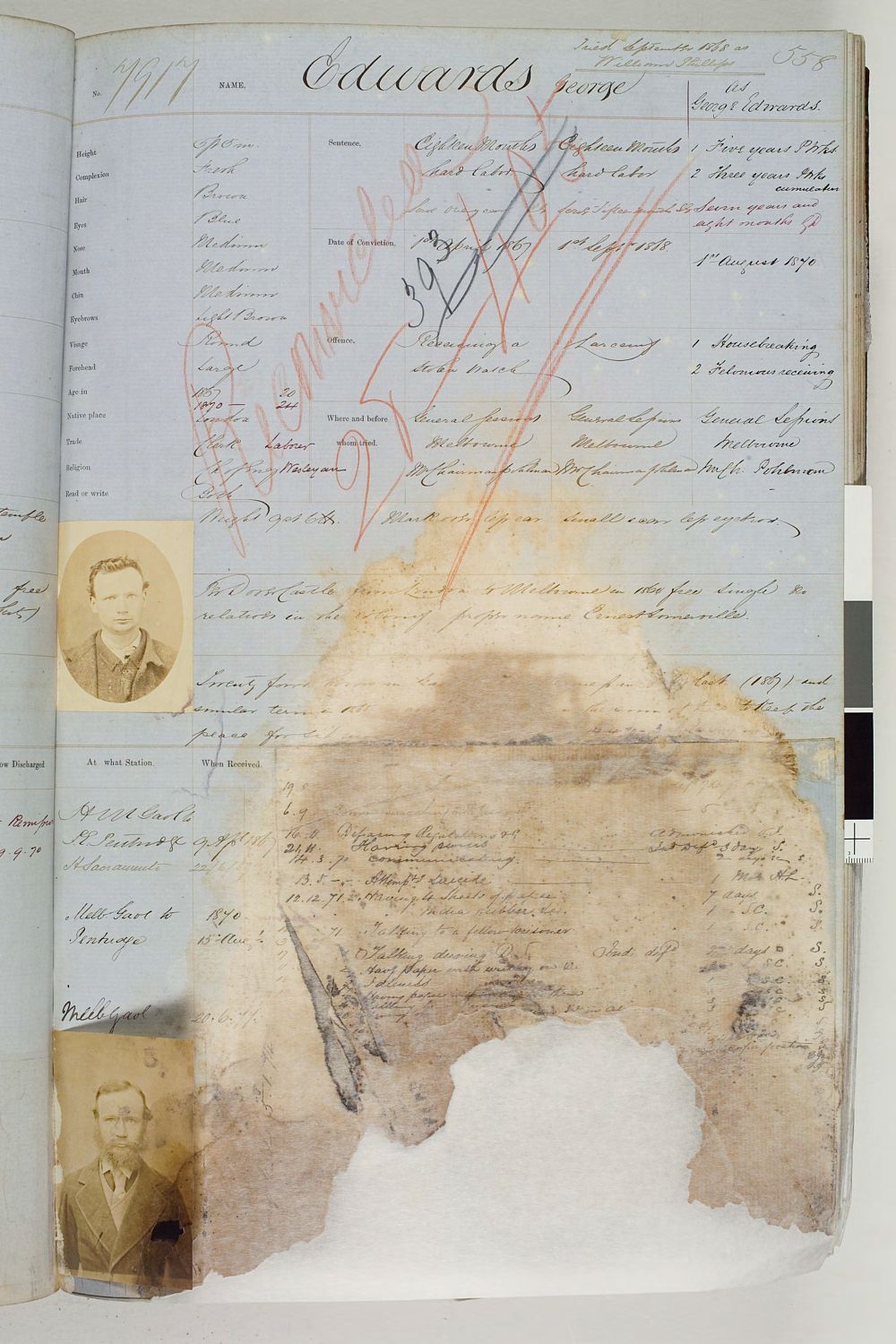
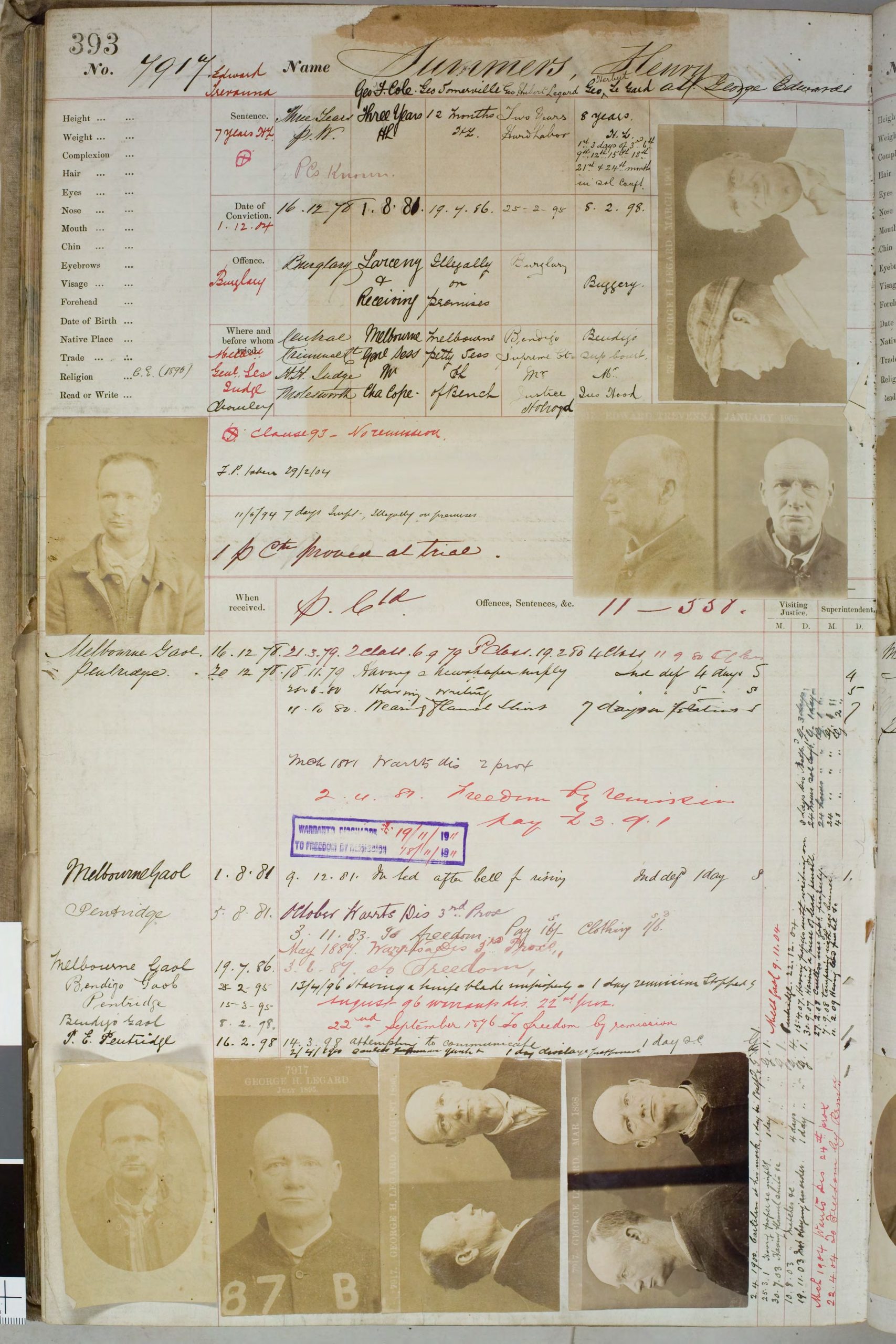
George Edwards’ prison charge sheets, as ‘George Edwards‘ (L) and as ‘Henry Summers‘ (R) with his known aliases written underneath. Central Register for Male Prisoners, Public Record Office Victoria; VPRS 515
It is difficult to say for certain what became of George Edwards, but a search of the births, deaths and marriages database for anyone named ‘George Edwards’ who died in the years after his final release from prison, and whose parents were unknown, revealed one possible contender. A man named George Edwards died in Mildura in March 1915. The inquest file reveals that he died of a ‘rupture of an aortic aneurism’.13 His body was found under a gum tree the morning after he had visited a slaughterhouse to ask for food. He had previously been seen in the area drinking heavily and sleeping rough. He died in his sleep and was identified when some notebooks were found in his possession with the name ‘George Edwards’ written inside. The police constable who handled the death wrote in his statement that, ‘the books had a few rough notes written in it but nothing to indicate where deceased came from’.14 Could this be our George? The puzzle pieces seem to fit with what we know of him, but it is difficult to say for certain.

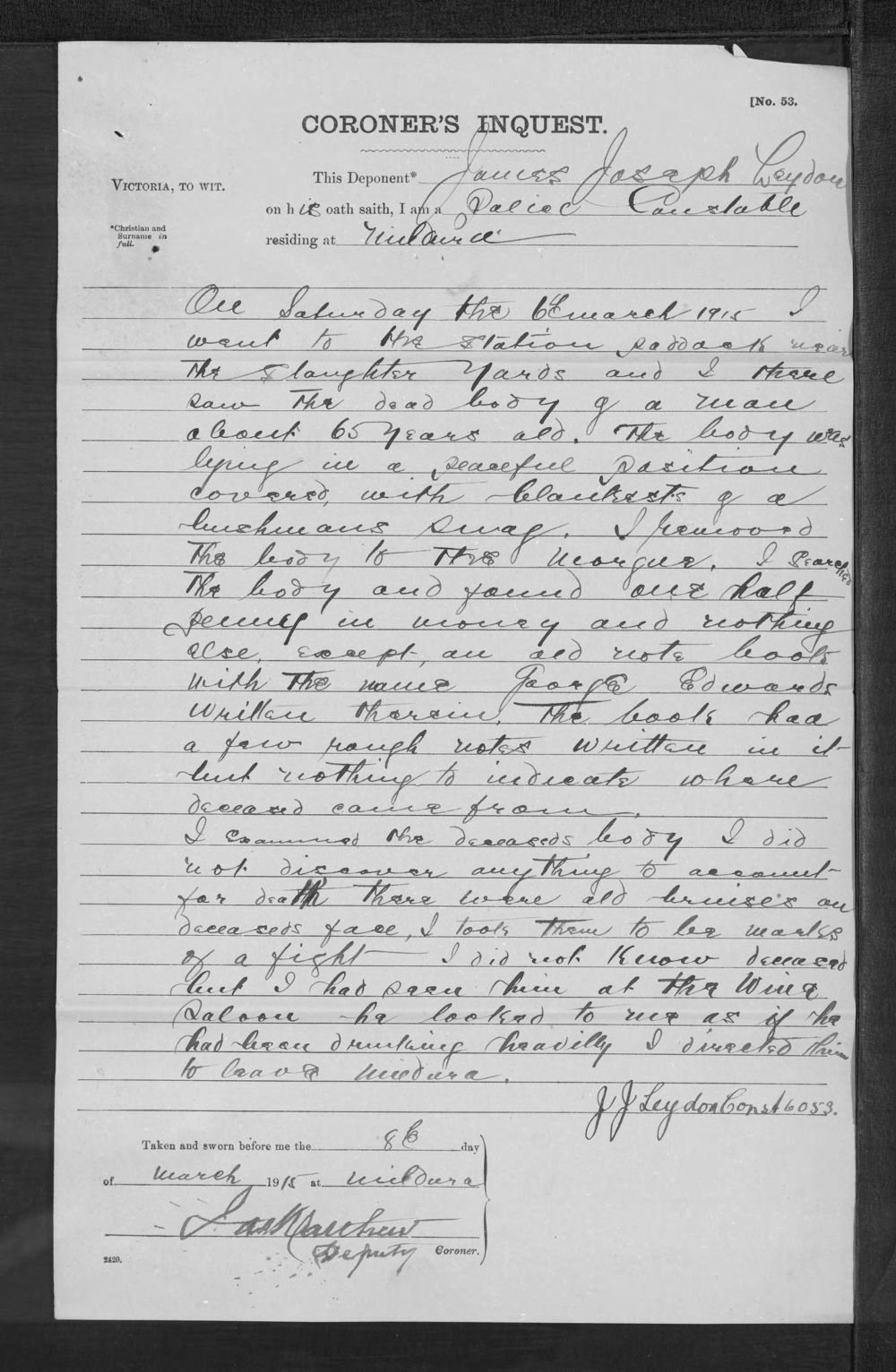
Left: The Mildura Telegraph and Darling and Lower Murray Advocate, 9 March 1915, p2. Right: Statement of police constable, George Edwards: Inquest; VPRS 24/P0000, 1915/137, Public Record Office Victoria
Afterlife
George’s extraordinary papers from the 1870s somehow made their way from the walls of Pentridge Prison to a cardboard box found at Coburg tip in 1982. From there, the fragile letters went to a storage shed, before the twine holding the papers was eventually broken and A short chronicle of the sorrows of George Edwards was revealed. The library acquired the papers in 2009.
In one of his letters, George wrote: ‘I dare not die. I laugh to think how solemnly I am writing these ravings for there is 9999 to 1 that these M.S.S. will be utterly destroyed by ants, mice and damp long before…I leave this cell… never mind, it relieves the maddening monotony that wears me down’.15 How wrong he was. Not only has some of his papers survived, they are now permanently kept as precious items in the state collection.

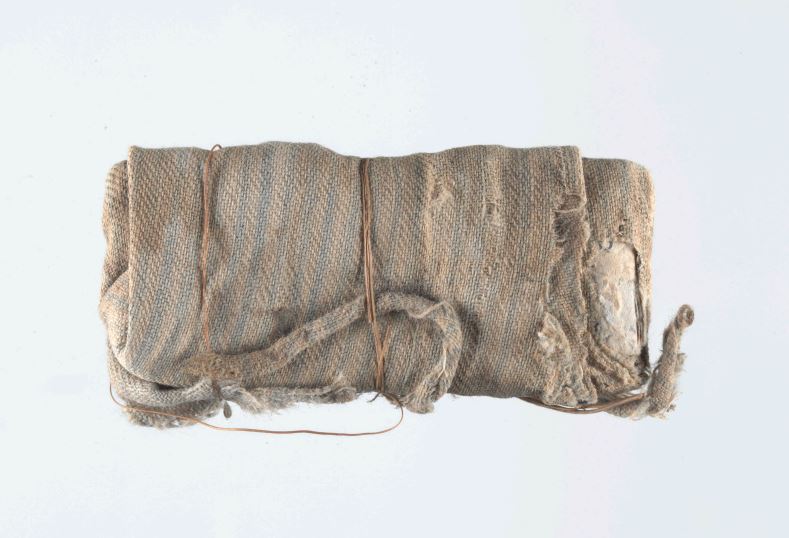
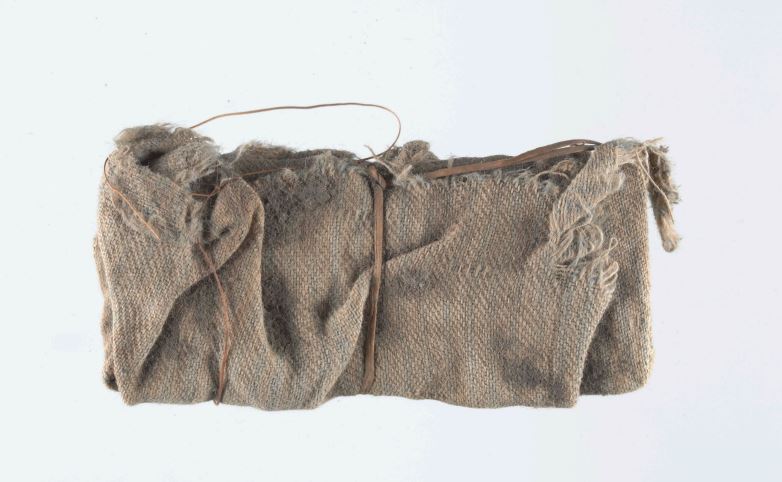
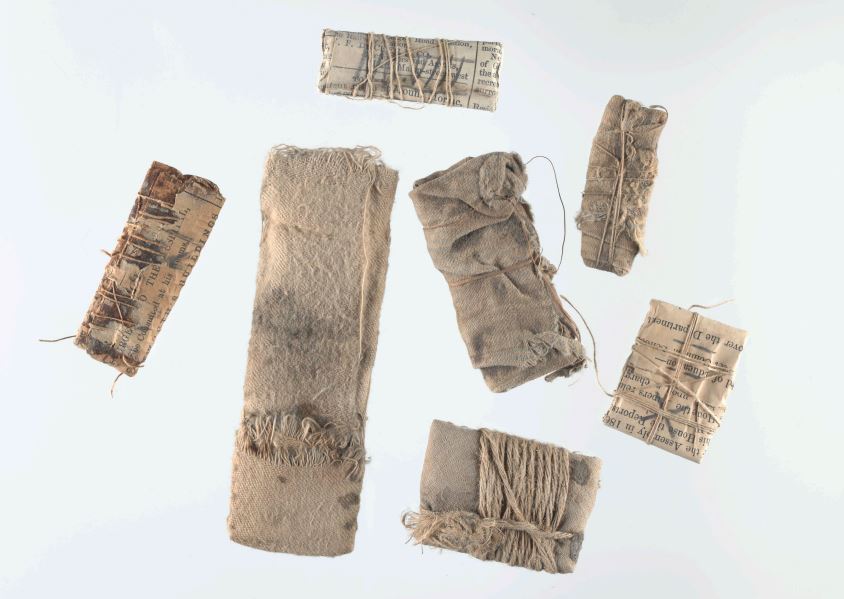
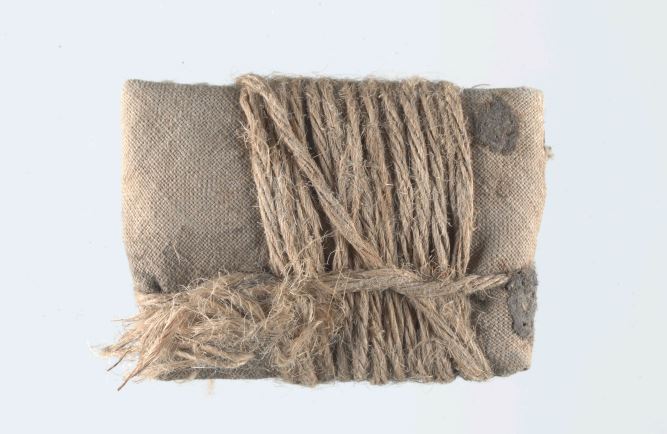
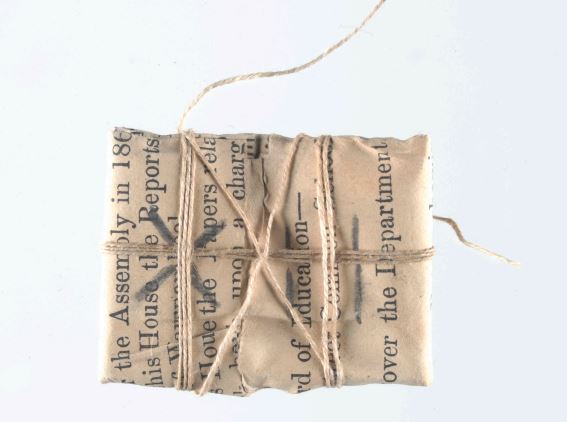
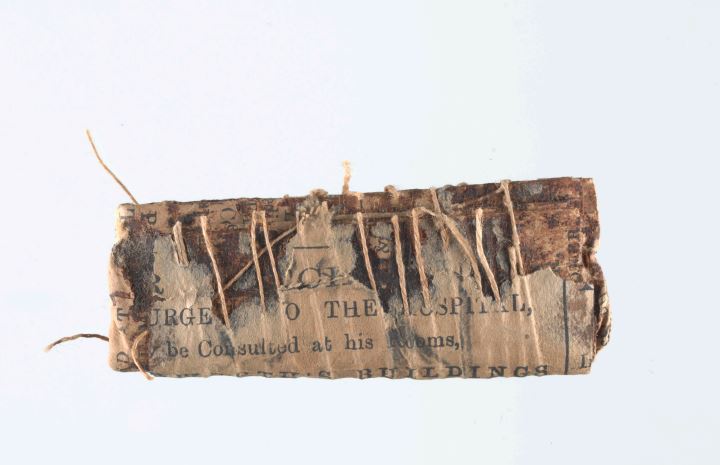
The bundles of Papers of George Edwards, 1870-ca. 1930; MS 13664. Photos by SLV Digital Production team at State Library Victoria.
References
- Inward overseas passenger lists: Dover Castle, May-Aug 1865, p 226, Public Record Office Victoria, 1865; VPRS 947/P000
- Papers of George Edwards, 1870-ca. 1930; MS 13664, State Library Victoria
- as above
- Sharpe J, 2004, Dick Turpin: the myth of the English highwayman, Profile Books, London, p 172
- Papers of George Edwards, 1870-ca. 1930; MS 13664, State Library Victoria
- as above
- as above
- Osborne D, 2023, Early Days at Pentridge Prison, Pentridge Voices, Melbourne, p 39
- Ned Kelly at Pentridge prison, 2025, National Trust of Australia, viewed 17 May 2025
- Papers of George Edwards, 1870-ca. 1930; MS 13664, State Library Victoria
- as above
- as above
- George Edwards: Inquest, 1915, Public Record Office Victoria; VPRS 24/P0000, 1915/137
- as above
- Papers of George Edwards, 1870-ca. 1930; MS 13664, State Library Victoria


Thanks for this amazing story and research!
thanks for your comment Katrin! I’m planning a blog about Pentridge Prison in the next few months too which I think will be of interest to you!
This is fascinating and extremely moving.
A sad but compelling story. Thank you for this amazing article that enables us to learn of the man George Edwards.
What a great story. Interesting how the cardboard box ended up at the tip…perhaps revealing of the attitude that continues today at Pentridge where all possible efforts are made to bury the real history of an abominable place of violence and misery.
Pentridge Is dressed up today but those imprisoned there were treated in a cruel and inhumane manner. The misery and despair inmates suffered while incarcerated there started with solitary confinement and continued with the attempts to prevent any form of interaction with fellow prisoners. They were denied any form of respite whether through exercise or study or creativity.
Its grim and frightening exterior is chilling.
What an amazing story and incredible find. Thak you for sharing this.
I agree.
What a great article! Thanks for writing it, the research and the transportation back through time. Poor fella.
That’s such a moving, fascinating story … and beautifully told. Congratulations. I look forward to the blog.
A beautiful story that reveals the power of a memoir. Thank you, George Edwards for sharing your life with us.
Extraordinary and so precious, thank you George the State library research and restoration team.
What an amazing collection, more amazing its discovery and finding its way to the Library. Congratulations to all those involved.
Amazing story. A hard and passionate life documented in Ernest’s own words.
A man of natural literary talent and sensitivity walled up by the social circumstances of his day.
Thank you to the wonderful staff at the Vic State Library for preserving and displaying to us this historical memoir.
A common story in prisons in that era. Many were worse and very few were better. remember that white settlement came from the need for prisons for the poor wretches of Britain often seeking to survive in the cesspits of the towns and cities. Even worse were the prisons for the indigenous peoples of the British Empire regarded as even lesser citizens.
How wonderful that the articles & letters have survived all these years. Interesting that letters were found in a cardboard box at Coburg tip. That’s a story in itself. Who found them? How did they find them?
Such a wonderful blog, and what a story. Poor George, sounds like a very tough life. I hope his writing brought him some solace – I bet he never imagined his story would be shared like this! Incredible the things that make their way into SLV’s amazing collections. Looking forward to the Pentridge blog!
Indeed a wonderful and moving story of life – which was so hard in the early days. We came as migrants in 1989, with a 3 year old by the hand – Thankfullly for us, things have changed a bit since those early days. But I can still relate to the issues of getting used to all the new ways of life, finding a job, house, daycare for child etc. etc. New Country – New Ways – New Life!
We are still here and we Love living in Australia, now about to enter the age of retirement…
It is interesting that this man had the same name as the last governor of pentridge to live in the gaol. That George Edwards, who used regularly visit our home in Coburg, was recruited as governor of Pentridge from a model prison in Manchester about 1950-55. That man was a kindly person who went out of his way to ensure that released prisoners ( presumably ones who were reformable) were able to get jobs after release.
Magnificent find, magnificent story. Thank you.
Congratulations on a well written article. What a great story. Good detective work on finding all this out. Look forward to reading more.
This is a very moving story. Thank you for putting it together and sharing it with us.
What an incredible find. Thanks for sharing.
What a creative person. What a creative life. So sad!
A fascinating piece of research that shows another side of life. The fact you could trace so much from so little is itself a feat of work. Thank you.
Thank you for bringing George/Ernest back to life for us. A very moving story of this early Pentridge prisoner. Amazing That his literary work survived and eventually found its way to the Victorian Library.His handwriting was very good as well as his writings.
I was pleased to read that he appeared to have died peacefully under a gumtree.
Congrats on the Research
Loved it, and thank you for sharing, Such a sad life. His words will be remembered forever.
Very interesting, and also sad that more of his papers haven’t survived. It would also be interesting to learn how they eventually ended up in the tip and who found them.
Such difficult lives they led just trying to stay alive. Thankyou for all your research and so glad George’s story is there for us to read. Best wishes.
Compelling reading indeed!
Thank you for sharing such wonderful research into the extraordinary life of a gifted man. Voi
How amazing. His life could have turned out very differently and what a shame he never had the opportunity to write and be published. Pleasing that these items are being preserved and studied.
What a great find and an amazing story. Thank you