
Our special guest bloggers, Ellie and Kerrie, are our Wikipedians-in-Residence. As the Radical Acts project comes to an end, they share some of their thoughts and findings on the last six months, on what has been a fantastic partnership with the Library.
In their first blog post, State Library Victoria’s two Wikimedians-in-residence, Ellie and Kerrie, shared some of their experiences from the first few months of the Radical Acts project, funded by Wikimedia Australia. That post focused on Australian feminist activists and movements, those advocating for women’s rights, equal pay for equal work, and the right to vote, as told through the story of Women’s suffrage in Victoria.
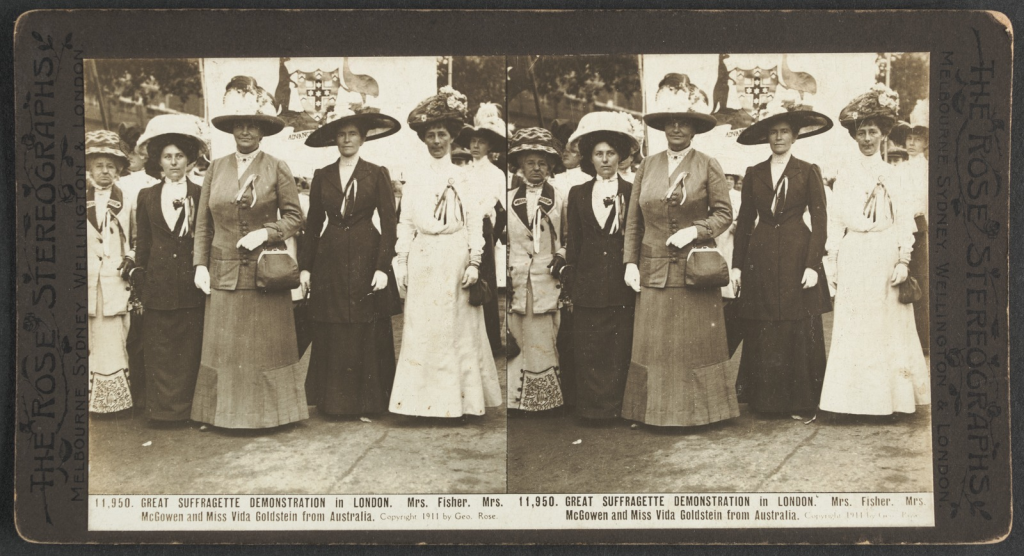
Great suffragette demonstration in London; H42581/51
With the term of the residency now at an end, this post will summarise some of the project’s main achievements. It will also share stories of other trailblazers, including social reformers, temperance advocates, and educators, as well as some of the organisations in which Victorian women have participated. The two Wikimedians are contributing to ongoing global efforts to address the gender bias on Wikipedia, where women are vastly underrepresented as both subjects and editors. These combined efforts have seen the number of English Wikipedia biographies about women increase from 15% in 2014 to just over 20% in 2025. This is gratifying, but there is still a long way to go.
Together, Kerrie and Ellie have created 52 new articles (27 Wikipedia articles and 25 Wikidata items). Wikidata is a free and open knowledge base that stores structured and linked data that can be read by both humans and machines. Information from Wikidata now underpins many other services, including Google and virtual assistants such as Apple’s Siri and Amazon’s Alexa. During the project, Ellie and Kerrie have edited and improved a total of 179 articles, added 141,000 words and 1,030 references to Wikipedia, and added 41 images to Wikimedia Commons. In total, the Wikipedia articles edited during the residency have now been viewed over 135,000 times.
Edith Charlotte Onians OBE (2 February 1866 – 16 August 1955) was a social reformer and voluntary welfare worker who was particularly concerned with the welfare of newsboys in Melbourne. She served as the organiser and secretary of the Melbourne Newsboys’ Club Foundation for over 55 years, and the records of this group are held by the State Library.

Melbourne’s Newsboys were child street traders who sold newspapers in the streets of the city. They were from poor families with little to no access to education and had limited prospects for overcoming poverty. Edith organised the boys’ education and training and provided assistance for their families. She maintained contact with many of the boys throughout their lives.

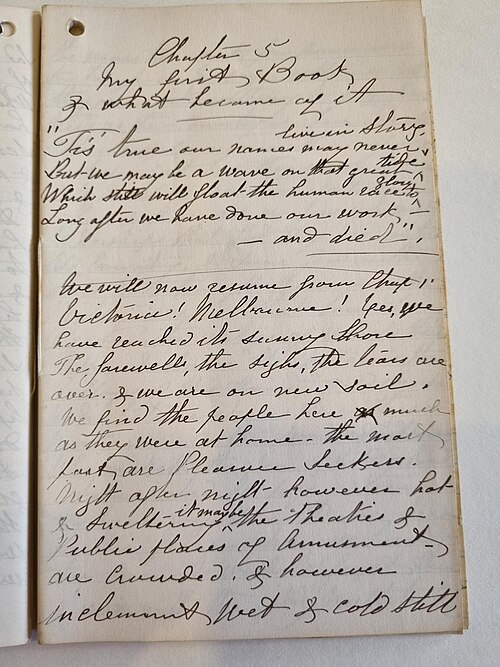
Mary Anne Merson (1828-1904) was a pioneer colonialist, a mother of ten, an author of temperance tales, and an Executive member of the Woman’s Christian Temperance Union of Victoria. She travelled from England to Melbourne in 1855 aboard the ship Champion of the Seas, and the Library holds a copy of her handwritten shipboard memoir in the manuscripts collection.
The library also holds a copy of one of Merson’s books, Emily Graham; or, The Dawning of light: a temperance tale. This copy includes a handwritten note on the title page, dated 22 June 1870, “Presented by the Authoress, Mrs Merson, Sebastopol Ballarat”.
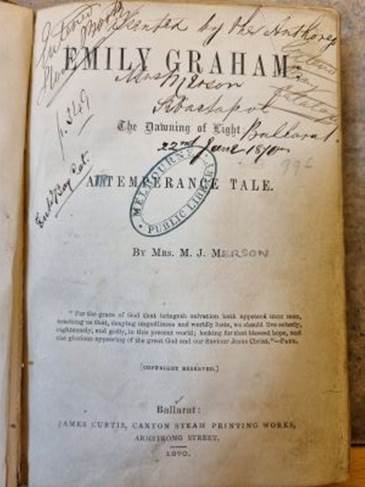
Title page of Emily Graham; or, The dawning of light : a temperance tale / by M.J.M.
Elizabeth Tripp (1809-1899) was an early educator who founded the first girls’ school in Melbourne that went on to become a successful and permanent educational institution. She was also the inaugural honorary secretary of the Royal Women’s Hospital when it opened in 1856. Tripp’s memoirs, which were transcribed by Bridget Thurgate (née Tripp) in 1997, are held in the Library’s manuscript collection.

In addition to holding items from individuals, the Library also holds manuscript collections from associated women’s groups and organisations. Kerrie and Ellie have also added links from Wikipedia articles for these groups to items in the State Library’s collection.
The National Council of Women of Victoria (Wikidata: Q133281530) was founded in 1902 and was an umbrella group for a number of associated member organisations to progress women’s issues and to lobby government. Women associated with this group include: Janet Clarke (founding president), Emily Dobson, Louisa Bevan, Annie Lowe, Annie Watson Lister, Maria Elizabeth Kirk, Catherine Hay Thomson, Ada Norris, and Elizabeth Jane Ward.
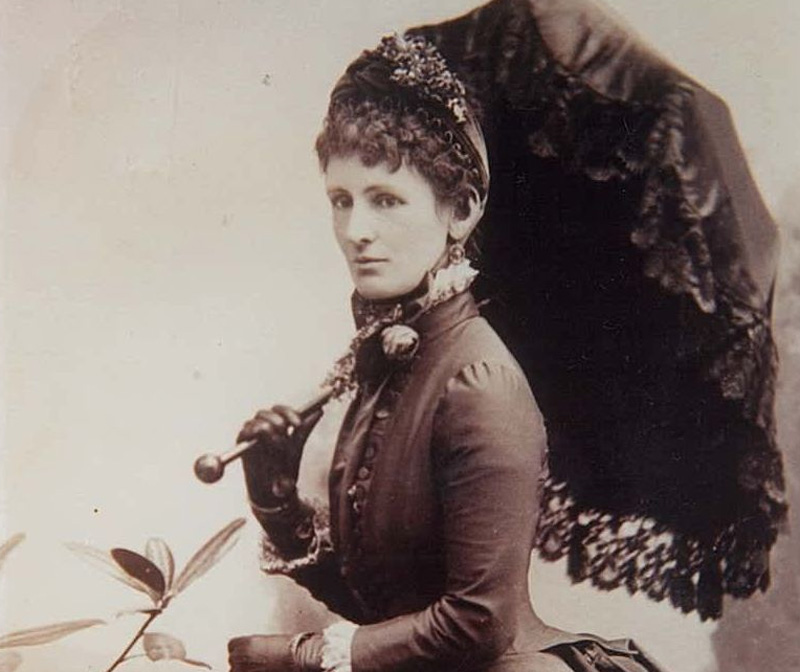
The Women Justices’ Association of Victoria (Wikidata: Q134100613) was formed in 1938 with the aim to unite women Justices of the peace and provide mutual support for members. Notable women involved with this association include: Julia Rapke (founder and first president), Millicent Preston-Stanley, Amelia Morrison Macdonald, Lillias Margaret Skene, Ivy Wedgwood, Elizabeth Britomarte James, and Ma Dalley.
In 1912, at a time when women were often excluded from professional associations and clubs, the Lyceum Club (Melbourne) (Wikidata: Q6707242) was founded to provide educated and professional women with a suitable space to meet, network, and share knowledge. Based on the London club of the same name, it became part of a global network of Lyceum clubs. In the 1970s, it joined with sister clubs from other Australian states to form the Australian Association of Lyceum Clubs (Wikidata: Q134602634).
The ubiquitous nature of Wikipedia and its high usage rates across the globe create significant opportunities for cultural heritage institutions. When links are added from Wikipedia articles to items held by State Library Victoria, and these articles are viewed, internet traffic is driven back to the library’s collections. This ultimately encourages greater engagement with the library’s unique resources and increases the likelihood that they will be used for future research. The Wikipedia articles of twenty-six women and seven organisations now have links added back to State Library collections.
The archives from organisations such as these often include the minutes of meetings, annual reports, newsletters, correspondence, photographs, and related items. They are, therefore, great sources of information for researchers studying the history of these groups and the women associated with them. Incorporating links in Wikipedia between individuals and the organisations with which they were associated helps to enhance our understanding of the relationships and connections between Australian feminist activists, organisations, and movements. By creating links between Wikipedia content and the SLV catalogue, the Radical Acts project has also helped to raise the visibility of the library’s holdings related to Australian feminist activism.


This is an excellent project and blog. This project has helped make progress on closing the gender gap in wikipedia and with this and other information SLV has access to you may also be able to help close the place name/public art gap through making nominations of these and other women to the Remember a Local Name a Place program – https://engage.vic.gov.au/name-a-place Each nomination is sent to the relevant local government area in Victoria (campaign only in Vic atm) for them to add to or create a Name bank of people that can support future place naming practice. Ensuring name banks include the names and stories of local women is essential in addressing the historic gap (currently around 1 in 10 place names are after women in Vic) Please contact me if you would like to discuss this further as we could also look at hosting a joint event and engaging the community to support this work