
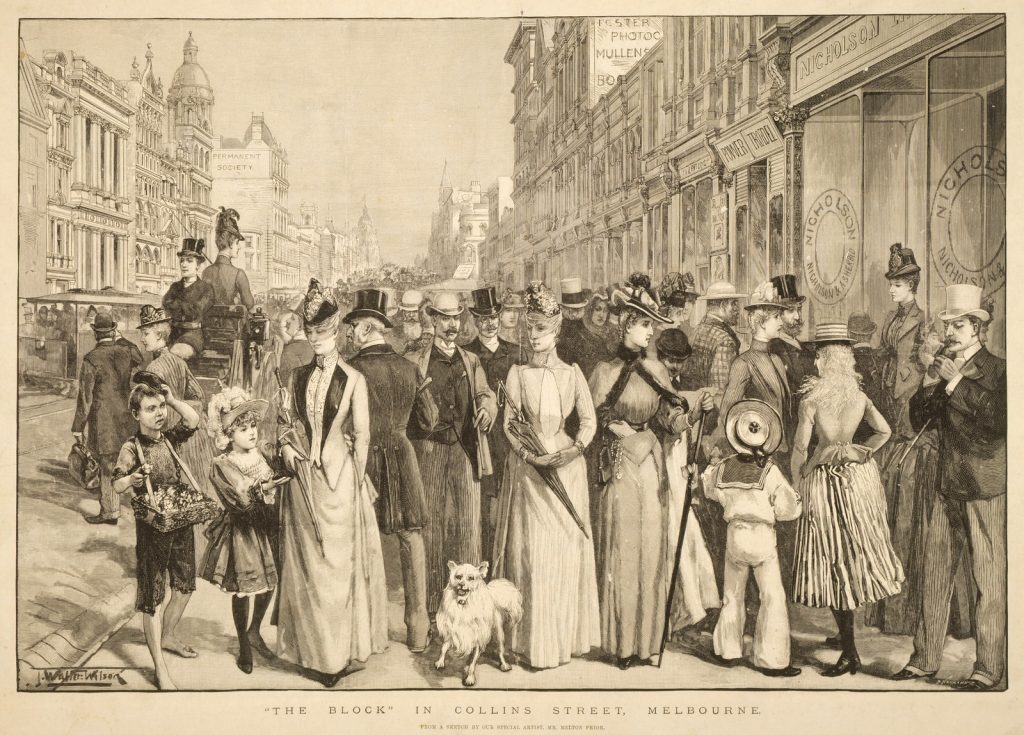
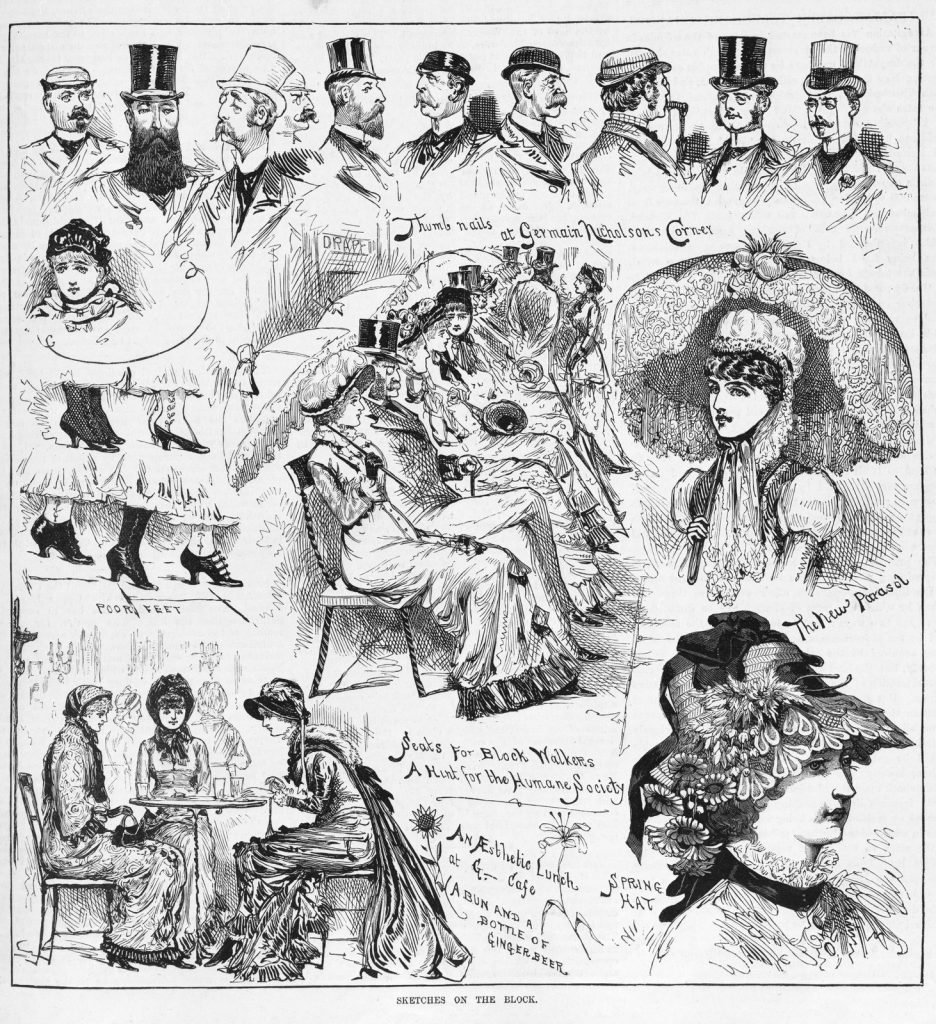
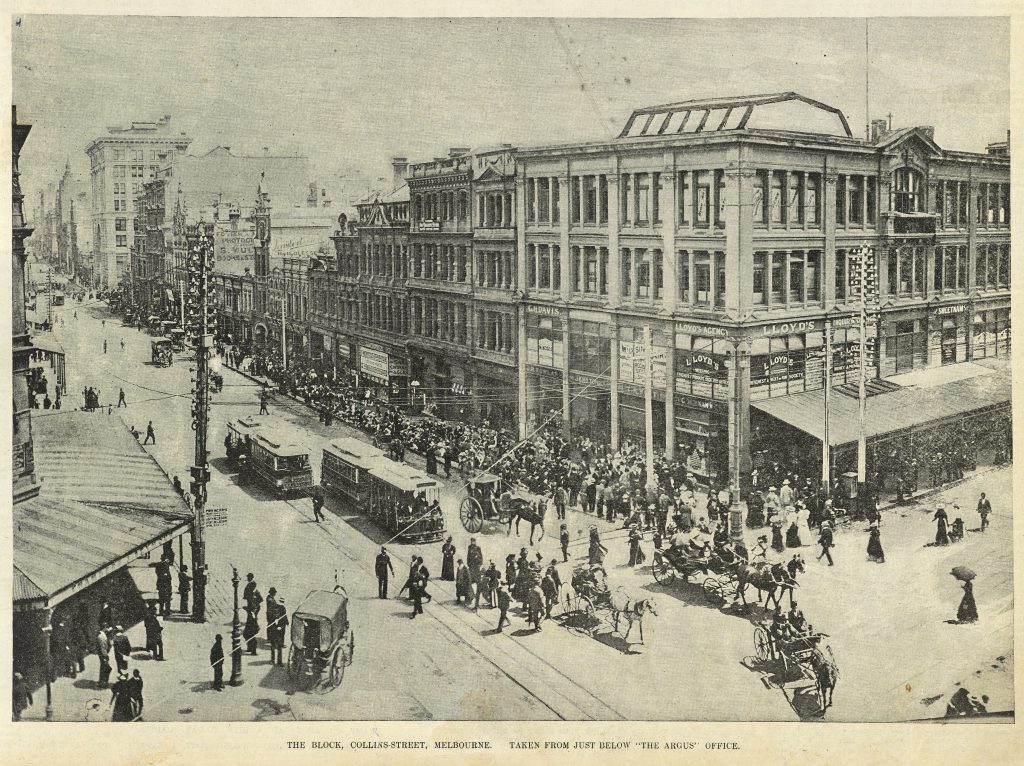
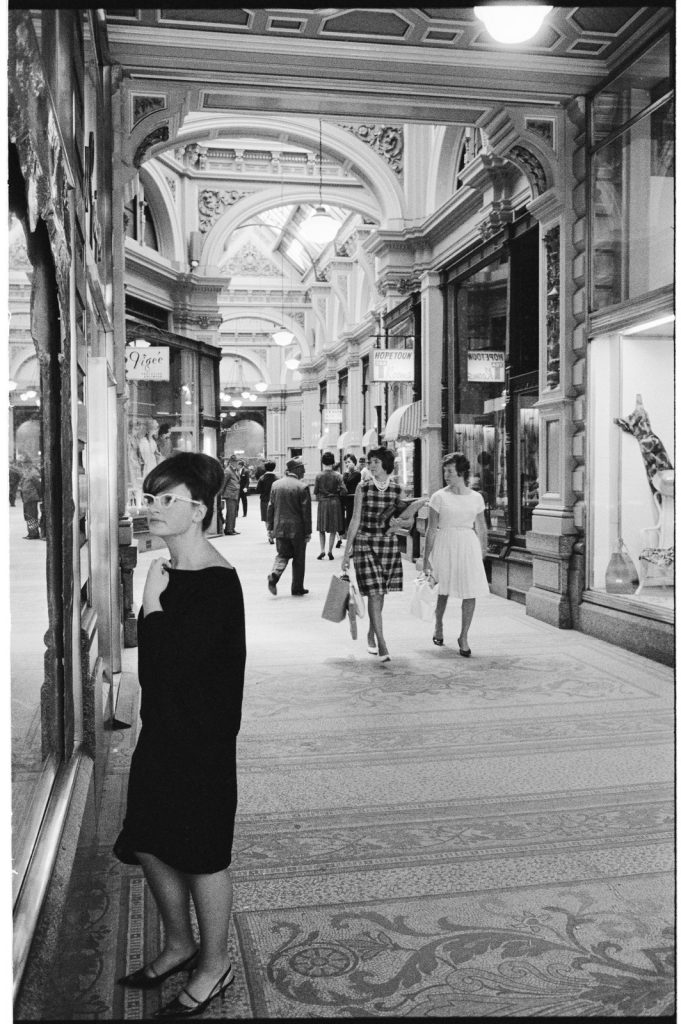
To the great majority the Block is a kind of vast, open-air club with unlimited membership. It is a promenade without a band, a carnival without confetti…Threading one’s way through the crowd, little snatches of conversation are caught, little scraps overheard…here on the Block is the tattle of the town…The Pessimist may condemn it for its aimlessness and its idleness. But to those who are daily drawn to it by the great magnet of its pavement, it is the centre of all things, it is Melbourne incarnate.1
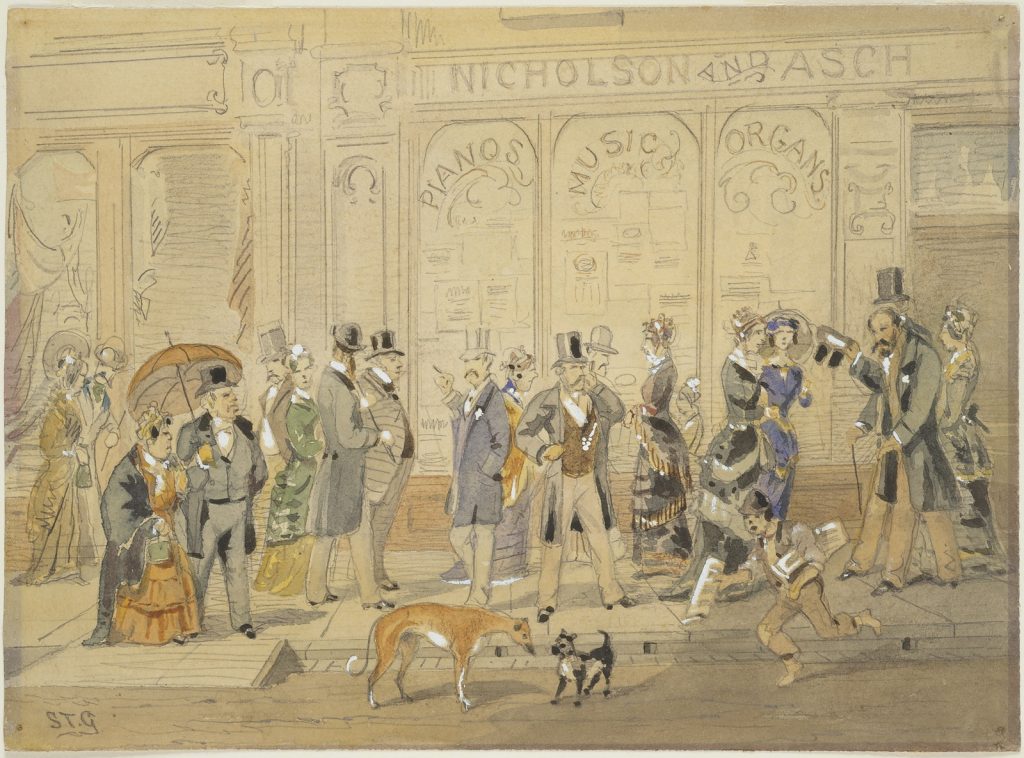
From Swanston street down to Elizabeth street, and then back again to Swanston street, they drift in an ever-increasing tide. A few of them appear to be there with a purpose, and nearly every shop doorway seems a rendezvous for some tea-party. In twosomes and foursomes they go-go where the rattle of the cups and the ragtime of the string band combine to make the music of the tea shops. A few more have come to the Block on the off chance that they will meet the people they are looking for – and where is a more likely spot to find “the people we know”? But the vast majority are there simply because it is “the Block.” and “to do the Block” – afternoon in and afternoon out – is part of the daily ritual of their lives.2
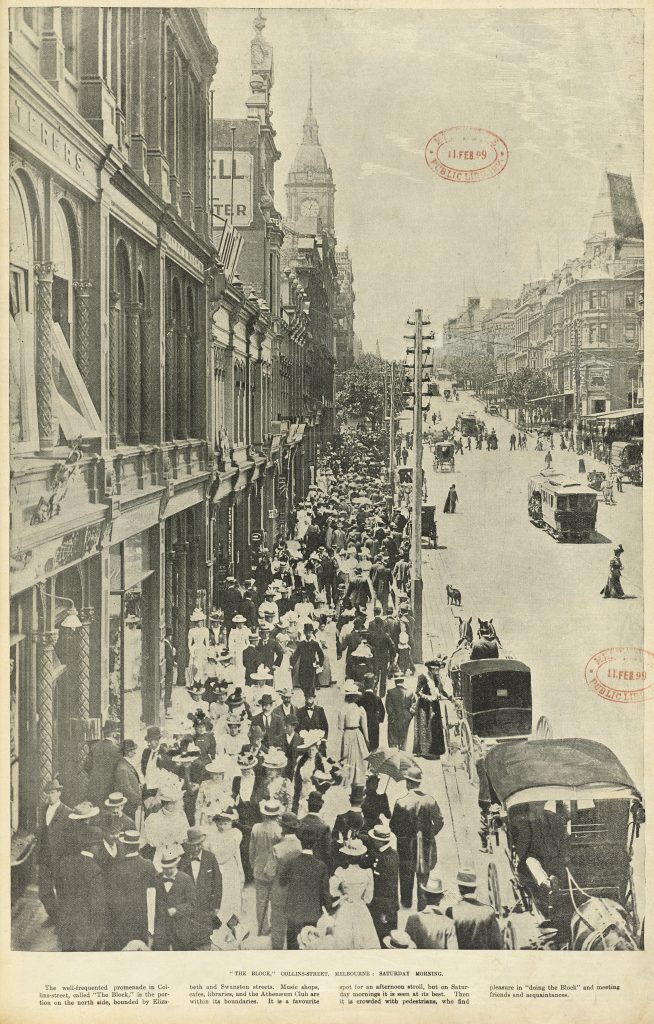
To see it on Saturday morning is to see it at its best. Every day from 12 til 2 it is crammed full with young men and women seeking a little midday recreation; every afternoon it is crowded with an idle, pleasure-seeking throng. But Saturday is gala day at the Block. It is no use trying to hurry against the vast army which marches and countermarches from one limit to the other. The people who come to do the Block have not come either to hurry or be hurried. 3
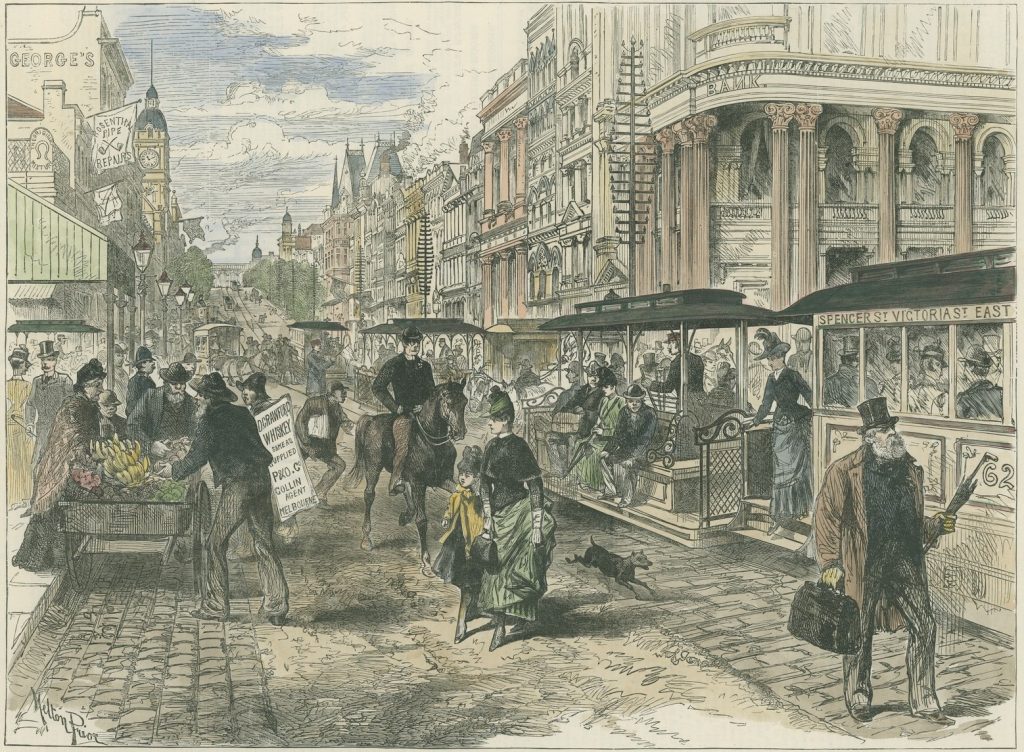
‘The Block’ was a section of Collins street bounded by Elizabeth and Swanson streets. As early as the 1860s is was considered one of the primary places to see and be seen in the Melbourne CBD, but it reached its zenith during the economic boom years in the 1880s and 1890s. ‘Doing the Block’ was a common term to describe the endless promenading of Melbournians up and down Collins street, often dressed in their finest as they frequented the fashionable cafes, tea houses and shops.4
A former City postman recalled the difficulties of completing his route when the Block was in full swing: ‘The ladies on the Block always congregated in Allan’s and Glen’s entrances to chat, and I had a difficult job to get past them as they wore tremendous hoops at the back – something like a large wire bird cage – and blocked up the doorways’ (The Age, 20 April 1935). This performative ‘moseying’ also allowed unmarried men and women to mingle and engage covert glances in a somewhat socially accepted form of courtship.
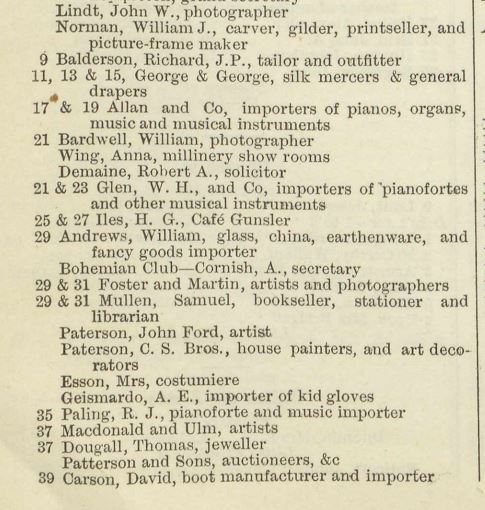
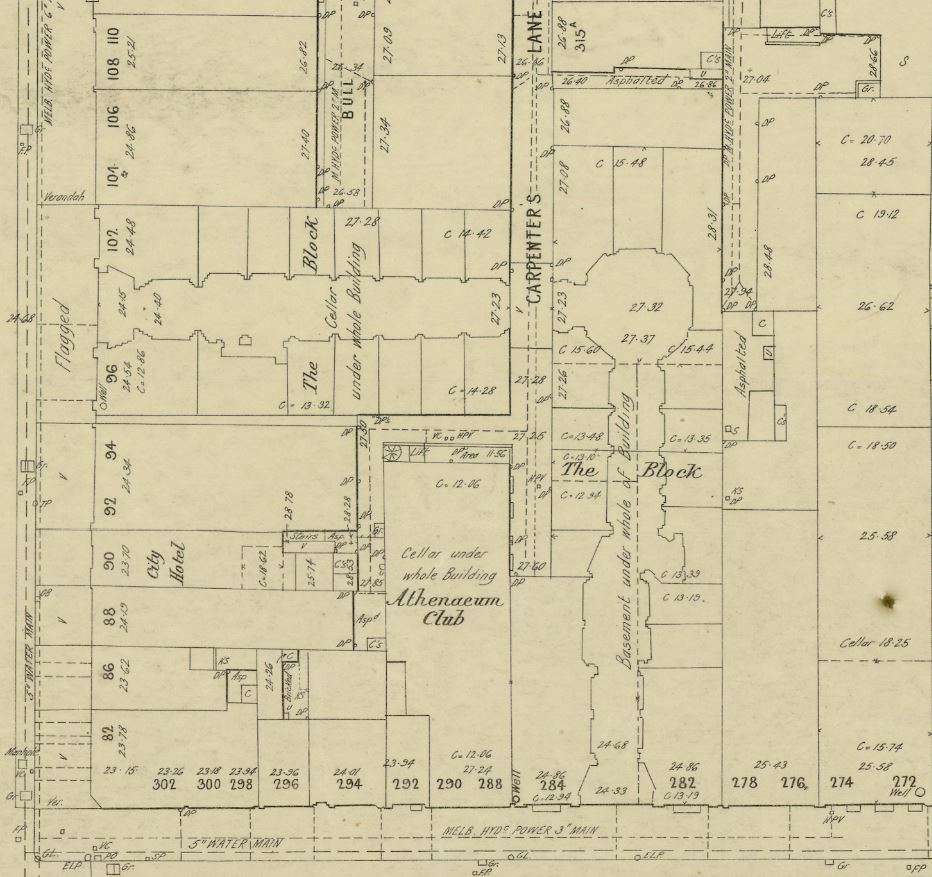
The 1885 Sands & McDougall directory (pictured below) gives a sense of the businesses on the Block during its heyday. With all the milliners, silk merchants, tailors, ‘fancy goods’ importers, portrait painters, hairdressers, jewellers, and bootsellers to patronise, it’s quite fitting that this part of Collins street was considered the prime location to show off one’s fine new spring hat, or parasol, and attract admiring eyes (and perhaps a mate in the process). 5
One enduring feature of the Block was Gunsler’s cafe. In 1878, an enterprising Austrian named John Ferdinand Gunsler purchased the land then known as ‘Petty’s corner’, and commissioned the building pictured below (designed by an architect called Lloyd Tayler) to house his catering and cafe business.6 Gunsler’s Cafe became one of the most opulent eateries in Melbourne at that time. It included a basement level for storing wines and spirits, two dining rooms (one reserved exclusively for ladies), a spacious guest hall which could accommodate 250 dinners, as well as smoking, reading and coffee rooms and ‘commodious lavatories on each floor.’ Iron water reservoirs in the roof supplied water for the facilities and the kitchens, which were kitted out with state of the art fixtures like Melbourne-manufactured Pullinger stove ranges. ‘Everything about the building’, The Argus declared, ‘goes to show that there is at last in this city an establishment that may be regarded as a first class cafe’ (The Argus, 10 June 1879).
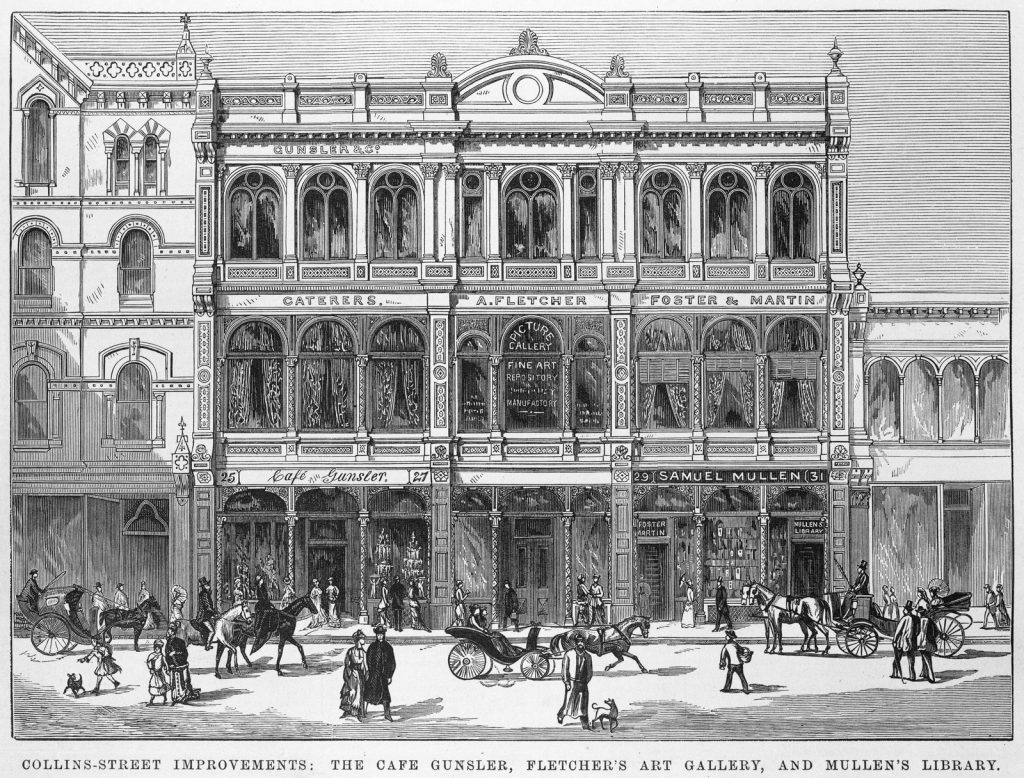
The business was sensationally successful and the cafe was synonymous with the Block for many years. In 1881 Gunsler’s entrepreneurial drive led him to Adelaide and later Sydney where he opened new restaurants (Table Talk, 17 June 1882). The cafe continued and was eventually renamed the Vienna Cafe (though the name Gunsler’s stuck for much longer), coming under the management of Fitzroy pastry chefs Edlinger and Goetz in 1887 (Melbourne Punch, 15 December 1887), who conducted various updates and improvements to the building.7
Adjacent to the cafe was Samuel Mullen’s Library and Bookshop, which opened in late 1850s catering to the intellectual elite, and was the first of its kind in Australia.8 Also nearby was the The Athenaeum Club, which was founded in 1868 and still exists today, and Allan & Co’s music store. But the crowning jewel of the Block in the 1880s was Melbourne’s most exclusive and fashionable department store, George and George’s Federal Emporium. George brothers, William and Alfred, had a motto – Quod facimus, Valde facimus (What we do, We do well) – and they took this motto very seriously, ‘offering the discerning shopper a hushed haven of deferential service, sophisticated ambiance and exclusive international designer labels’.9
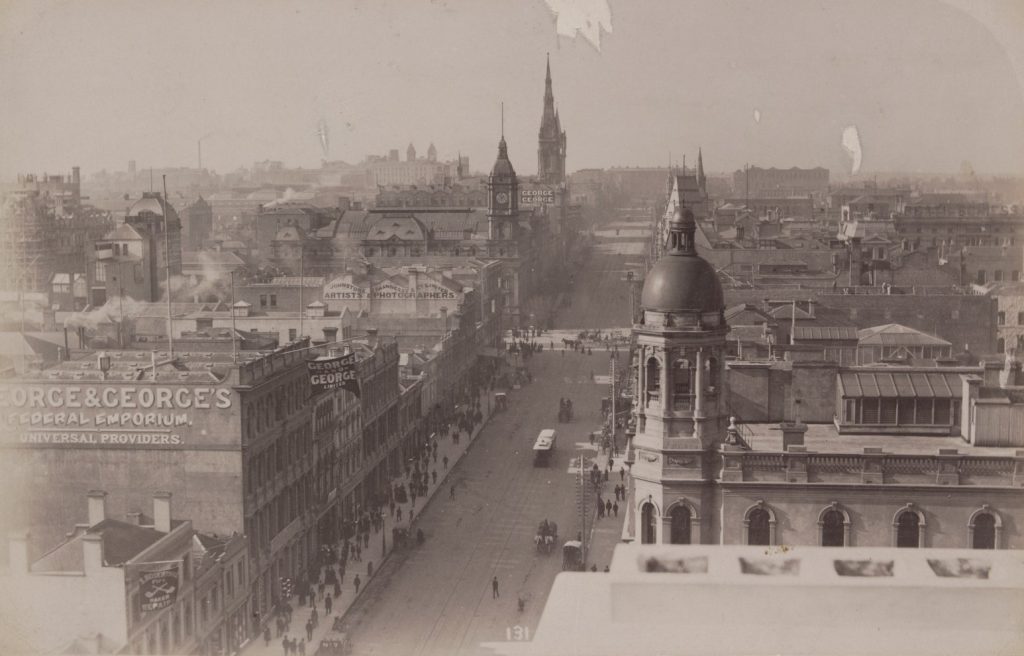
In business on Collins Street since 1880, the brothers moved a few doors down to the four-storey building where the Block Arcade now stands today10. The store’s opening in 1883 prompted much excitement, with the Weekly Times noting the many distinguished guests – ‘members of Parliament, City magnates, professional gentlemen, connoisseurs of art, and those who could afford to be liberal patrons’ – attending the exclusive ticketed opening event (Weekly Times, 15 September 1883).
Shoppers could walk through to Little Collins street via a passenger walkway lined with glass show cases filled with various goods of unrivaled luxury and exquisite quality. In addition to millinery and haberdashery departments, an in-house dressmaking workroom employed some 80-90 ‘girls’, presided over by ‘two French ladies’ (Weekly Times, 15 September 1883). There was also an immaculately dressed furniture showroom with a drawing room, bedroom and dining room, and a fernery and lounge area complete with a lake and mountain scene painted on canvas, aviaries of trilling canaries, and refreshment counters for tea and coffee.
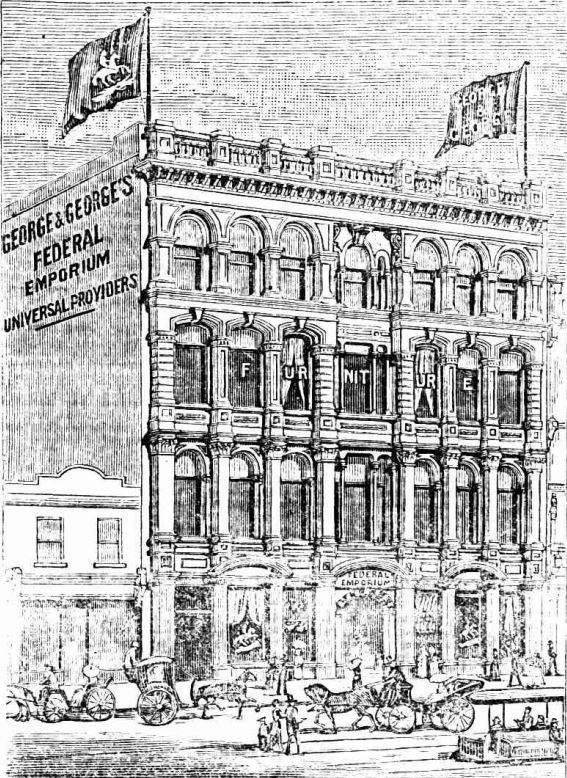
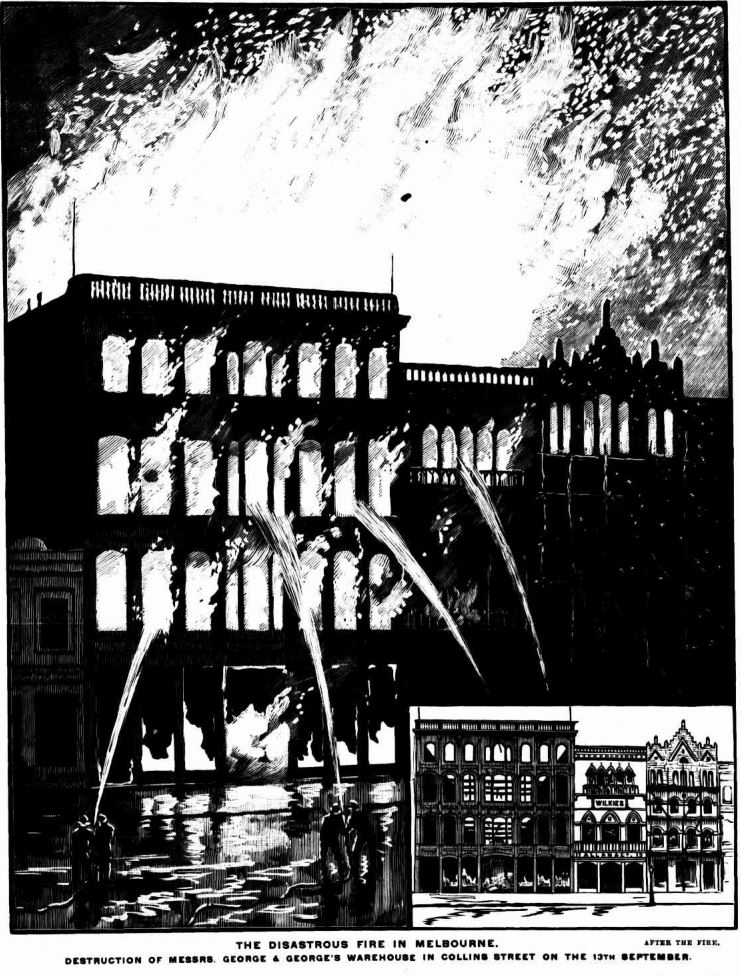
Left: Weekly Times, 11 June, 1887, p 7. Right: Illustrated Sydney News, 3 October 1889, p 28
In September 1889 a devastating fire gutted the building11, leading the brothers to consolidate their operations at their now more famous location (the former Equitable Co-operative Store), designed by John Grainger and Charles D’Ebro at 162-168 Collins street, originally 89 Collins Street East (the ‘Paris-end’ of the street). 12
The City Property Company purchased the fire ravaged site and commissioned architect David Askew (from Twentyman & Askew) to design a new arcade (The Age, 28 January 1890), which was constructed between 1891 and 1893 and opened to the public in stages. A fitting tribute to the site’s history as the premier shopping experience in Melbourne, the tender called for a Renaissance building with grand frontages on Collins and Elizabeth streets (six and seven storey buildings, respectively), and an L-shaped shop-lined walkway covered in an iron and glass roof of ‘ornamental character’.
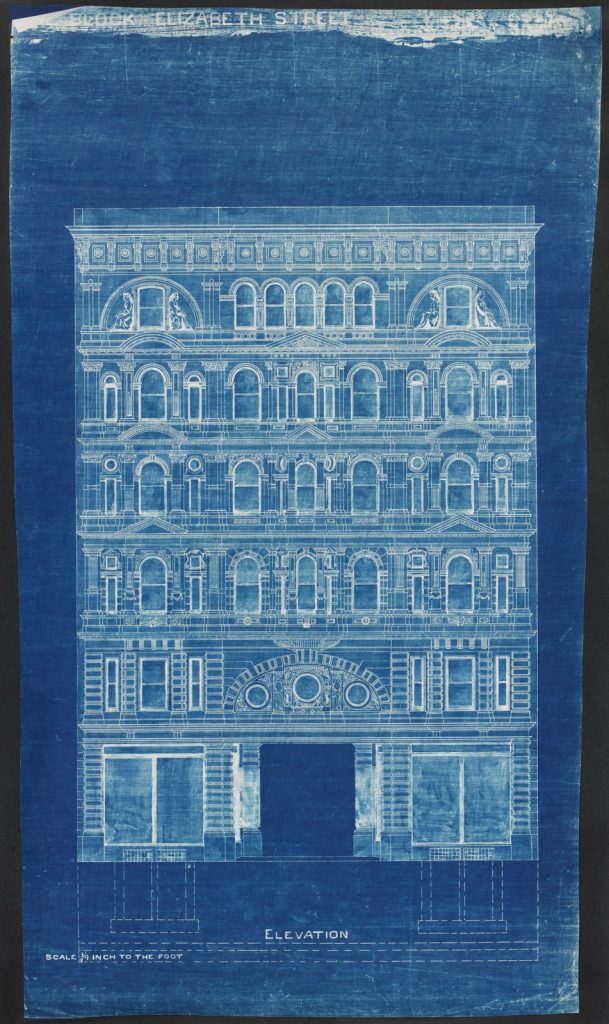
The Block Arcade Collins Street, 1890; YLTAD108/29/1. Architectural drawings by Twentyman & Askew.
The final product (costing £87,000, over 29 million in today’s terms), with its stained glass windows, intricate wrought iron and glass ceilings, and lavish decorative finishes, was deemed ‘an ornament to the city’ (The Prahran Telegraph, 2 December 1891). The arcade’s elaborate mosaic floor was imported from Europe, and at the time of its opening was purported to house the largest floor mosaic in Australia13 In 1907, the arcade was further enhanced by ceiling artwork by artist Philip Goatcher in the Singer Sewing Machine Company store (pictured below). Some well-known occupants of the Block Arcade include the first Kodak store, Allan & Co’s music store and the Houptoun Tea Rooms (1892) – the oldest tea room in Australia – which still operates.
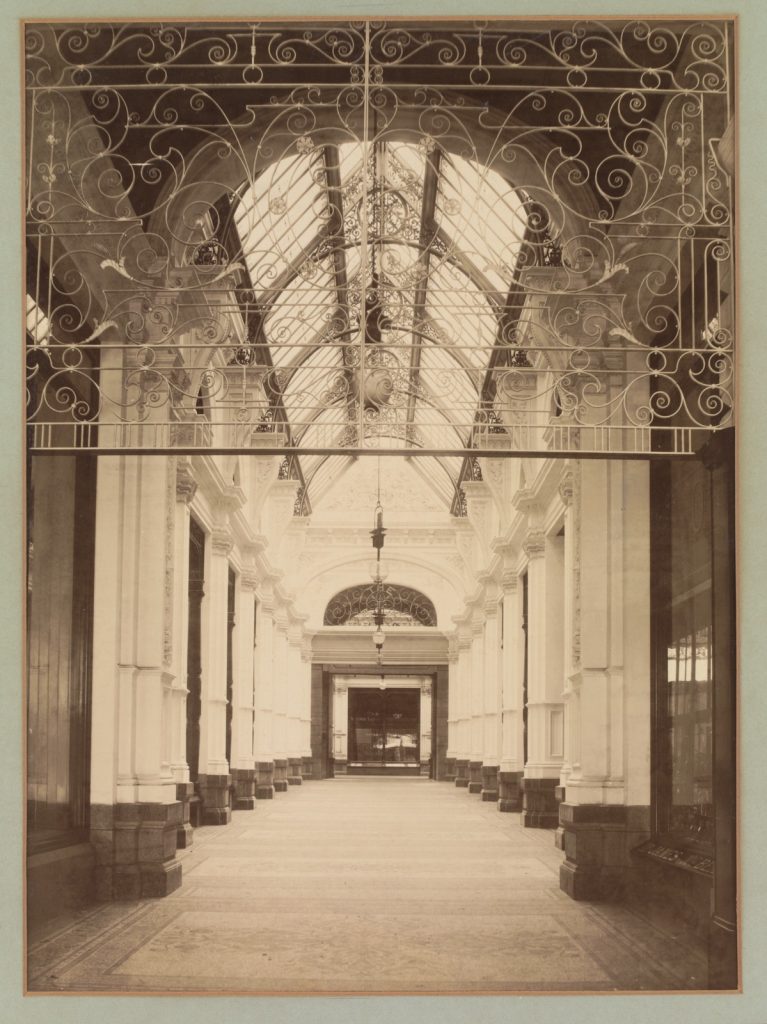
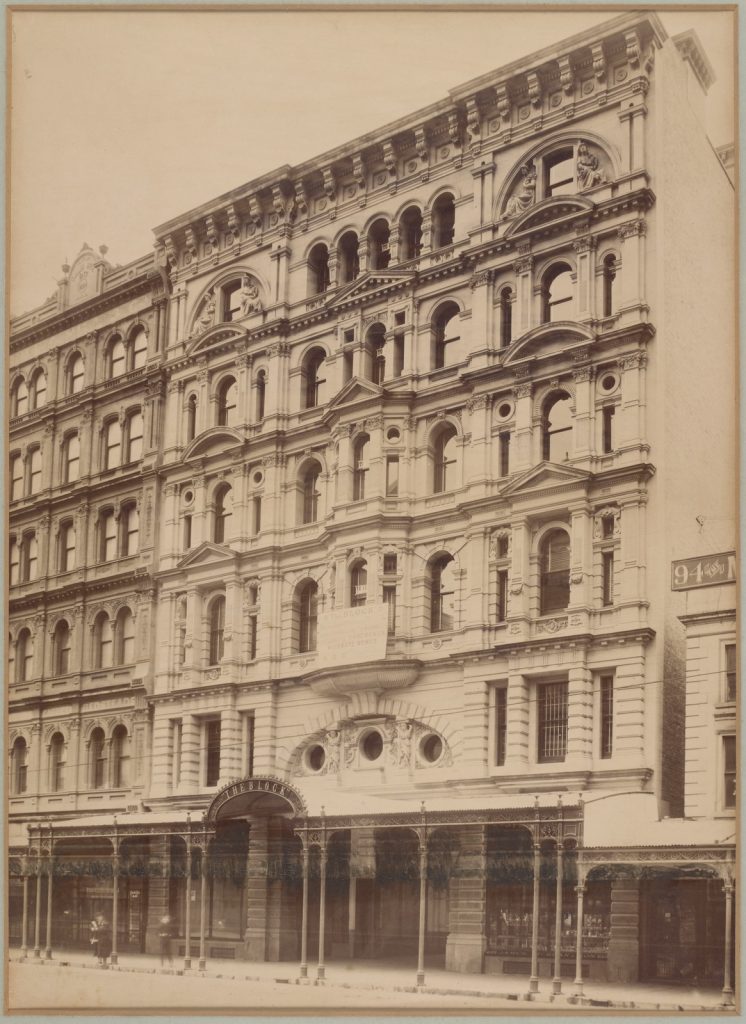
Left: Block Arcade, Melbourne, c 1890; H12214. Photo by David Askew. Right: Block Arcade, ca 1890; H12211
The Block Arcade has been deemed ‘Victoria’s most elaborate shopping arcade’, and is considered to be the grandest and most fashionable example of a once extensive network of retail arcades traversing Melbourne’s major city streets, that ‘brought the street inside’14 It has achieved heritage listing for its architectural, aesthetic (particularly its lavish intact interior decoration), social and historical significance to Victoria. Remarkably preserved and still operating as a grand retail precinct thronged with shoppers and diners, the Block Arcade remains a clubhouse with unlimited membership, a distinctly Melbourne place to see and be seen, or just be idle and take in the city promenade.
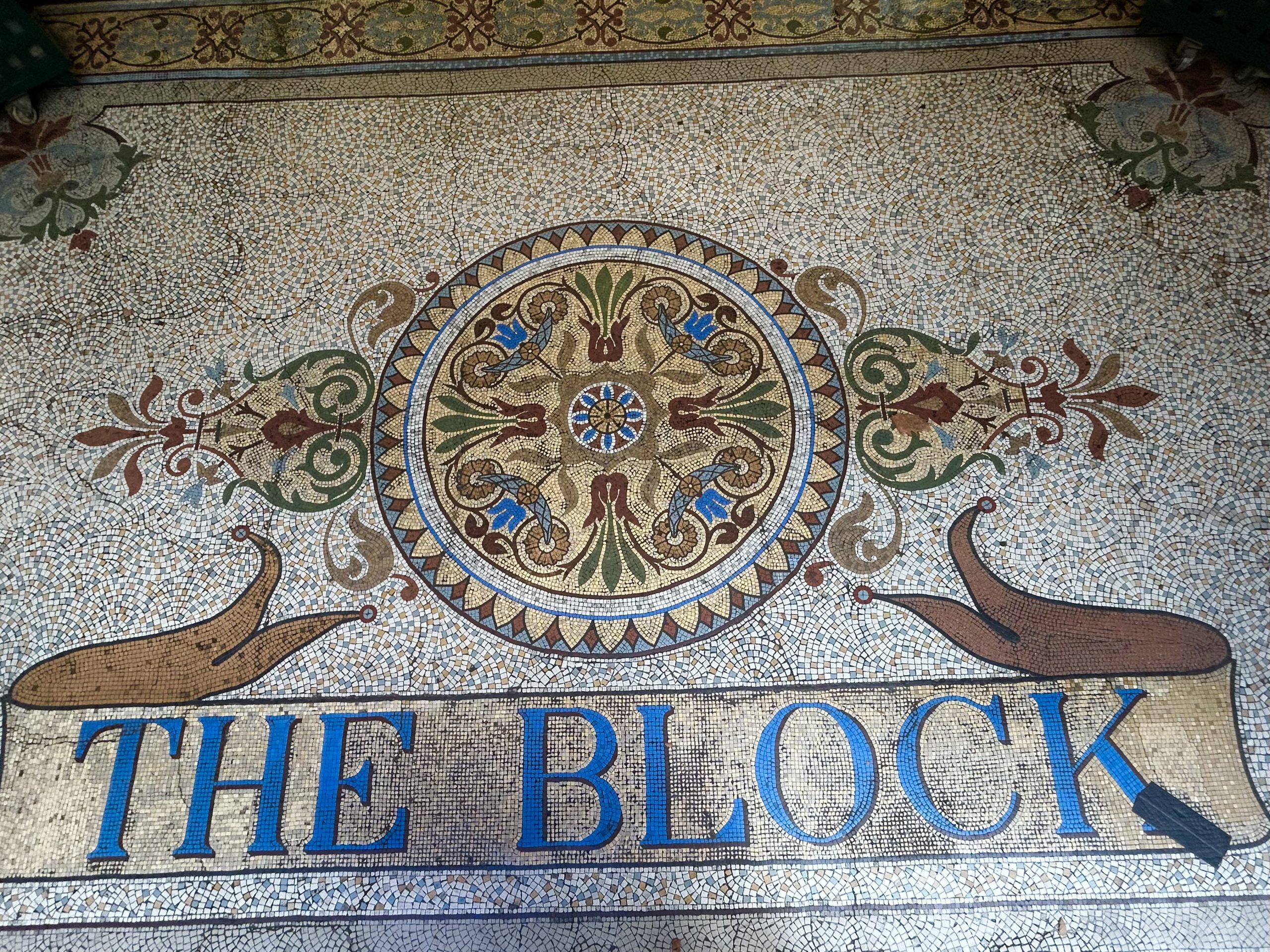
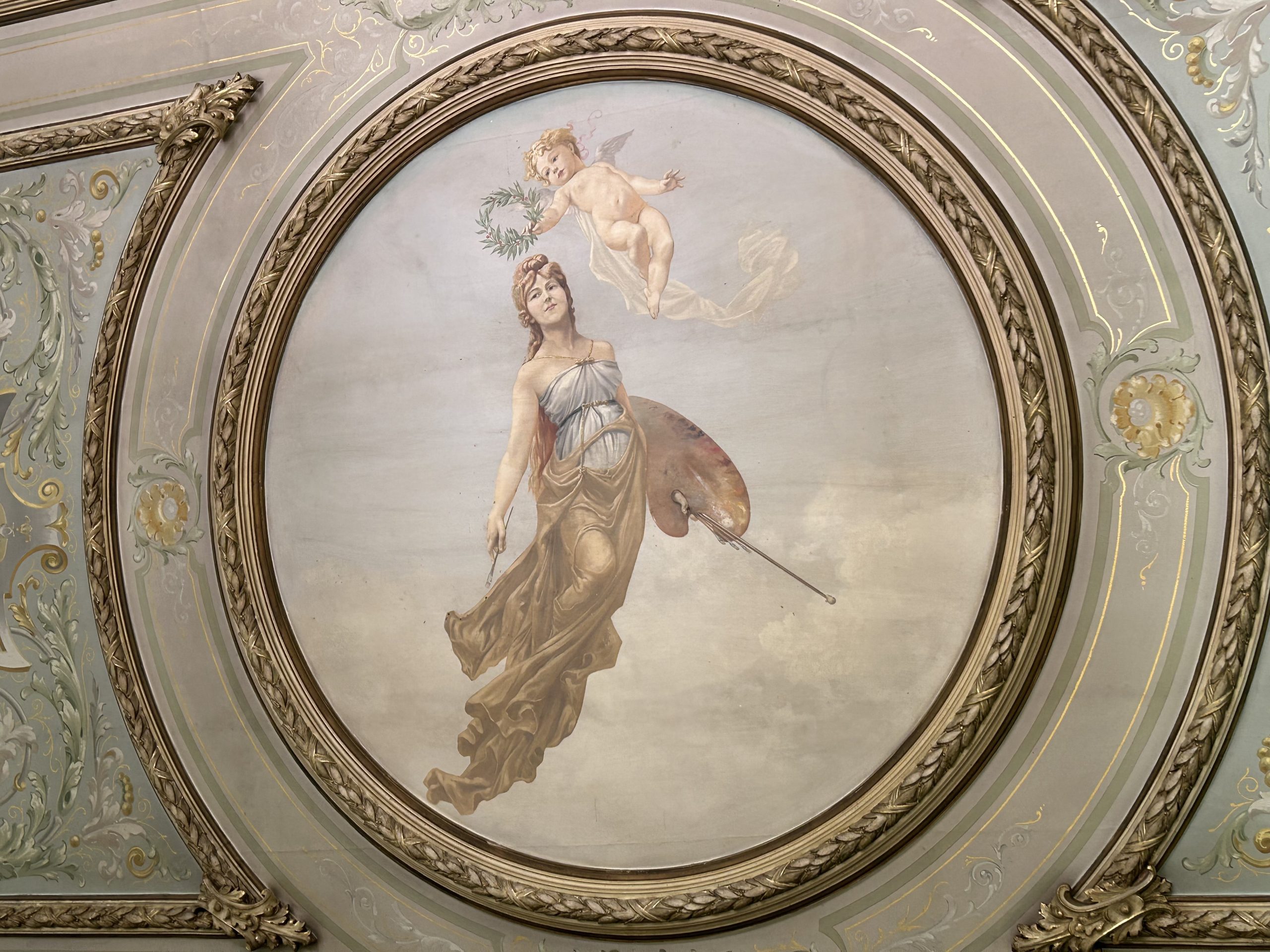
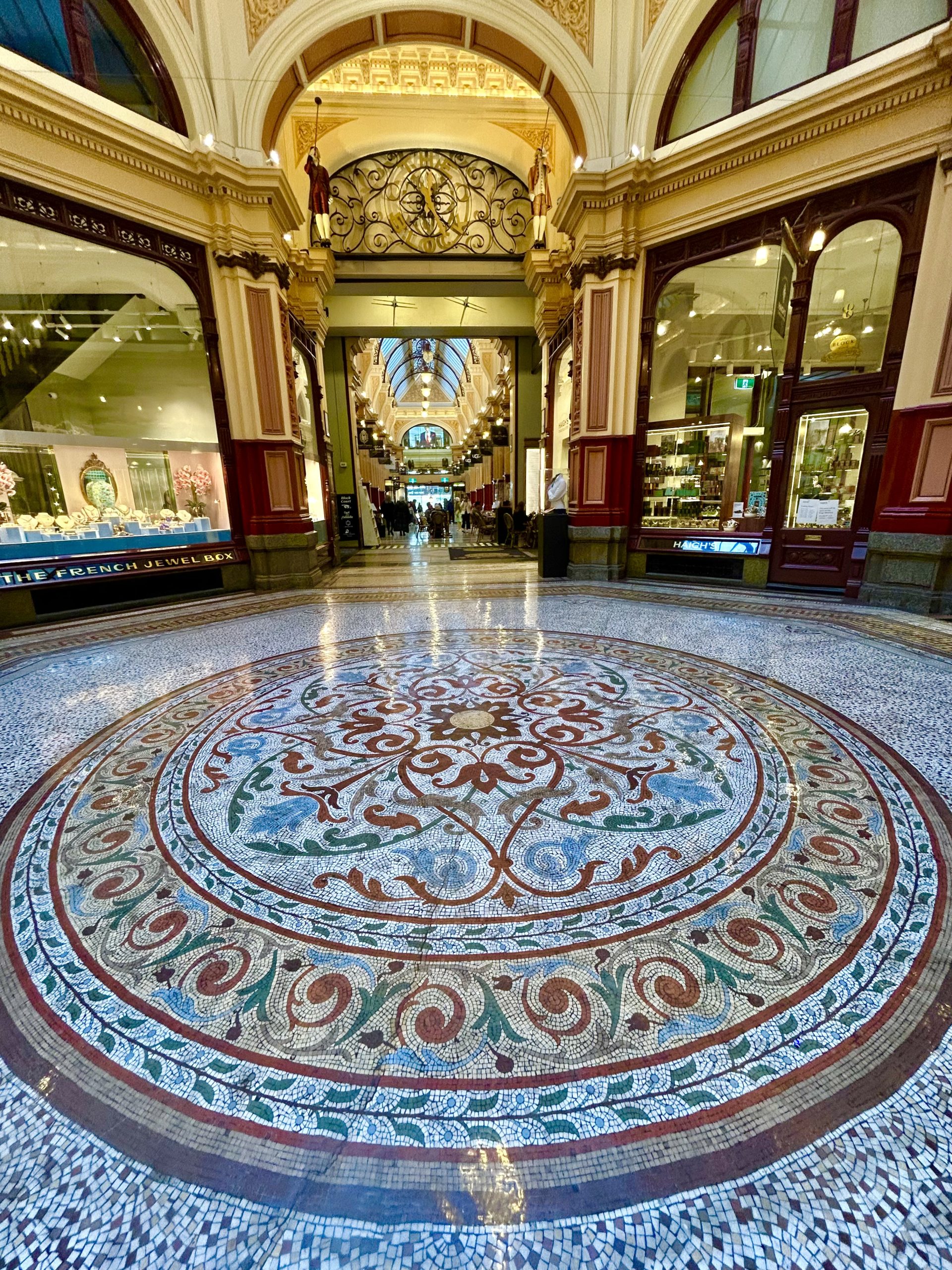
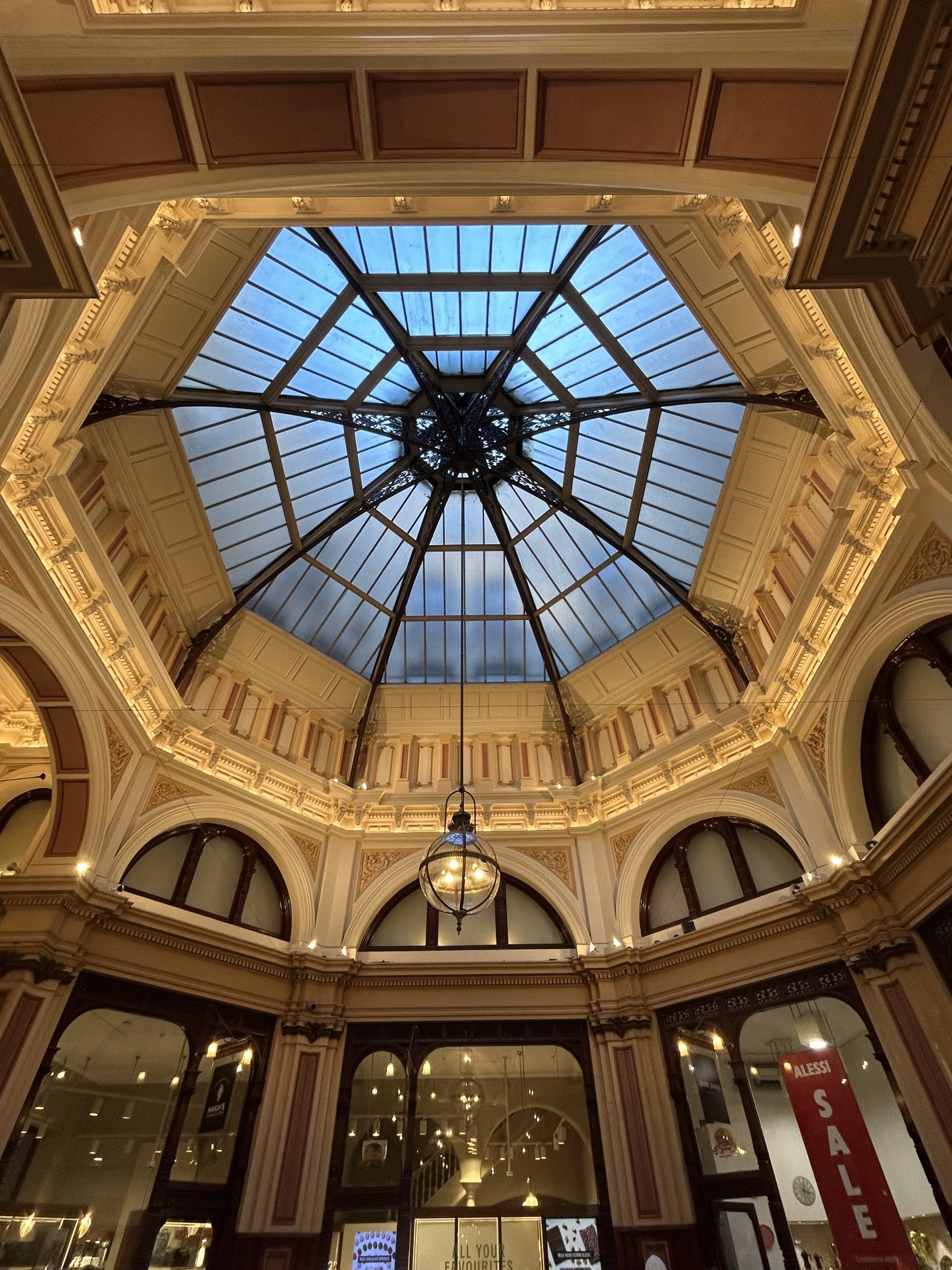
Top left: Detail of the magnificent floor of the Block Arcade. Top right: Detail from 1910 mural artwork by Philip Goatcher in the former Singer Sewing Machine Company store at the Block Arcade. Bottom left: The Block Arcade. Bottom right: Polygon glass and iron roof, that ‘hinges’ the walkways of the Block arcade from Elizabeth and Collins streets, © Photos by Alison Ridgway, 2025
Further reading
Bernstein DL (1939) Hotel Australia, Melbourne 1939, Wilke & Co., Melbourne. Contains many reminiscences about the area back to the early days.
Davison G (2008) ‘Doing the block‘, e-Melbourne [website].
History The Block Arcade https://theblock.com.au/history/ [website].
- ‘ON THE BLOCK‘ (19 August 1919), The Argus, p 4, accessed 1 May 2025.
- As above.
- As above.
- Famously described by author Fergus Hume in his novel The Mystery of a Hansom Cab, first published in Melbourne in 1886: ‘It was Saturday morning and fashionable Melbourne was ‘doing the block’. Collins Street is to the Southern city what Bond Street and the Row are to London, and the Boulevards to Paris… Carriages were bowling smoothly along, their occupants smiling and bowing as they recognized their friends on the side walk… Portly merchants, forgetting Flinders Lane and incoming ships, walked beside pretty daughters; and the representatives of swelldom were stalking along in their customary apparel of curly brimmed hats, high collars and immaculate suits. Altogether it was a pleasant and animated scene…‘
- ‘THE BLOCK‘ (31 March 1887), Melbourne Punch, p 12, accessed 2 May 2025.
- ‘The Cafe Gunsler‘ (10 June 1879), The Argus, p 6, accessed 2 May 2025. Prior to that, Gunsler had taken over an existing pastry and confectionery business from his retiring business partner C.J. Hughes, renaming the cafe after himself, ‘A CAFÉ WITH A HISTORY: The Australia—A Much Remodelled Restaurant‘, The Australian home beautiful : a journal for the home builder, vol 9, no 10, 1 October 1931, p 6.
- Later the site was occupied by the sumptuous Cafe Australia (1916-1927), followed by Australia Hotel, see ‘A CAFÉ WITH A HISTORY: The Australia—A Much Remodelled Restaurant‘, The Australian home beautiful : a journal for the home builder, vol 9, no 10, 1 October 1931, p 6. Also see Bernstein DL (1939) Hotel Australia, Melbourne 1939, Wilke & Co., Melbourne.
- Holroyd JP (2006) ‘Samuel Mullen (1828-1890)‘, Australian Dictionary of Biography [website], accessed 27 May 2025.
- Austin J ‘Melbourne’s lost department stores’ (2 April 2019), State Library Victoria blog, accessed 27 May 2025. Also see May A (2008) ‘Georges‘, e-Melbourne [website], accessed 28 May 2025.
- Formerly the home of Briscoe’s Bulk Grain store 1856-1883.
- The fire was one of the most devastating in Melbourne’s history – to that point – leading to the death of one fireman, and the establishment of the Metropolitan Fire Brigade.
- May A 2008 ‘Georges‘, e-Melbourne [website], accessed 28 May 2025.
- Heritage Council Victoria ‘Block Arcade Statement of Significance‘, Victorian Heritage Database [website], accessed June 3 2025.
- Heritage Council Victoria ‘Block Arcade Statement of Significance‘, Victorian Heritage Database [website], accessed June 3 2025. The Bourke Street The Royal Arcade (1869) is of course another significant – and earlier – example of a Melbourne shopping arcade.


My father told me of his version of doing The Block in the 1940s. Fresh faced young soldiers with a day off in town would spy an officer, perhaps with a young lady on his arm. The soldiers would smartly salute the officer, who was obliged to return the salute. The young soldiers would then scoot to the back of the queue and go round to salute again, thus ruining the officer’s pleasant afternoon out strolling round the block with his girl. After realising he was seeing some faces more than once, the officer would depart to quieter streets.